
Japan without rose-colored glasses: 8 myths that distort the perception of the country
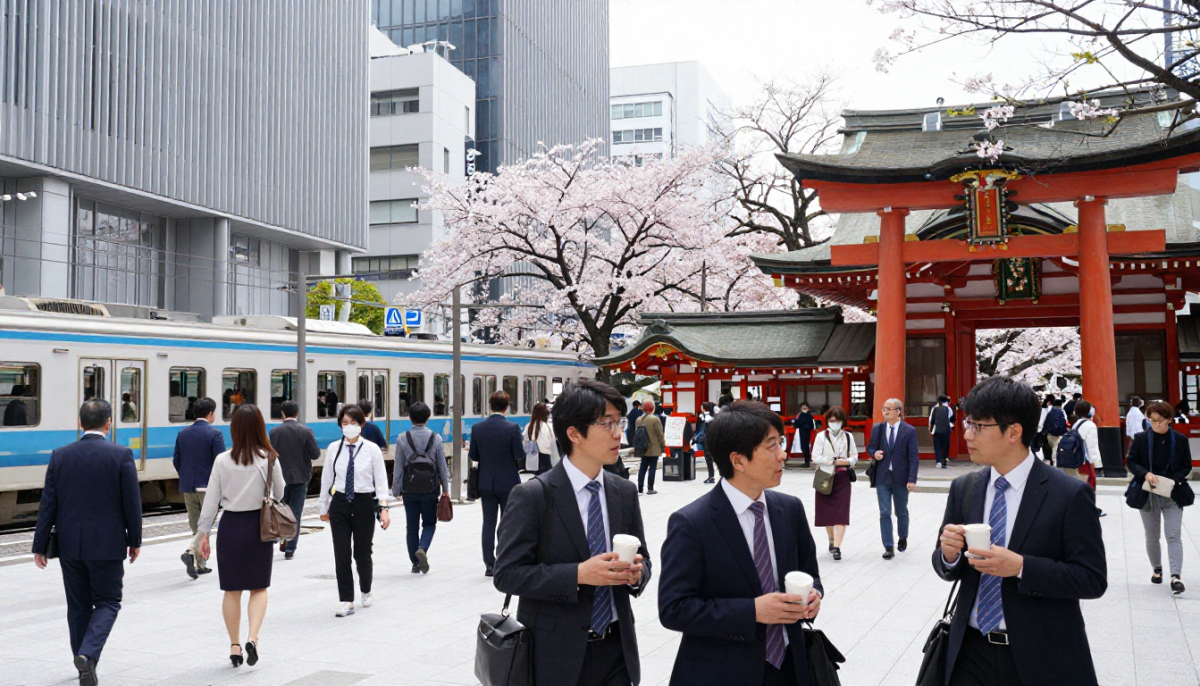
When we talk about Japan, a set of stable images almost automatically comes to mind: anime, sushi, extreme politeness, technological advancement, workaholism, and the mysterious suicide forest. These images are not fabricated, but they are taken out of context and turned into convenient cultural clichés.
The problem is that such exoticization creates an illusion of understanding. We see a collection of vivid details, but we do not grasp the mechanisms behind them - the demographic structure, institutional logic, historical compromises between modernization and tradition.
In this analysis, I will not recount "crazy facts." Instead, I will highlight several persistent myths that are formed based on them and examine what lies behind them at the level of reality.
Myth #1. Japan is a completely traditional and isolated society.
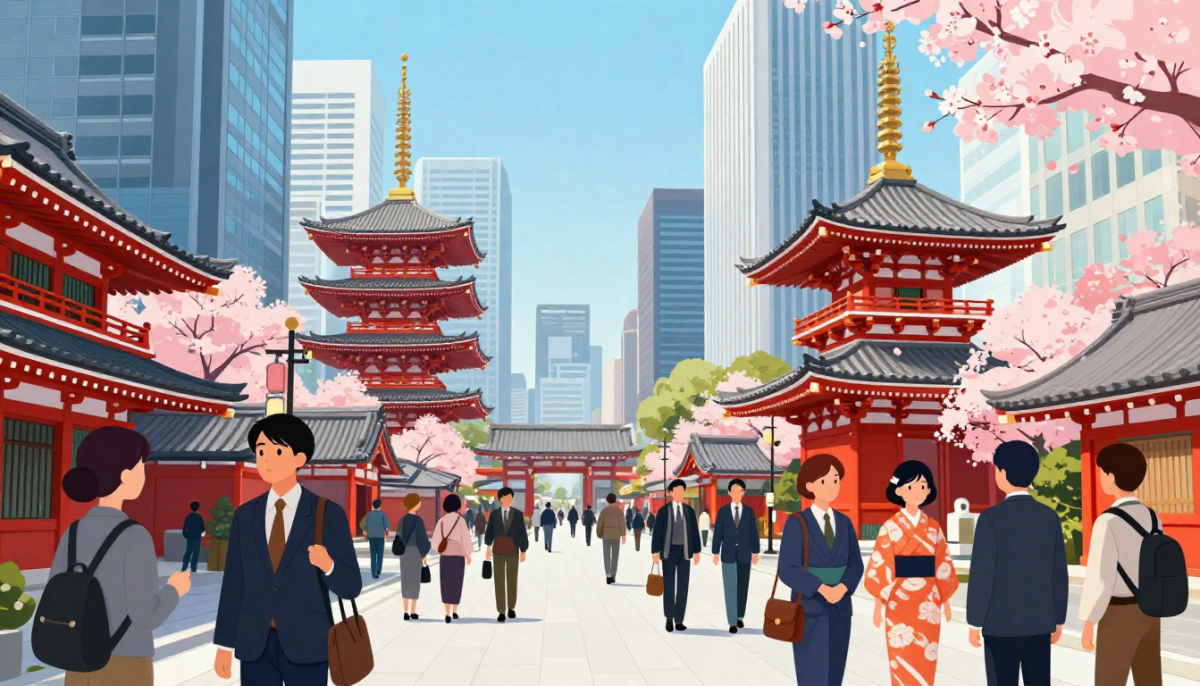
The narrative about "98 percent of Japanese people" and the almost complete absence of immigration is often presented as evidence of the country's closed nature. Indeed, according to the Ministry of Internal Affairs of Japan, the share of foreign residents has remained significantly lower for many years than in Western Europe or North America. However, this does not equate to cultural isolation.
Since the late 19th century, Japan has consistently built a model of controlled modernization. After the Meiji Restoration in 1868, the country consciously adopted Western institutions—from the legal system to military organization. In the 20th century, the Japanese economy became deeply integrated into global production chains. Today, it is one of the largest economies in the world.
The low share of immigration is not an archaic insularity but a result of institutional choice. For a long time, the economic model relied on domestic labor resources and high employment of citizens. However, in recent years, against the backdrop of demographic decline, the country has gradually expanded programs to attract foreign workers.
The image of a "country that lets no one in" simplifies a much more complex institutional history.
Myth #2. The Japanese are a nation of extremes: either super polite or fanatically workaholic.
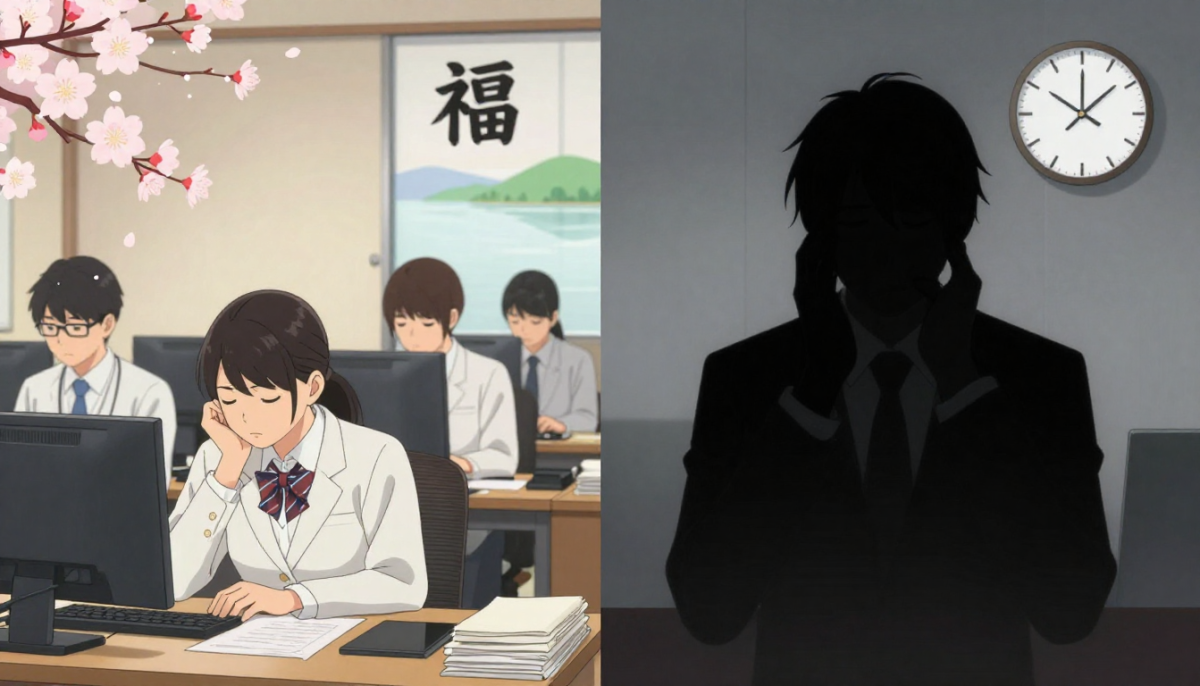
The stereotype of the "most polite people" usually coexists with another - about mass death from overwork, the phenomenon of karoshi.
The term karoshi does indeed exist and is used in official statistics. The Ministry of Health, Labour and Welfare of Japan publishes data on deaths related to overwork. However, the figures circulating in popular texts are often greatly exaggerated. The problem of overwork is real, but it is institutionally recognized and regulated - the government is gradually introducing limits on overtime hours.
Politeness, on the other hand, is not an innate trait, but a social norm. Japanese culture has historically been built around the concepts of giri and wa - duty and harmony. Public behavior is strictly regulated, but this does not mean a lack of individuality. In private settings, behavioral patterns can be much less formal.
The idea of "extremity" arises when we extract a phenomenon from its social structure. In reality, it is a system of norms, not cultural exoticism.
Myth #3. Japan is a country of strange and illogical rules.
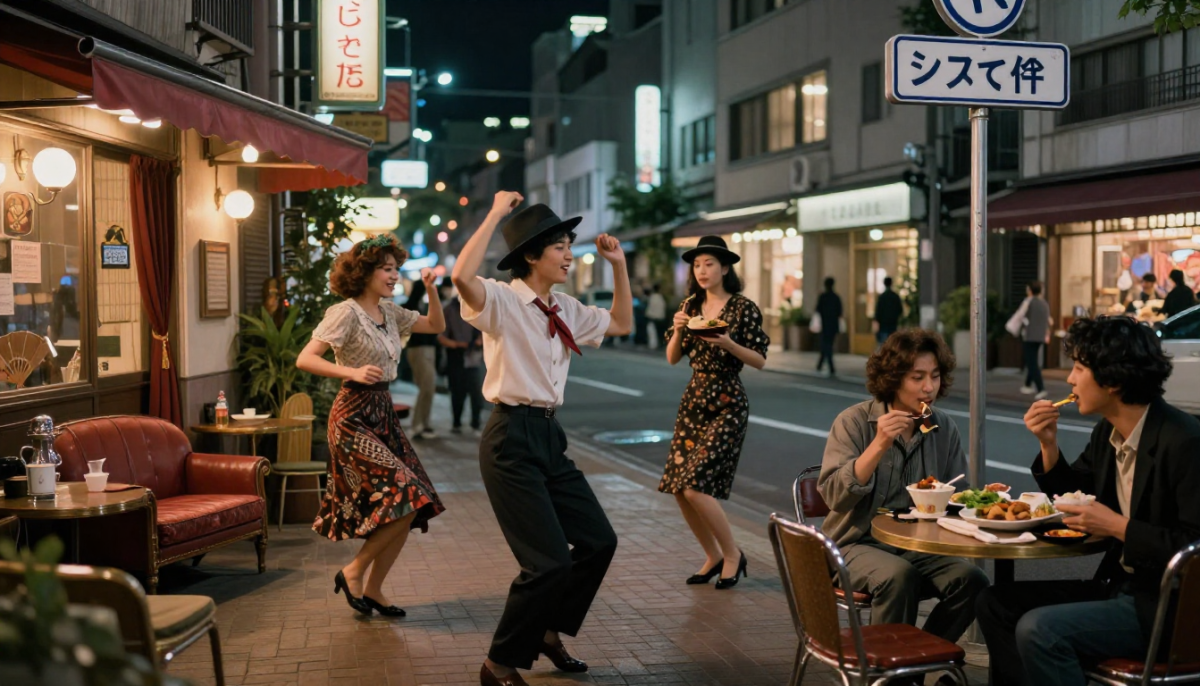
The ban on night dancing, the absence of street names, and the negative attitude towards eating on the go - such details create a sense of cultural irrationality.
The story of night dancing is linked to the 1948 law on entertainment establishments, which originally regulated the activities of post-war cabarets. Restrictions were gradually eased, and in 2015 they were significantly revised. This is not a "ban on dancing," but rather a legacy of a specific legal regime.
The absence of street names in several cities is a consequence of a different logic of addressing. In Japan, an address is constructed by blocks and districts, rather than by a linear street system typical of European cities. This is the result of historical urban development, not a cultural protest against "straight lines."
Norms related to food are embedded in the idea of respect for others and control of public space. They may seem unusual from the outside, but within the system, they are logical.
Exoticism arises from the incommensurability of everyday rules, not from their absurdity.
Myth #4. Japan is on the brink of demographic extinction.
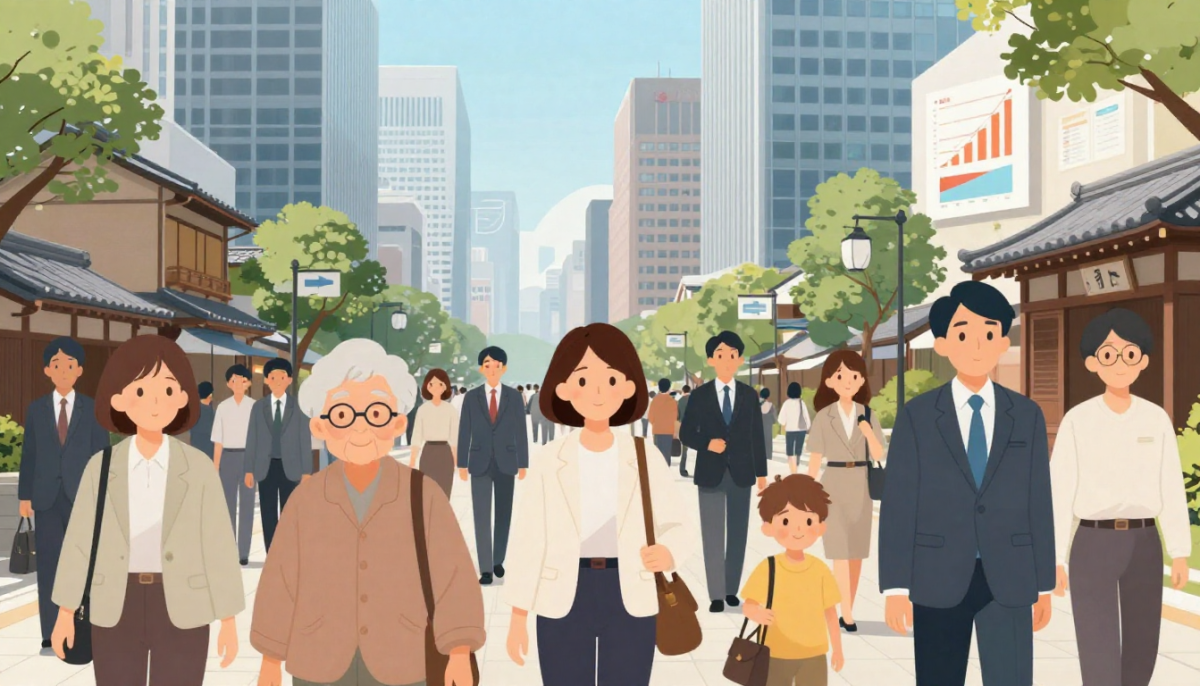
The phrase about a "nation that may disappear" sounds striking. Indeed, Japan is experiencing one of the deepest demographic declines among developed countries.
The birth rate is significantly below the level of simple reproduction, and the share of people over 65 years old exceeds 28 percent. The country is facing a shrinking workforce, an increasing burden on the social security system, and changes in consumption patterns.
However, this is not about "disappearance," but about transformation. The state is adapting the pension system, encouraging the employment of the elderly, expanding women's participation in the labor market, and gradually adjusting migration policy. This is a complex and painful process, but it is institutionally managed.
Demography is not an apocalypse, but a long-term structural dynamic.
Myth #5. Japan is a country of cultural absurdities and strange exoticism
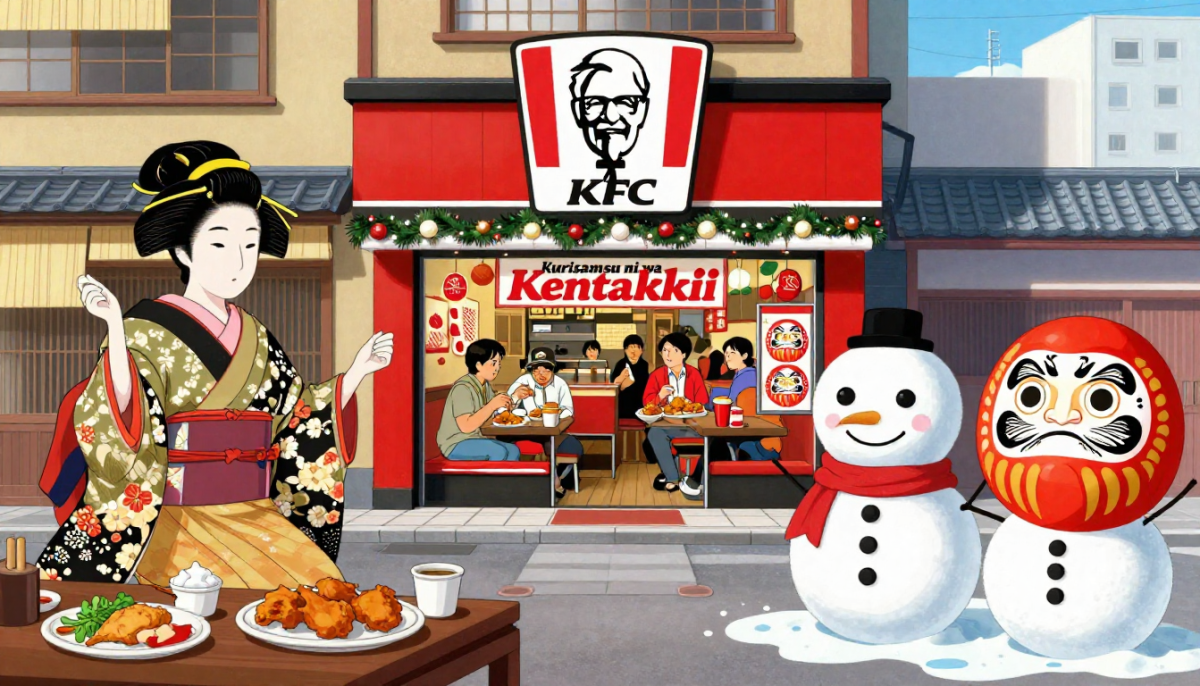
Male geishas, two-sphere snowmen yuki-daruma, Christmas at KFC, a ban on dancing after midnight - all of this is usually presented as evidence of cultural "strangeness."
But if we peel back the layers, almost every phenomenon turns out to be the result of historical logic.
The first geishas were indeed men - in the 17th century, they served as entertainers at banquets. Female geishas appeared later and gradually displaced men from the profession. This is not a cultural paradox, but an evolution of social roles within the entertainment industry of the Edo period.
The story of KFC's Christmas chicken is a classic example of marketing engineering. In 1974, the Japanese branch of the chain launched the campaign Kurisumasu ni wa Kentakkii - "Kentucky for Christmas." In a country where Christmas was not a traditional family holiday, the company essentially offered a ready-made script for celebration. Consumers embraced it not for its religious significance, but for its convenience. This is not a "national oddity," but a successful commercial strategy.
Even the two-sphere snowman is connected to the image of Daruma - the Buddhist monk Bodhidharma, traditionally depicted without arms and legs. This is a cultural adaptation, not a simplification of form.
Exoticism disappears when tracing the origins of a phenomenon.
Myth #6. The Japanese language is a chaotic and almost impossible system.
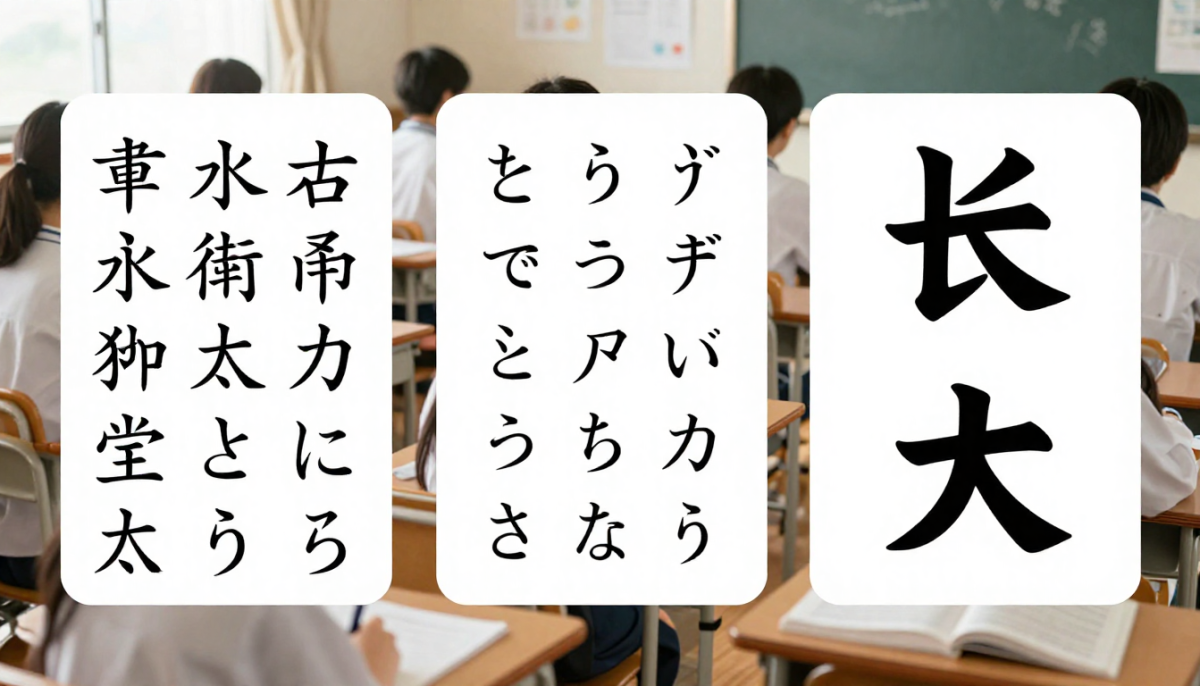
Three writing systems - kanji, hiragana, and katakana - are often presented as proof of the "incomprehensibility" of the Japanese language.
In practice, this is a functional distribution of tasks.
Kanji - Chinese-origin characters - convey the root meanings of words. Hiragana is used for grammatical endings and auxiliary forms. Katakana is intended for borrowings and emphasis. The system may seem complex, but it is structured.
Yes, schoolchildren learn more than 2,000 mandatory characters. Yes, the same combination of signs can have different readings. But the literacy rate in the country consistently exceeds 99 percent. This speaks not of "impossibility," but of a systematic educational infrastructure.
The complexity of the language is not an anomaly, but an investment in a written culture that has developed over centuries.
Myth #7. Japan is an absolutely safe and perfectly organized country.
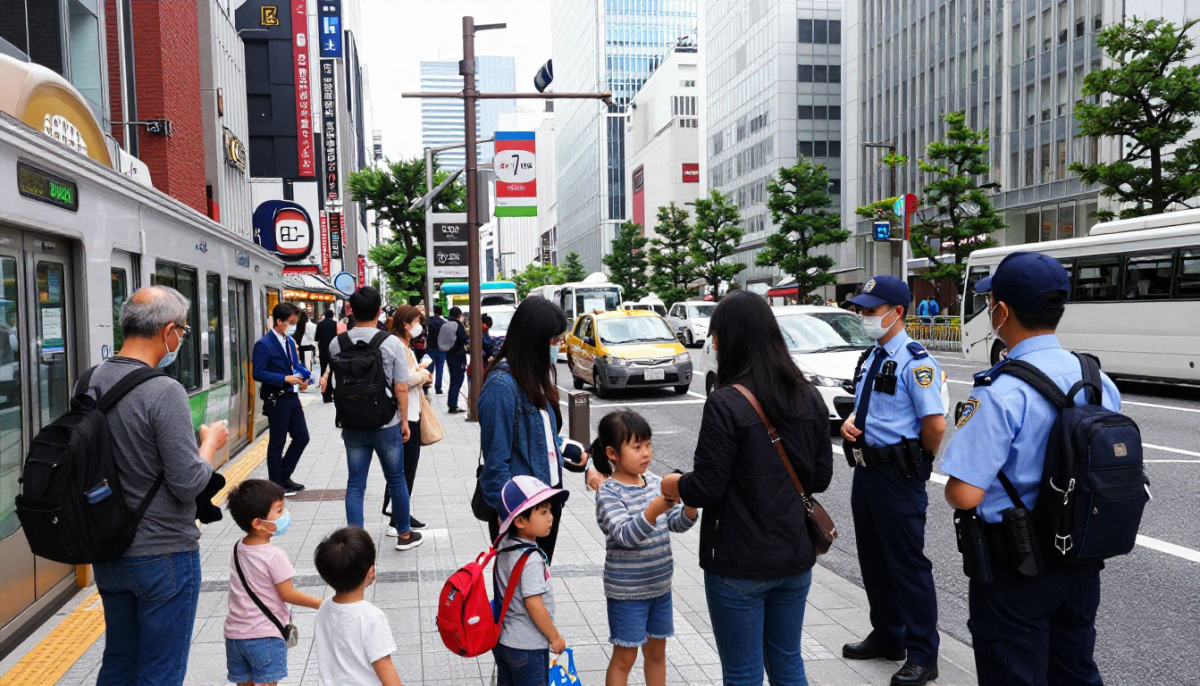
Tokyo is often referred to as the safest megacity in the world. Indeed, the level of violent crime in Japan is significantly lower than in most OECD countries. Children can travel independently on public transport, and lost items are often returned to their owners.
However, safety is not cultural magic. It is the result of a combination of factors: strict gun control, a high level of social homogeneity, dense urban infrastructure, effective policing, and stable social norms.
At the same time, the country is not without problems. There is organized crime - the yakuza, there are economic crimes, and there are issues of domestic violence that have long been underreported in statistics.
Idealization distorts the picture just as much as demonization. High safety is a reality, but it is ensured by institutions, not by a "special nature of the people."
Myth #8. Japanese society is rigidly patriarchal and unchanging.
The thesis that "men are served first" or that gender roles are strictly fixed is often used as evidence of the archaic nature of the social structure.
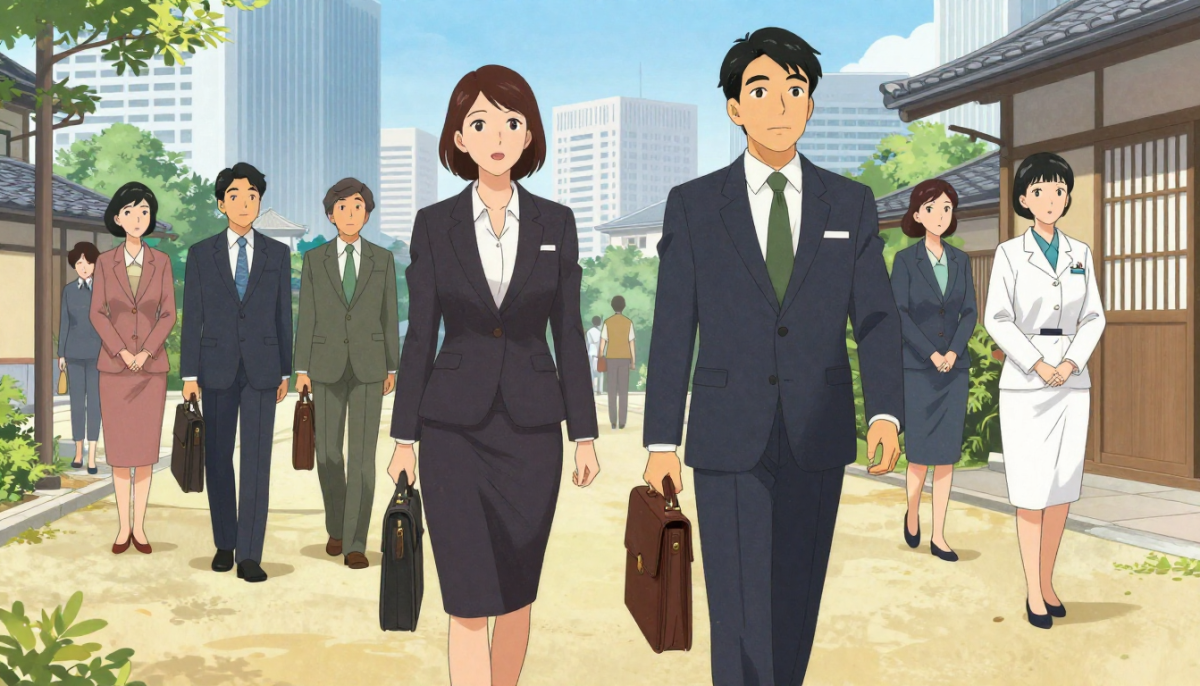
Historically, post-war Japan was indeed built around the salaryman model - the breadwinner male and the housewife female. This model was reinforced during the economic growth period of the 1950s to 1980s.
However, in recent decades, the picture is changing. Women's participation in the labor market is increasing, the share of women with higher education is growing, and the government is promoting programs to support women's employment. Women's political representation is still lower than in several Western countries, but there is a dynamic of gradual change.
The social system is not static. It is inertial but adaptive.
The notion of "frozen tradition" is convenient but inaccurate.
Sources:
Most "crazy facts" about Japan turn out not to be sensational but fragments of more complex social mechanisms. Exoticism appears where context is absent.
When superficial astonishment is removed, Japan looks not like a mysterious anomaly but as a society that consistently addresses modernization issues - sometimes differently than Western countries, but within a framework of rational logic.
It is not a country of extremes. It is a country of institutional compromises.
- Kingston, Jeff. Contemporary Japan: History, Politics and Social Change since the 1980s. Wiley-Blackwell, 2013.
- Vogel, Ezra F. Japan as Number One: Lessons for America. Harvard University Press, 1979.
- Ministry of Health, Labour and Welfare of Japan - White Paper on Karoshi Countermeasures.
- Statistics Bureau of Japan - Population Census Data.
- Sorensen, Andre. The Making of Urban Japan: Cities and Planning from Edo to the Twenty First Century. Routledge, 2002.
You might like
How North Korea Really Works: 11 Popular Misconceptions
North Korea has long become an object of mythologization. Some see it as an exotic archaic regime, others as almost a dystopia from a textbook on total...

10 unusual professions that turned out to be not so unusual after all
In almost every popular video about unusual professions, viewers are invited to be amazed: here are people milking snakes, hiring huggers, or staging kidnappings...

Carandiru: How Brazil's Largest Prison Became a Symbol of Systemic Violence
Prisons are rarely associated with humanism. But sometimes in the public consciousness, an image of the "most terrible prison in the world" emerges - a place where punishment prev...
10 Billion People: Will the Earth be Overpopulated?
The issue of overpopulation has sounded like a prediction of disaster for more than one century. At the end of the 2nd century, Tertullian wrote that the Earth can barely withstand people - t...
Behind the walls of the toughest prisons: between reality and fiction
The topic of "the most terrifying prisons in the world" invariably evokes a strong emotional reaction. Descriptions of isolation, violence, torture, and the complete loss of human dignity...