
Carandiru: How Brazil's Largest Prison Became a Symbol of Systemic Violence
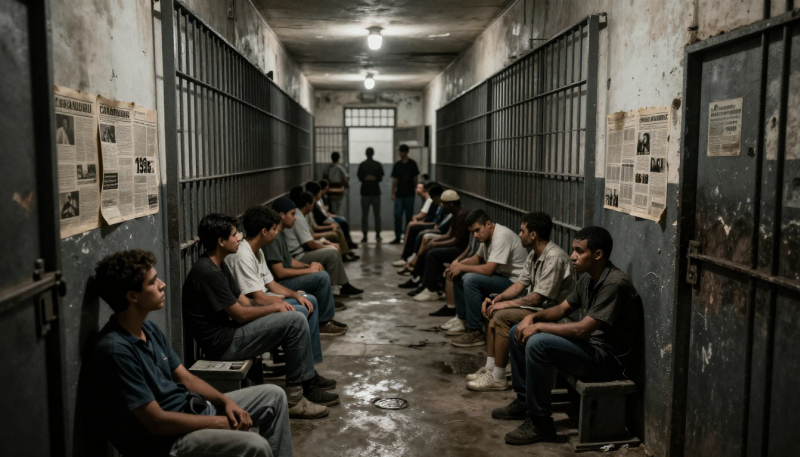
Prisons are rarely associated with humanism. But sometimes in public consciousness, an image of the "most terrible prison in the world" emerges - a place where punishment turns into survival, and the system completely loses its human face. This is the image that has become associated with the Brazilian prison Carandiru.
In this material, we analyze statements from the video and check them for factual accuracy.
Historical context and the creation of the prison
“The prison was designed and built by Samuel Dass in 1920…”
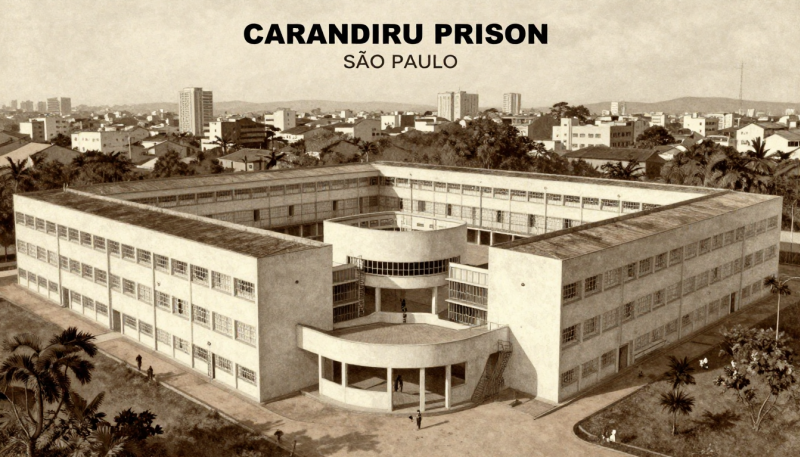
This statement requires clarification and a broader historical context. Carandiru - officially the São Paulo House of Detention - was not opened in 1920. The design of the complex indeed dates back to the first half of the 20th century, but the actual opening took place in 1956. The architect was Samuel das Neves - a representative of the generation of specialists who shaped Brazil's new penitentiary infrastructure.
To understand the concept of the prison, it is important to consider the atmosphere of the time. At the end of the 19th century, a new Criminal Code was adopted in Brazil (1890), reflecting the desire to modernize the punishment system after the fall of the monarchy and the proclamation of the republic. In the early 20th century, penitentiary policy in many countries was built around the idea of discipline, isolation, and “rational organization” of space. The prison was seen as a tool not only for isolation but also for rehabilitation.
Carandiru was designed within this logic. The complex consisted of several pavilions intended for the separation of prisoners by categories. The architectural structure provided for centralized control and relative autonomy of the blocks. By the standards of the mid-20th century, this was considered a progressive solution.
However, there was a gap of several decades between the project and reality. By the 1970s-1980s, the rise in crime in the metropolis of São Paulo and the chronic overload of the judicial system began to undermine the original model. The prison, designed for approximately 3,500-4,000 people, gradually began to accommodate twice as many inmates. The space, intended as a tool for order, turned into an environment of overcrowding.
And here manifests a typical paradox for many countries in the 20th century: an institution created within the framework of modernization optimism gradually begins to operate under conditions for which it was not designed. Carandiru was not conceived as a symbol of cruelty. On the contrary, at the time of its creation, it was perceived as a step forward. But the combination of demographic growth, urbanization, social inequality, and weak institutional control gradually transformed it into a space of systemic crisis.
It is this discrepancy between the original concept and later reality that helps to understand how a “model” prison of the mid-20th century became associated with one of the most tragic episodes in the history of the Brazilian penitentiary system a few decades later.

Scale of the institution
“At the peak of its development, it was the largest prison in South America, housing more than 8,000 inmates.”
This statement generally corresponds to the facts but requires clarification of the scale and dynamics. Carandiru was indeed considered the largest penitentiary complex in Latin America at its time. The designed capacity was around 3,500 - 4,000 people. However, by the end of the 1980s and especially in the early 1990s, the actual number of inmates consistently exceeded the calculated figures by almost double.
According to various estimates, at different times, the complex housed between 7,000 and more than 8,000 people, with some sources mentioning figures approaching 10,000. At the time of the events in October 1992, there were over 7,000 inmates in Carandiru. This means that the institution operated in a state of chronic overcrowding.
It is important to understand that this is not just about a “large prison.” The scale in this case had qualitative consequences. With such a number of people, control, medical care, food distribution, and sanitary support become significantly more complicated. Space designed for a certain population density begins to operate under different laws when the load is doubled.
Overcrowding in Carandiru was not a temporary glitch but a persistent state. It affected everything from living conditions to the balance of power between the administration and the inmates. The greater the gap between the designed model and the actual population, the weaker the institutional control becomes. In this sense, the scale of the institution became not only a statistical indicator but also a fundamental factor in the further escalation of violence.
Thus, the formulation about the “largest prison” reflects not so much a prestigious status as the scale of systemic overload, which gradually turned Carandiru into one of the most problematic penitentiary facilities in the region.
Testimonies of Drauzio Varella
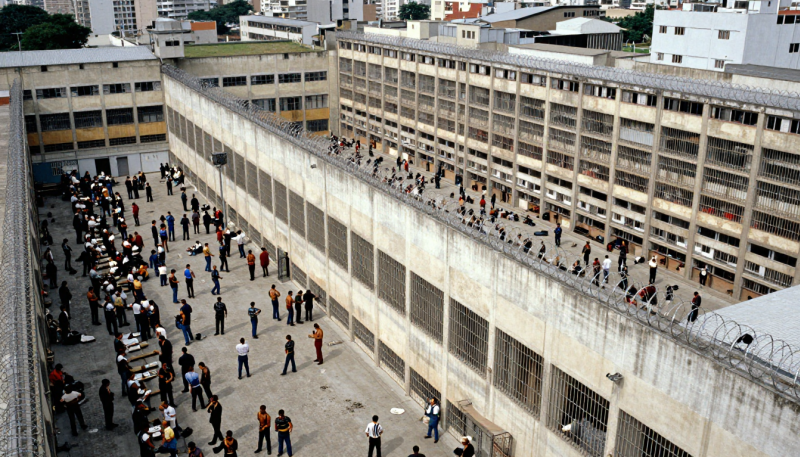
“Drauzio Varella voluntarily worked as a doctor in Carandiru…”
This is confirmed. Brazilian doctor and oncologist Drauzio Varella indeed worked in the prison since the late 1980s as part of the fight against the HIV/AIDS epidemic. His book “Estação Carandiru” became one of the most important documentary accounts of the internal life of the prison.
The uniqueness of the book lies in the fact that it is not a sensationalist piece of journalism, but a detailed observation by a doctor who interacted daily with the inmates. This is why much of the information about the scale of HIV infection, violence, and the internal hierarchy in the prison is based on his descriptions.

Medical situation and HIV epidemic
“Every fifth prisoner was HIV-infected”
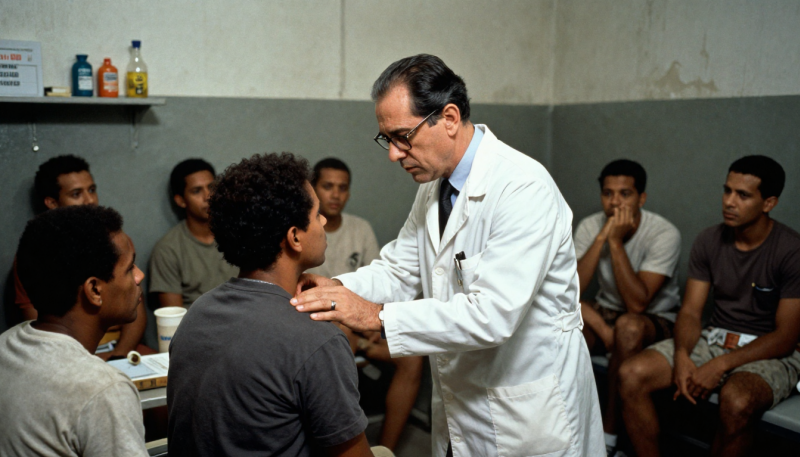
This statement sounds harsh, but it is based on real estimates from the early 1990s. According to the testimony of doctor Drauzio Varella and data from epidemiological studies of that period, the prevalence of HIV in Carandiru was indeed extremely high - significantly above the average in Brazil. Various sources cite estimates in the range of 15 - 20 percent among prisoners, which allows for the expression “every fifth” to be seen as an approximate but not arbitrary formula.
However, it is important to see the broader context. In the late 1980s and early 1990s, Brazil was experiencing a severe phase of the AIDS epidemic. The healthcare system was just beginning to develop large-scale antiretroviral therapy programs, and prevention in vulnerable populations was insufficient. Prisons, by their very structure, create conditions that exacerbate the spread of infection: overcrowding, lack of medical oversight, high levels of intra-prison violence, the spread of injectable drugs, and limited access to protective measures.
In Carandiru, these factors were compounded by chronic overcrowding. Cells designed for a few people often housed twice or three times as many prisoners. The medical service was objectively overwhelmed. Varella described a situation where the diagnosis, isolation, and systemic treatment of HIV-infected individuals were hindered not only by a lack of resources but also by organizational chaos.
At the same time, it is important to emphasize: Brazil later became one of the countries that implemented one of the most extensive state programs for the free provision of antiretroviral therapy. But in the early 1990s, this system was still being formed. Carandiru found itself at the intersection of two crises - penitentiary and epidemiological.
Staff-to-inmate ratio
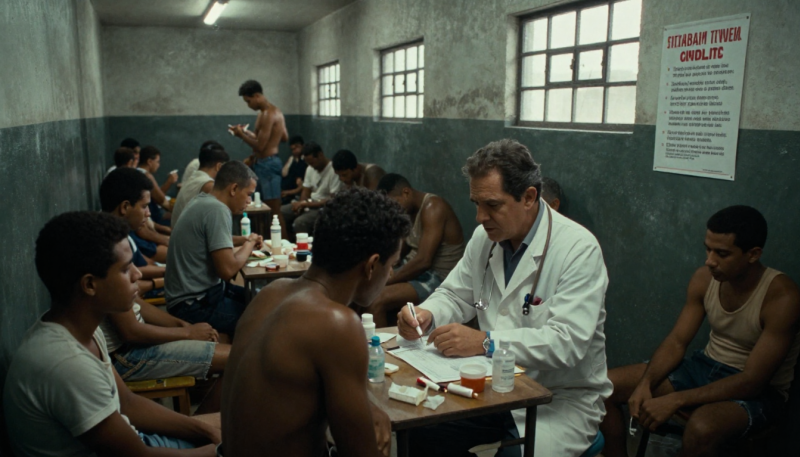
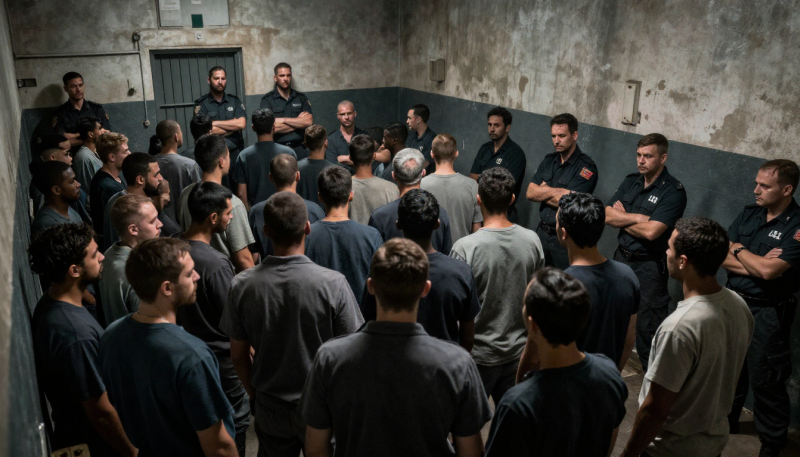
"7,500-10,000 inmates had less than 1,000 staff members..."
Even if the exact numbers changed, the key issue - the imbalance - was real. The shift work regime led to significantly fewer staff members being present in the blocks at the same time than what was needed to control such a large number of people.
In fact, in many facilities, the inmates themselves established the internal order. This does not mean the absence of state power, but it does mean the delegation of a significant portion of control to criminal hierarchies.
Violence and Internal Autonomy
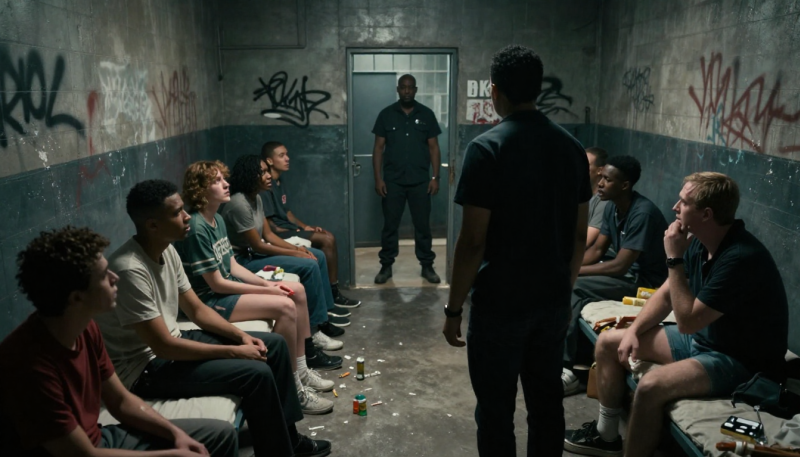
“Prisoners were left to their own devices… violence and drug addiction thrived”
This wording sounds generalized, but in the case of Carandiru, it reflects the reality described in research and testimonies. It is not about a complete absence of administration, but about a factual redistribution of power within an overcrowded institution. With a ratio of several thousand prisoners to a limited number of staff, state control inevitably became fragmented.
Within the prison, informal hierarchies formed. Prisoners allocated sleeping spaces, regulated everyday conflicts, established their own coexistence rules. In such conditions, a parallel system of governance arises - unofficial, but effective. It relies on the authority of leaders, on fear, on the ability to apply violence.
Drugs played a dual role in this structure. On one hand, they are a source of addiction and destruction. On the other hand, they are an element of the internal economy. Control over the distribution of prohibited substances became a tool of influence. Where the official administration could not maintain order, criminal self-regulation mechanisms filled the vacuum.
It is important to emphasize: such autonomization is not a unique feature of Carandiru. It is characteristic of many overcrowded prisons in Latin America at the end of the 20th century. The state maintains the external perimeter - walls, armed guards, formal procedures. But the internal daily life gradually comes under the control of the prisoners.
It is in such an environment that violence ceases to be an exception and becomes a tool for maintaining order. It does not necessarily take the form of constant mass confrontations. More often, it is a system of covert pressure, threats, and demonstrative punishments. Overcrowding intensifies this dynamic: the less space and resources, the higher the competition.
Causes of Rebellions
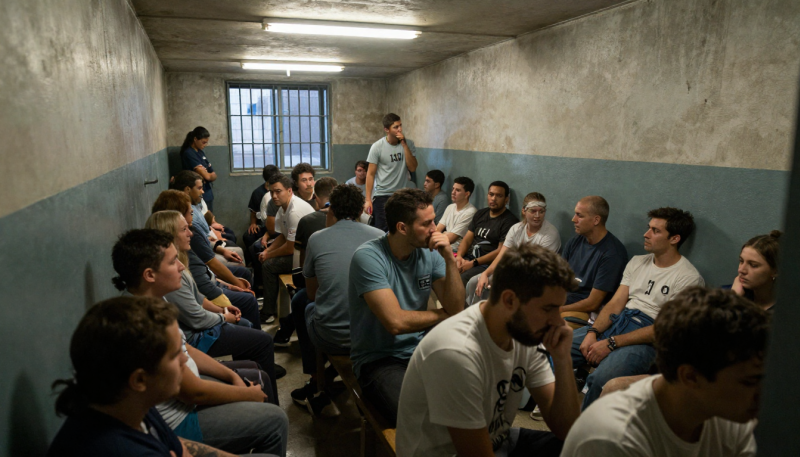
"The main motive for prison riots is overcrowding"
Overcrowding is indeed recognized as a key factor of instability. In the early 1990s, Brazil faced a rise in crime and mass arrests. The prison infrastructure could not keep up with the increasing number of inmates.
However, it would be an oversimplification to reduce everything to mere congestion. Important roles were played by: the lack of effective judicial oversight, delays in case processing, poor sanitary conditions, and the growing influence of criminal gangs.
Control of gangs inside prisons
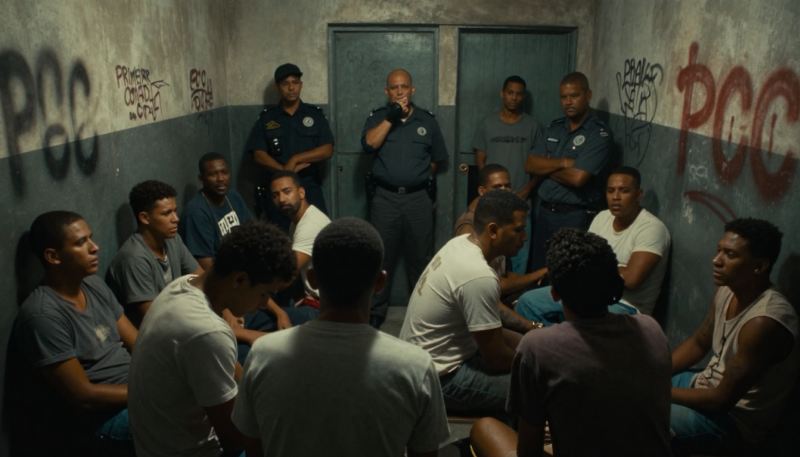
“Many prisons are effectively controlled by criminal groups”
This statement is not an exaggeration when considering the Brazilian penitentiary system of the 1990s as a whole. Carandiru did not exist in isolation - it was part of a broader environment where overcrowding, weak institutional control, and high criminalization of inmates created conditions for the formation of resilient criminal structures within prisons.
A particularly illustrative example is the organization Primeiro Comando da Capital (PCC), which emerged in 1993 in the state of São Paulo - shortly after the events at Carandiru. According to research by Brazilian sociologists and human rights organizations, the creation of PCC was a response from inmates to violence from the state and to a sense of complete vulnerability within the prison system. The organization positioned itself as a structure for mutual aid and collective defense of inmates' rights, but over time it transformed into a powerful criminal network operating both inside and outside of prisons.
It is important to emphasize: this is not about a formal transfer of power. The state maintained control over the perimeter, the conditions of confinement, and the armed guards. However, inside the prison blocks, the real everyday regulation of life - allocation of spaces, conflict resolution, control over prohibited items - increasingly depended on the influence of informal leaders and groups.
Systemic overcrowding intensified this dynamic. The more inmates there were and the weaker the administration's capacity for individual control, the higher the likelihood that management would be delegated to the "strongest" within the community. Over time, such structures began not only to maintain order but also to establish a hierarchy, a system of sanctions, and financial flows.
Prison violence and institutional weakness not only created chaos but also contributed to the formation of more organized criminal associations. Paradoxically, it was precisely in conditions of insufficient state control within the prison walls that structures emerged which subsequently strengthened the influence of organized crime beyond the penitentiary system.
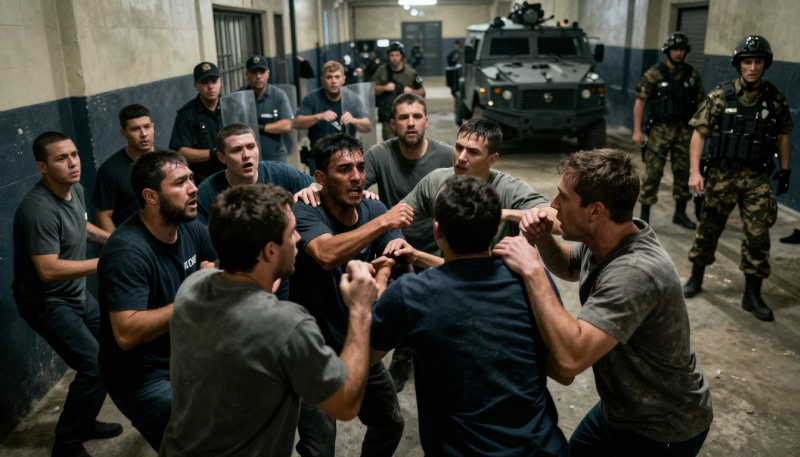
Revolt of October 2, 1992
"The riot began after a fight between two inmates..."
According to official data, the conflict indeed started with a fight in one of the pavilions. The situation escalated into a mass disturbance, after which the governor of São Paulo state authorized the deployment of military police.
This is an important point: it was not about an armed uprising against the state, but rather an internal conflict that the authorities decided to suppress by force.
Number of casualties
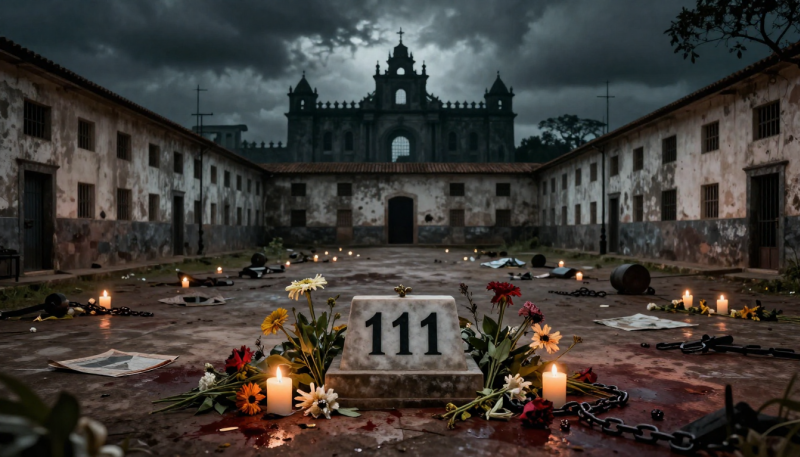
"On that day, 111 inmates died..."
The figure of 111 is confirmed by official investigations. This is one of the largest mass killings of prisoners in the history of Brazil. The court proceedings in the case lasted more than two decades.
Medical examinations established that most of the deceased suffered gunshot wounds, many to the head and back. This gave rise to accusations of executions without trial.
No casualties among the police
"None of the security personnel were killed or injured"
According to official data, there were indeed no fatalities among the police. This has intensified public doubts about the necessity of such a large-scale use of force.
If the operation lasts nearly 3 hours, involves more than 300 employees, and there are casualties only on one side, it naturally raises questions about the proportionality of the use of force.
Court proceedings
After the events of October 2, 1992, the Karandiru case did not conclude with the assault. On the contrary, a long and controversial judicial history began, stretching over more than two decades. This protraction significantly influenced public perception of the tragedy.
The first real judicial developments occurred only many years later. In 2013-2014, a jury in São Paulo found dozens of military police officers guilty for their involvement in the operation. Various groups of police officers were sentenced to lengthy prison terms—ranging from dozens to hundreds of years collectively—depending on the number of murder incidents attributed to each defendant.
However, the process did not end there. In 2016, the São Paulo Court of Appeals overturned the guilty verdicts, citing procedural issues and defense arguments that the police actions allegedly took place under conditions of quelling a riot. This decision sparked a new wave of public discussion and criticism from human rights organizations.
In the following years, the case was reviewed again. In 2021, the Brazilian Federal Supreme Court confirmed the possibility of holding individuals accountable for the events of 1992, effectively restoring the guilty verdicts. Thus, nearly thirty years after the tragedy, the judicial assessment of the actions of the security forces continued to be a subject of disputes and legal collisions.
This protracted process became an indicator of several problems. Firstly, the complexities of the Brazilian judicial system, where appellate mechanisms allow for years of revisiting high-profile cases. Secondly, the political sensitivity of the issue of state use of force. Karandiru not only became a symbol of the prison crisis but also a test of the legal system's ability to provide a definitive and sustainable assessment of the actions of law enforcement agencies.
It is precisely the duration and controversy of the judicial decisions that intensified the feeling that the tragedy of 1992 became not just an episode of violence but also a long-term test for the principle of the rule of law in Brazil.

Closure and demolition
"10 years later, the prison was closed and demolished"
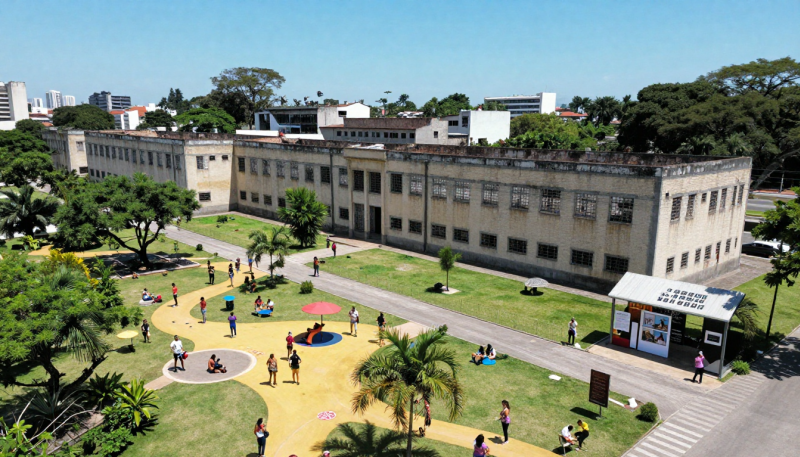
Carandiru was finally closed in 2002. Most of the complex was demolished, and a Youth Park was created on the site in São Paulo. Part of the memory of the prison is preserved in museum and cultural projects.
The closure became a symbolic gesture - an attempt to sever ties with a tragic past. However, the problems of the Brazilian penitentiary system did not disappear.
What is the conclusion: truth, myth, or unproven?
Most key statements about Carandiru are based on factual evidence:
-
Overcrowding - true.
-
High level of HIV - true.
-
111 dead in 1992 - officially confirmed.
-
No casualties among police - confirmed.
-
Extreme brutality of the suppression - supported by investigations and court documents.
-
Estação Carandiru - Drauzio Varella - 1999
-
Massacre do Carandiru - Inter-American Commission on Human Rights
-
Reports on the Brazilian penitentiary system - Human Rights Watch - 1990s
-
World Prison Brief - Institute for Crime & Justice Policy Research - data from the 1990s and 2000s
-
Court rulings on the Carandiru case - São Paulo Court of Justice - 2010s
You might like

The Fastest Production Cars in the World
The permissible speed for driving on federal highways generally does not exceed the mark of 110 km/h. However, there are cars that are capable of...

Crazy car stunts that are hard to believe!
In this video, a truck with a trailer will jump 25 meters; you will see how the Nürburgring is driven on two wheels; we will show a loop-the-loop in a car and many ...

Is it true that Putin has 50,000 bodyguards? Who really protects world leaders?
The conversation about the personal protection of world leaders is almost always accompanied by strong exaggerations. In popular culture, bodyguards are perceived as ...

How North Korea Really Works: 11 Popular Misconceptions
North Korea has long become an object of mythologization. Some see it as an exotic archaic regime, others as almost a dystopia from a textbook on total...

10 unusual professions that turned out to be not so unusual after all
In almost every popular video about unusual professions, viewers are invited to be amazed: here are people milking snakes, hiring huggers, or staging kidnappings...