
How North Korea Really Works: 11 Popular Misconceptions
North Korea has long become an object of mythologization. Some see it as an exotic archaic regime, while others view it as almost a dystopia from a textbook on totalitarianism. There is indeed little information, and a significant portion of the data comes through defectors, human rights reports, or the official propaganda of the DPRK itself. As a result, a dense layer of assertions has formed around the country, which have been repeated for years - from "the punishment of three generations" to stories about legal marijuana and the mandatory rescue of the leader's portrait in case of a fire.
The problem is that different levels of facts are mixed: documented practices, expert assessments, rumors, interpretations, and outright legends. To understand the DPRK regime, it is important to separate the structural features of the system from sensational details. Below, I will analyze several key assertions from common descriptions of the country and check what is confirmed by research and what requires caution.
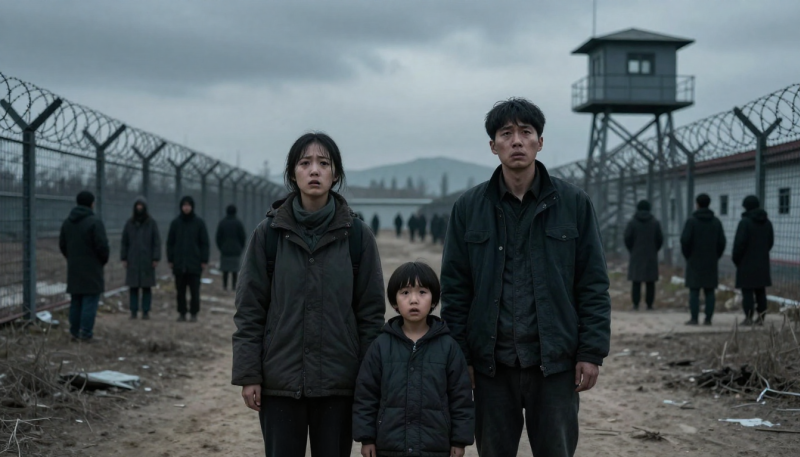
Myth #1. In North Korea, there is an automatic "three generations of punishment" system, under which the entire family of a criminal is inevitably sent to a camp.
The thesis of collective responsibility of the family is widely accepted and appears in the testimonies of former prisoners. In particular, in the book "Escape from Camp 14," Shin Dong-hyuk describes the kwanliso camp system, where relatives of those accused of political crimes could be held. The UN Commission of Inquiry on Human Rights in North Korea also documented cases of collective punishment in 2014.
However, the formula "automatically sends the entire family and two subsequent generations" simplifies the picture. Researchers, including Andrei Lankov, point out that the practice of collective responsibility was primarily applied to political crimes and depended on the category of accusation and the social status of the family. This is not a universal and mechanical algorithm, but a tool of intimidation embedded in the control system.
The existence of political camps and collective repression is confirmed by numerous testimonies. But the notion that any violation automatically leads to life imprisonment for three generations is an oversimplified formula that does not reflect the complexity and variability of repressive practices.

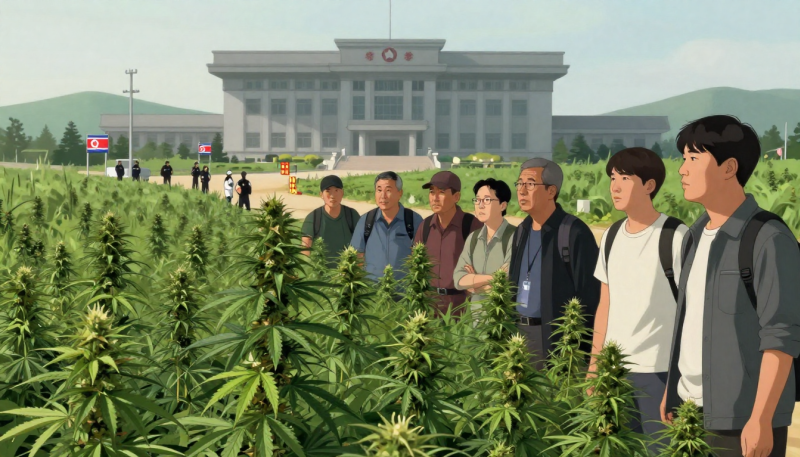
Myth #2. Marijuana and opium are completely legal and encouraged by the government.
The statement about legal marijuana regularly circulates on the internet. It is based on observations by foreigners who have seen wild-growing hemp and the absence of explicit prohibitions in public rhetoric.
In practice, the situation is different. Formally, the DPRK has joined international UN conventions on drug control. Research and reports indicate that at various times, state structures were indeed involved in the production and export of drugs - primarily to obtain foreign currency in the 1970s-1990s. This concerns organized production, not free domestic consumption.
As for everyday use, the data is contradictory. Domestic legislation is closed, but defectors and specialists note that drugs are viewed as a social problem, especially in border areas with China. The idea that "the Ministry of Health recommends marijuana as a healthy alternative to tobacco" is not supported by academic sources.
Here, the effect of exoticization is at work: from individual observations, a conclusion is drawn about complete legalization. There is no reliable confirmation of such a policy.
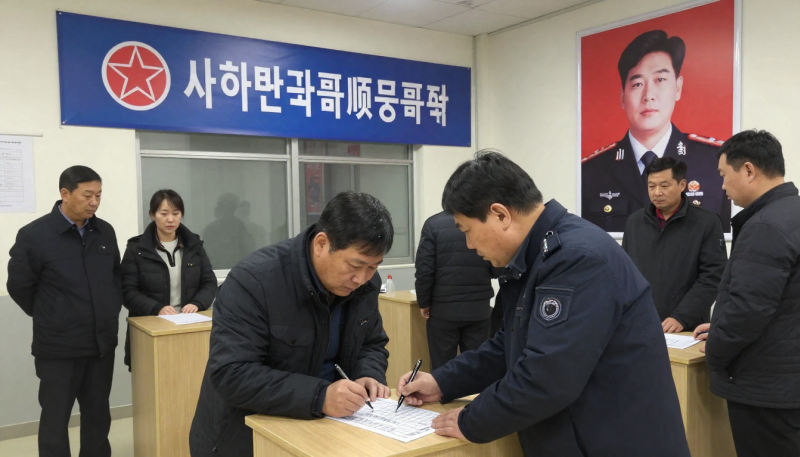
Myth #3. In North Korea, there is one candidate in the elections, but citizens can formally vote against.
Formally, this statement is correct. The Constitution of the DPRK guarantees electoral rights, and elections to the Supreme People's Assembly are held regularly. The ballot indeed lists one candidate from the United Democratic Front.
Theoretically, a voter can cross out the candidate's name and vote against. Practically, the procedure is organized in such a way that voting against requires a separate action in conditions of complete transparency for observers. According to defectors and researchers, voter turnout is close to 100 percent, and the official support for candidates consistently exceeds 99 percent.
This is an example of institutional imitation. Formal procedures exist, but political competition is absent. There is no myth in the literal sense—there is a formally correct description that, without context, can create the illusion of a real choice.

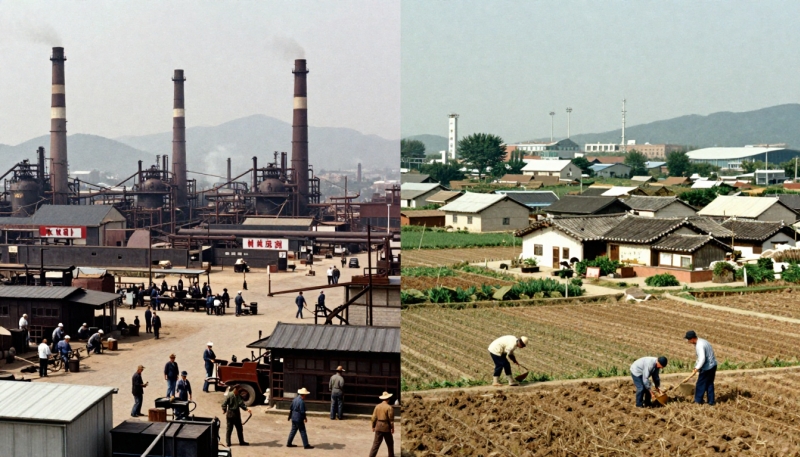
Myth #4. North Korea's economy was once stronger than South Korea's.
In the 1950s-1960s, the industrial base in the north of the peninsula was indeed more developed - a legacy of Japanese colonial industrialization. South Korea at that time remained predominantly agrarian.
According to estimates by economic historians, until the early 1970s, GDP per capita in the North was comparable to or higher than in the South. A turning point occurred in the 1970s when South Korea's export-oriented development model, supported by the USA and global markets, began to yield rapid growth.
By the 2010s, the gap had become colossal. South Korea became one of the developed economies, while North Korea experienced a severe crisis in the 1990s after the collapse of the USSR and a reduction in external support. Thus, the thesis of a "stronger economy until the 1970s" is generally confirmed but requires time frames and clarifications.
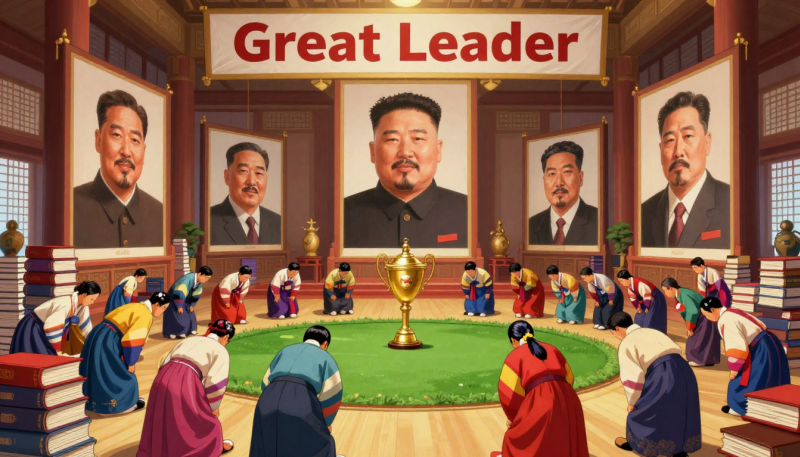
Myth №5. The cult of personality in North Korea is entirely based on absurd biographical legends.
Stories that Kim Jong Il wrote thousands of books or made dozens of holes in one stroke do indeed appear in official North Korean propaganda. State media published biographies with elements of heroization, which appear caricatured to an external observer.
However, reducing the cult of personality solely to anecdotal details means missing its function. The cult is embedded in the ideology of Juche and in the structure of power legitimization. It supports the continuity of the Kim dynasty and creates a sacralized image of the leader as the guarantor of the country's independence.
It is important to understand that such elements are characteristic of many personalist regimes of the 20th century. In North Korea, they are combined with institutional hereditary power transfer, which allows some researchers to speak of a "quasi-monarchical" model under a formally republican constitution.
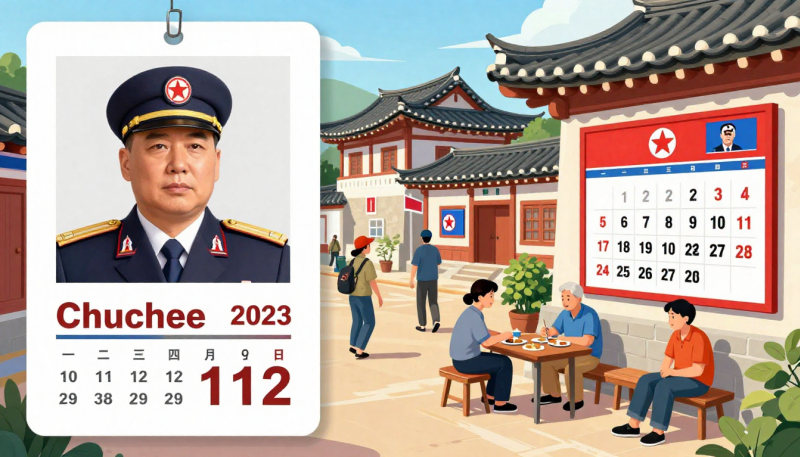
Myth #6. North Korea has a separate calendar system that completely breaks the connection with the world calendar.
It is often heard that "in North Korea it is not the year 2023, but the 111th" or some other number, because the country has supposedly completely abandoned the Gregorian calendar. In reality, since 1997, the country has been using the Juche calendar system, which counts years from 1912 - the year of Kim Il-sung's birth.
However, in practice, this system is used alongside the commonly accepted dating. In official documents and publications, both dates are often indicated - for example, "the year 2023, Juche 112." In international contacts, the standard calendar is used. This is a symbolic gesture emphasizing ideological independence, but not isolation in time.
The myth of the "complete abolition of the world calendar" is an example of a literal interpretation of a propaganda symbol.
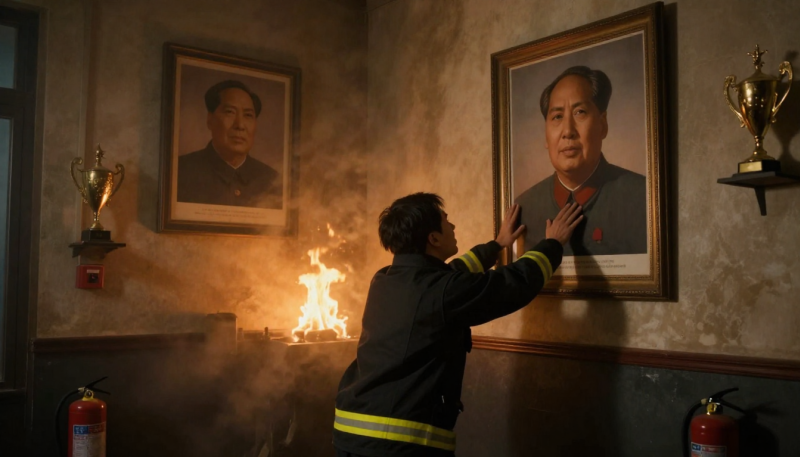
Myth #7. All citizens are required to save portraits of leaders during a fire under the threat of punishment.
The story that during a fire one must first save the portrait of Kim and only then take care of oneself is actively circulating in the media. Its roots lie in the real system of mandatory placement of leaders' portraits in living spaces and in the cult of respect for symbols of power.
Testimonies from defectors confirm that damage to portraits could lead to sanctions. In schools and institutions, there are rituals for caring for images of leaders. However, the claim of a formalized instruction of "second priority after oneself" is not supported by official documents.
This is an important distinction. The cult is indeed institutionalized, statues and monuments are protected, and disrespect can be interpreted as a political violation. But the formula about a clear order of rescue during a fire is more of a media hyperbole than a legal norm.
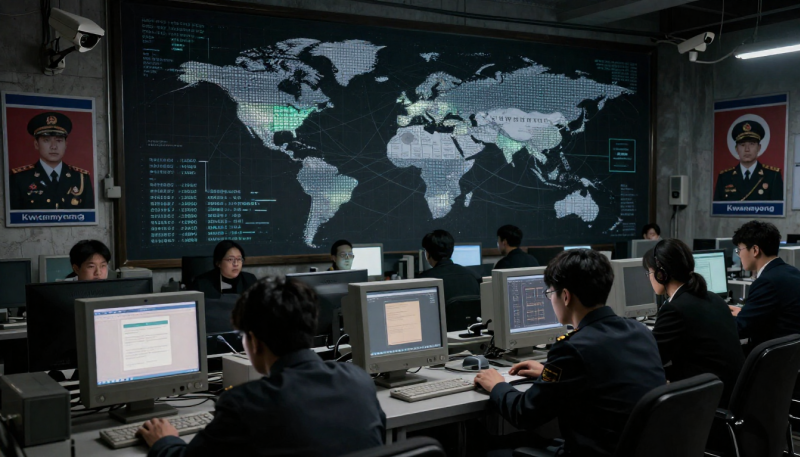
Myth #8. There is almost no internet in North Korea - literally only a few hundred users.
The number "605 users" is often cited as evidence of the country's digital isolation. The source of this figure is unclear, and it is not supported by contemporary research.
The real picture is more complex. In North Korea, there exists a closed internal network called "Kwangmyong," which is not connected to the global internet. Access to the international network is strictly limited and is mainly provided to state institutions, research organizations, and select universities.
According to estimates by researchers and cybersecurity experts, the number of people with real access to the global internet is in the thousands, not the hundreds. At the same time, the level of digital control is extremely high. The isolation of the digital environment is a fact, but the specific figure of "605" is an outdated and poorly verified estimate.
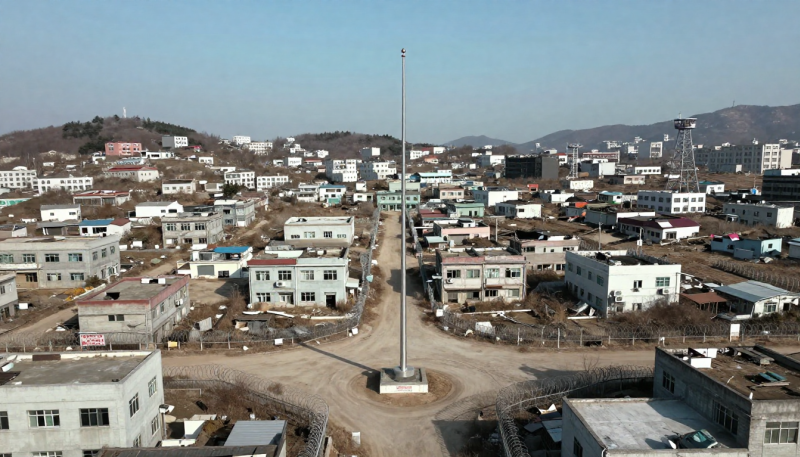
Myth №9. The city of Kijon-don is a completely fake set without inhabitants.
The Kijong-dong settlement in the demilitarized zone was indeed built as a showcase. South Korean observers in the 1960s-1970s claimed that the buildings looked like empty shells.
Modern studies and satellite images show that some of the buildings were indeed used to a limited extent, and the infrastructure had a demonstrative character. The city is home to one of the tallest flagpoles in the world - this is a confirmed fact.
However, the notion of a completely "cardboard city without windows and interiors" is an oversimplification. It is a propaganda object, but not a theatrical set in the literal sense. Its function is symbolic rivalry with the South, rather than the creation of a full-fledged urban space.
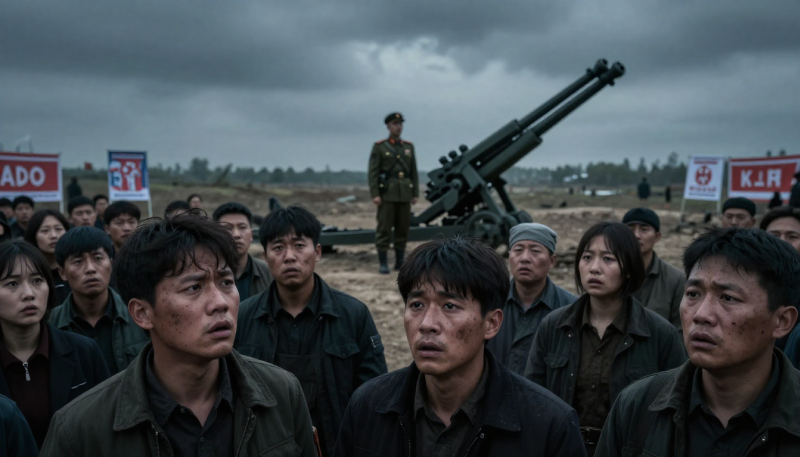
Myth #10. In North Korea, executions by mortar are a common practice.
Stories about executions from anti-aircraft installations or mortars regularly appear in South Korean media. Some reports have concerned high-ranking officials.
The problem is that a significant portion of such news later either goes unconfirmed or is corrected. South Korean intelligence has repeatedly acknowledged mistakes in initial reports about executions. This does not mean that capital punishment is not applied - human rights organizations document its existence. However, turning individual cases into "common practice" is a media exaggeration.
The regime does indeed use public executions as a tool of intimidation; however, sensational details often turn out to be part of the information war between the North and the South.
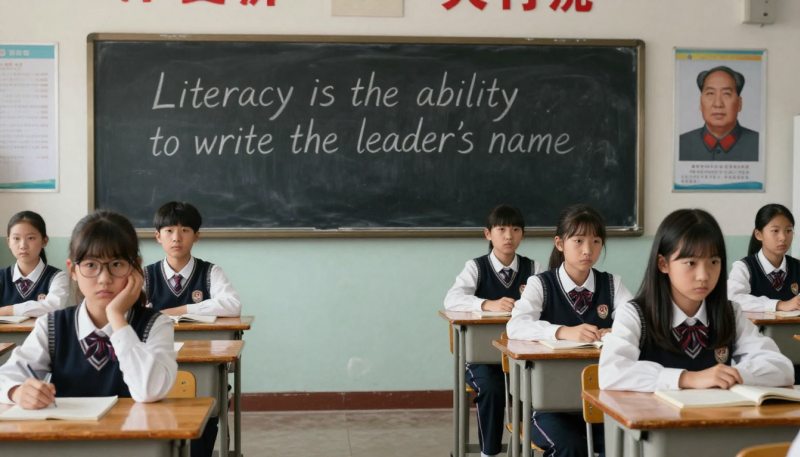
Myth №11. Literacy is determined by the ability to write the name Kim Jong Il.
The statement that "literacy is the ability to write the name of the leader" appears to be a sarcastic comment on the official statistics of 99 percent literacy.
The education system of North Korea includes 11-12 years of compulsory education. Research by defectors and comparative analyses indicate that basic literacy is indeed widespread. During the Soviet period, North Korea achieved nearly complete eradication of illiteracy.
This does not negate the ideological nature of the curricula and the strict censorship of content. However, the claim of fictitious literacy is not supported by empirical data. Here we encounter typical logic: distrust in official statistics evolves into the denial of any indicator.
Sources
In most common stories about North Korea, there is a grain of reality, but it almost always becomes embellished with simplifications. Political camps exist, but the mechanics of repression are more complex than the formula "three generations automatically." Elections take place, but without real competition. Economic backwardness is evident, but historical dynamics cannot be reduced to constant stagnation. The cult of personality is real, but it serves a systemic function, not just a propaganda one.
If the task is to understand the structure of the regime, sensational details help attract attention but do not replace analysis. Without context, they turn a complex political system into a set of frightening facts.
- UN Human Rights Council. Report of the Commission of Inquiry on Human Rights in the Democratic People's Republic of Korea. 2014.
- Lankov, Andrei. The Real North Korea: Life and Politics in the Failed Stalinist Utopia. Oxford University Press, 2013.
- Myers, B.R. The Cleanest Race: How North Koreans See Themselves and Why It Matters. Melville House, 2010.
- Smith, Hazel. North Korea: Markets and Military Rule. Cambridge University Press, 2015.
- Armstrong, Charles K. The North Korean Revolution, 1945-1950. Cornell University Press, 2003.
You might like

The Fastest Production Cars in the World
The permissible speed for driving on federal highways generally does not exceed the mark of 110 km/h. However, there are cars that are capable of...

Crazy car stunts that are hard to believe!
In this video, a truck with a trailer will jump 25 meters; you will see how the Nürburgring is driven on two wheels; we will show a loop-the-loop in a car and many ...
Is it true that Putin has 50,000 bodyguards? Who really protects world leaders?
The conversation about the personal protection of world leaders is almost always accompanied by strong exaggerations. In popular culture, bodyguards are perceived as ...
10 unusual professions that turned out to be not so unusual after all
In almost every popular video about unusual professions, viewers are invited to be amazed: here are people milking snakes, hiring huggers, or staging kidnappings...
Carandiru: How Brazil's Largest Prison Became a Symbol of Systemic Violence
Prisons are rarely associated with humanism. But sometimes in the public consciousness, an image of the "most terrible prison in the world" emerges - a place where punishment prev...