
10 Billion People: Will the Earth be Overpopulated?
The issue of overpopulation has sounded like a prediction of disaster for more than a century. At the end of the 2nd century, Tertullian wrote that the Earth could barely support people - at that time, about 300 million people lived on the planet. In 1804, humanity reached its first billion. By 1960, it was already three billion. In 2022, the population exceeded 8 billion. Against this backdrop, it is natural to feel a sense of exponential acceleration and loss of control.
But feeling is not equal to diagnosis. Demographic processes are governed by measurable patterns, and over the last 70 years, they have changed radically. To understand whether we are truly facing a disaster due to overpopulation, it is necessary to separate emotional scenarios from verifiable facts. In this text, I will analyze the key theses from the original material and formulate them as specific myths that can be tested with statistics, research, and historical experience.
Myth #1. The Earth's population continues to grow at accelerating rates and will spiral out of control.
The video creates the impression that population growth is accelerating and may continue to speed up indefinitely. However, the demographic dynamics of recent decades tell a different story.
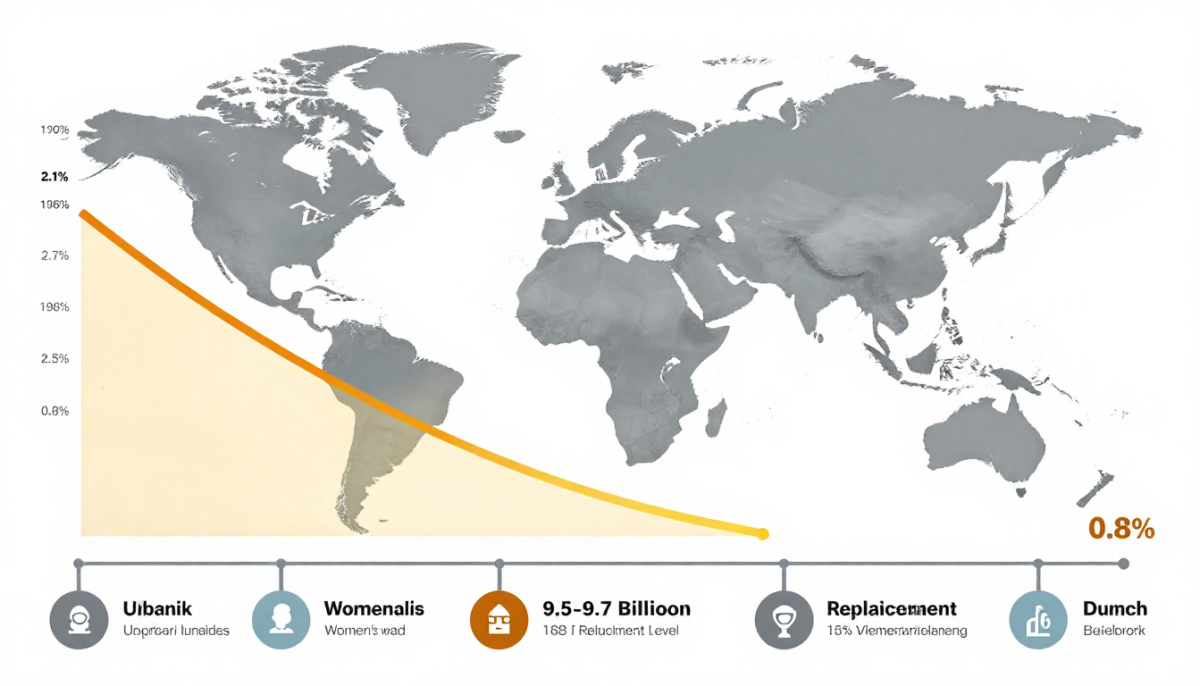
The peak growth rate was reached over half a century ago. In the 1960s, global growth was about 2.1 percent per year. Today, it has decreased to approximately 0.8 percent. This is not acceleration, but a steady slowdown.
UN forecasts indicate that by the middle of the century, the population may reach 9.5-9.7 billion and then stabilize or begin to decline. A 2020 study in The Lancet suggests a peak of around 9.7 billion in 2064, followed by a decrease by 2100. This is not about infinite exponential growth, but rather a phase of demographic transition - a decline in birth rates following urbanization, women's education, and access to contraception.
It is also important to note that today more than half of the countries in the world have a fertility rate below the replacement level. The problem of the 21st century in developed regions is not a population explosion, but aging and decline.
Thus, the assertion of uncontrolled acceleration of demographic growth does not align with current data.
Myth #2. With 9-10 billion people, global hunger is inevitable.
The thesis often arises that to feed 9-10 billion people, food production needs to be increased by 60 percent, which is supposedly impossible. This argument requires clarification.
Yes, FAO indeed points to the need for production growth relative to the levels at the beginning of the 21st century. However, the global food problem today is not so much about absolute scarcity as it is about distribution, losses, and inequality of access.
According to FAO estimates, about one-third of the food produced is lost or wasted each year. At the same time, a significant portion of grain is used for animal feed or biofuel production. The dietary model, especially in developed countries, significantly impacts the burden on the system.
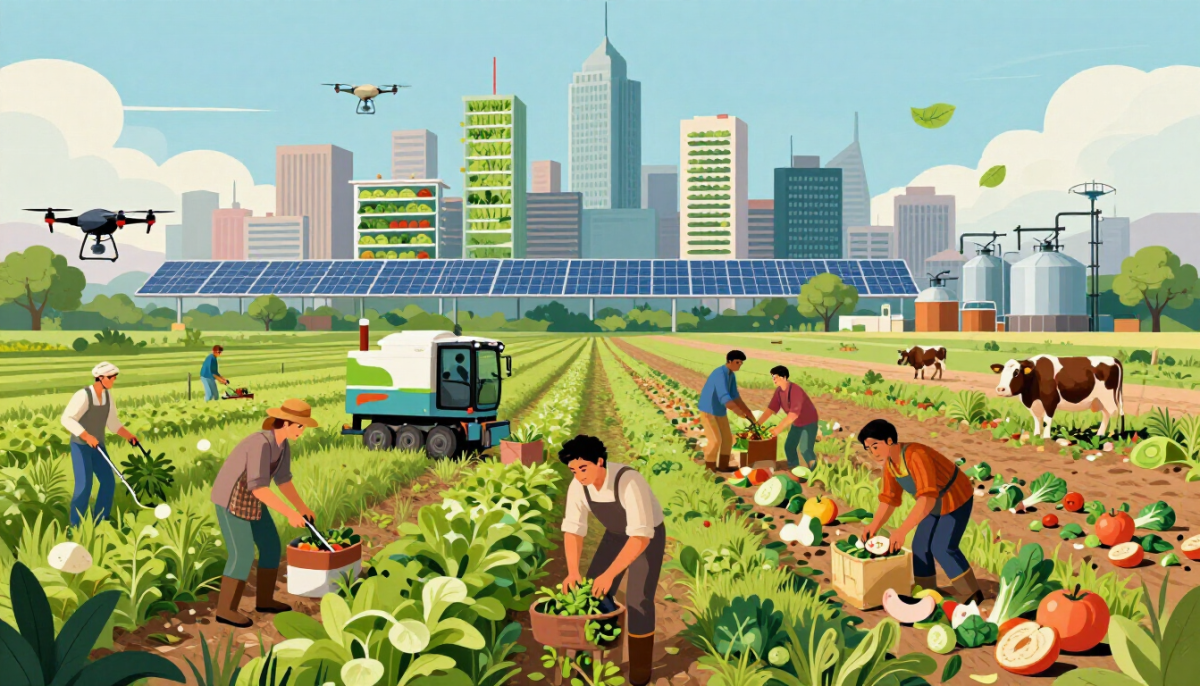
The Green Revolution of the second half of the 20th century demonstrated that technological leaps can exponentially increase yields. Today, precision agriculture, genetic technologies, vertical farms, and alternative protein sources are being developed. This does not guarantee an automatic solution but demonstrates that there is no direct link between "more people - inevitable hunger."
The risks of food instability are real, especially in vulnerable regions, but they depend on policy, infrastructure, and climate as much as on population size.
Myth #3. Overpopulation automatically leads to epidemics and wars.
High population density does indeed facilitate the spread of infections. The history of cities confirms this. However, the epidemics of recent decades present a more complex picture.
Ebola outbreaks occurred in regions with low population density. COVID-19 spread more rapidly in megacities, but control depended on the quality of healthcare and management decisions. South Korea and Japan, among the most densely populated countries, demonstrated more effective control compared to less densely populated regions.
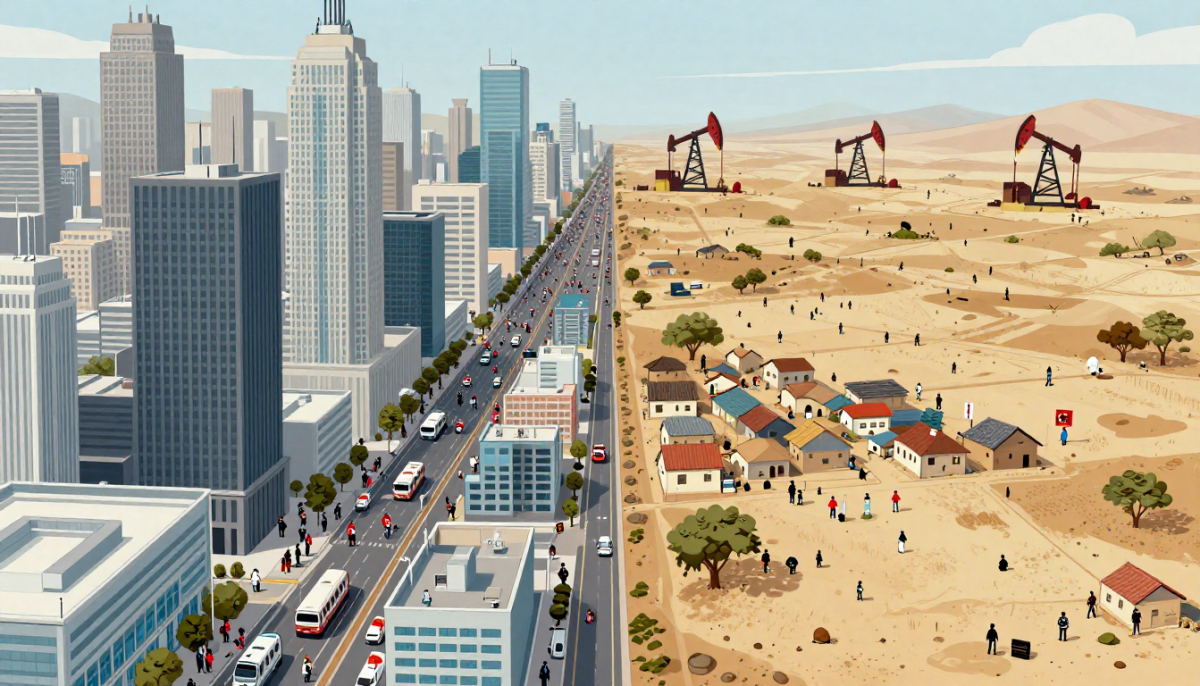
As for resource wars, studies by political scientists show that armed conflicts more often correlate with weak institutions, economic inequality, and political instability, rather than simply with population size. The example of the Gulf countries shows that even in arid regions, with the presence of desalination technologies and investments, water scarcity does not necessarily lead to war.
The relationship between population size and violence is mediated by multiple factors and is not automatic.
Myth #4. Overpopulation is a global problem for all countries without exception.
The original text rightly notes that in a number of countries in Europe and North America, birth rates are declining. This is not a minor detail, but a central demographic fact of the 21st century.
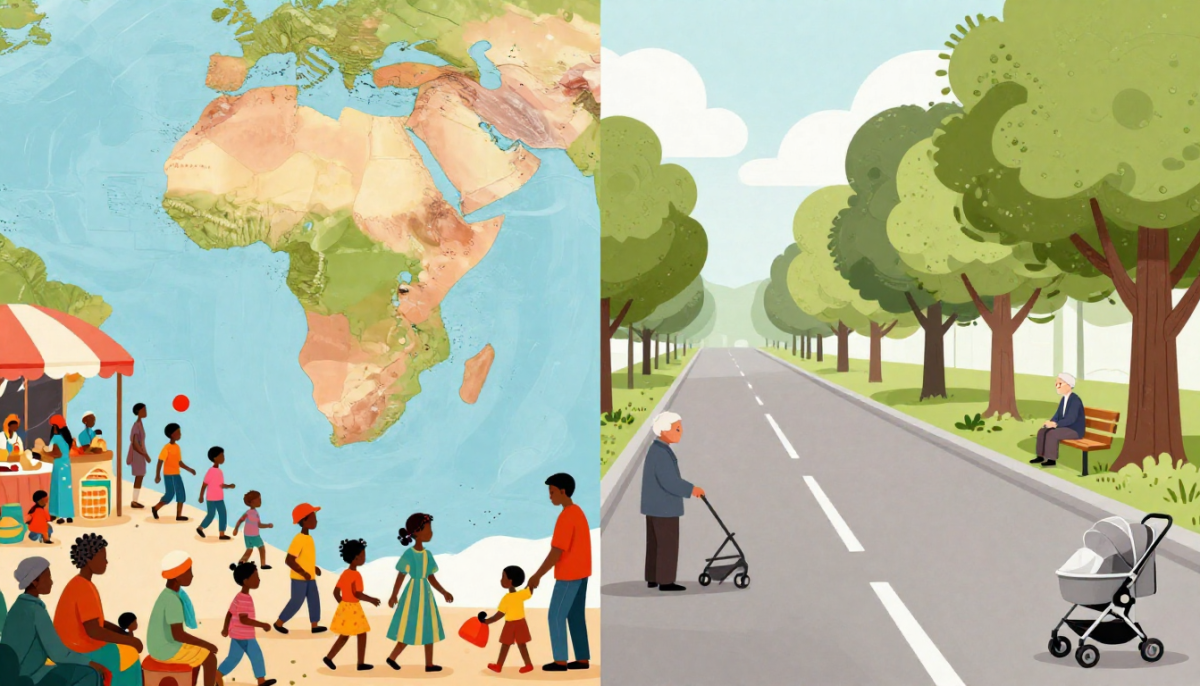
The fastest population growth today is concentrated in countries south of the Sahara. At the same time, Japan, South Korea, Italy, and Germany are facing population decline and aging. China, after decades of a one-child policy, is now encouraging births, fearing a demographic downturn.
This means that "overpopulation" is not a universal condition of the planet. We are witnessing demographic asymmetry - some regions are growing, while others are shrinking. The global picture is made up of divergent processes.
To speak of a single global problem without considering this heterogeneity means simplifying reality.
Myth #5. The Earth is physically unable to sustain more than 10 billion people.
This thesis is often presented as an obvious limit - as if the planet has a fixed "capacity," beyond which inevitable collapse begins. However, in science, there is no single figure for the maximum population size. Estimates range from 8 to 20 billion and beyond, depending on the level of technology, consumption patterns, and resource distribution models.
It is noteworthy that over the past 60 years, global food production has grown faster than the population. According to FAO data, global calorie availability per capita has increased since the 1960s, despite the population more than doubling. This does not mean the absence of hunger, but it shows that the physical limit of production has not yet been reached.
The key factor is not so much the number of people, but the consumption model. The average resident of developed countries consumes several times more resources and energy than a resident of the poorest regions. If the entire world shifts to a resource-intensive high-consumption model, the burden will become critical even with the current population. However, if technologies and behaviors change, 10 billion is not automatically an unattainable limit.

Myth #6. Overpopulation is the main cause of the climate crisis.
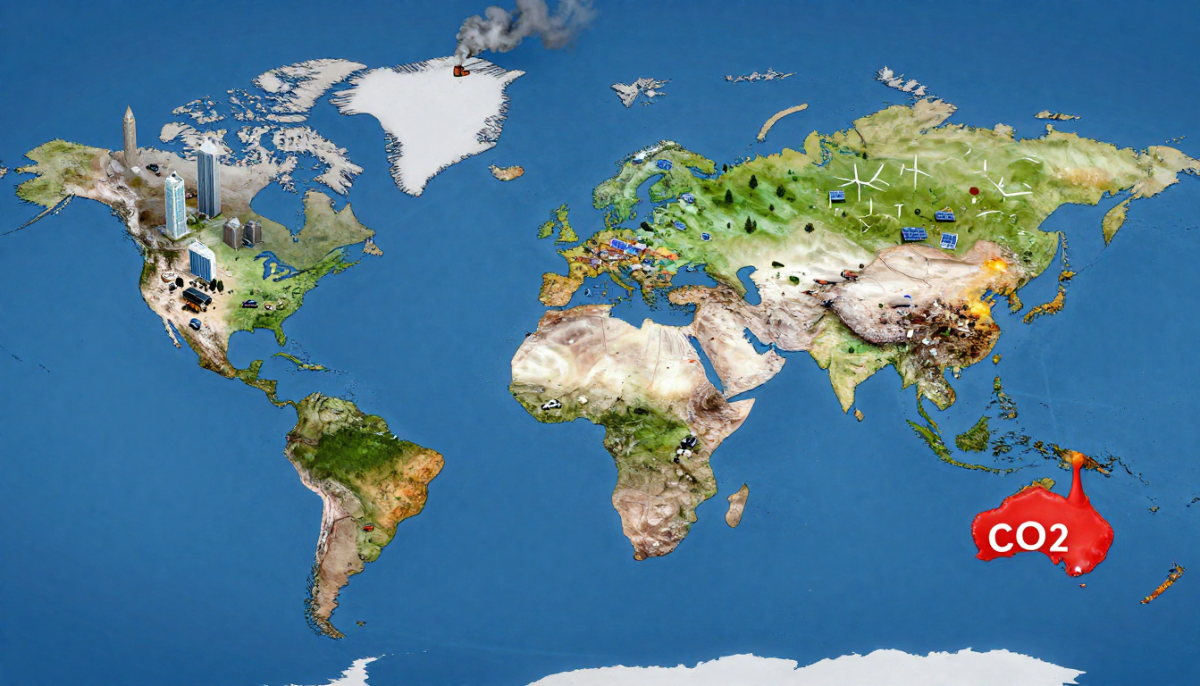
Population growth does indeed increase the total volume of emissions. However, the distribution of these emissions is extremely uneven. According to international climate research, the richest 10 percent of people on the planet are responsible for about half of global CO2 emissions.
This means that the ecological footprint is primarily determined by the level of consumption and the energy structure of the economy, rather than just the number of people. A country with a moderate population and coal-based energy can produce more emissions than a more densely populated country with developed nuclear or renewable generation.
The historical contribution to accumulated emissions is also concentrated in industrialized countries. Therefore, reducing the climate crisis solely to demographic growth means ignoring structural economic factors and differences in living standards.
Myth #7. Urbanization inevitably destroys the quality of life with population growth.
Intuitively, it seems that the more people concentrate in cities, the worse the conditions become. However, empirical data shows a more complex picture.
Cities, when managed wisely, can be more environmentally efficient than rural dispersed areas. Dense construction reduces transportation costs, makes public transport profitable, and simplifies access to education and healthcare.
Metropolises face challenges - infrastructure overload, rising housing prices, social inequality. But the experiences of Singapore, Tokyo, or Seoul demonstrate that high population density does not equate to degradation. Investments in planning, transportation, and utility systems are critical.
The problem is not in the number of urban residents per se, but in the pace and quality of urban management.

Myth #8. The only way to stop overpopulation is through strict birth control measures.
The example of the one-child policy in China is often cited as evidence of the need for radical measures. Indeed, administrative restrictions accelerated the decline in birth rates. However, China is already facing accelerated population aging, a shrinking working-age population, and the necessity to encourage the birth of a second and third child.
Historically, the most sustainable decline in birth rates has occurred without coercion - through the increase in women's education, urbanization, access to contraception, and rising incomes. In most European countries and East Asia, the birth rate has fallen below the replacement level without repressive measures.
This indicates that demographic transition is a structural social process, not just a result of directive policy.

Myth No. 9. In 100 years, humanity will be on the brink of extinction due to overpopulation.
Forecasts for a century ahead inevitably have a probabilistic nature. However, none of the leading demographic models suggest the extinction of humanity due to population size as such.
The risks are associated with climate, ecosystem degradation, water stress, and inequality. But scenarios of global collapse require a simultaneous failure of technological adaptation, international cooperation, and economic transformation.
The history of the last two centuries shows that demographic forecasts often turn out to be too linear. In the early 20th century, endless population growth in Europe was expected; today it is declining. In the 1970s, global famine by the year 2000 was widely discussed - this did not happen, although regional crises persisted.
This is not a reason for complacency, but neither is it a basis for deterministic extinction scenarios.
Sources
The issue of overpopulation cannot be reduced to a simple catastrophe scenario. Growth rates are already slowing down, food risks are related to distribution and technologies, epidemics and conflicts are determined by the quality of institutions, and the demographic situation varies radically across regions. Humanity is indeed increasing the burden on ecosystems, but population size is just one of the factors.
The problem requires rational resource management and social policy, rather than waiting for an inevitable collapse.
- United Nations, World Population Prospects 2022 Revision
- Vollset S.E. et al. Fertility, mortality, migration, and population scenarios for 195 countries and territories from 2017 to 2100. The Lancet, 2020
- Food and Agriculture Organization of the United Nations. The State of Food Security and Nutrition in the World 2022
- Food and Agriculture Organization of the United Nations. Global Food Losses and Food Waste, 2011
- Our World in Data. Population growth and demographic transition datasets
- Our World in Data. CO2 and Greenhouse Gas Emissions Dataset

You might like

How North Korea Really Works: 11 Popular Misconceptions
North Korea has long become an object of mythologization. Some see it as an exotic archaic regime, others as almost a dystopia from a textbook on total...

10 unusual professions that turned out to be not so unusual after all
In almost every popular video about unusual professions, viewers are invited to be amazed: here are people milking snakes, hiring huggers, or staging kidnappings...

Carandiru: How Brazil's Largest Prison Became a Symbol of Systemic Violence
Prisons are rarely associated with humanism. But sometimes in the public consciousness, an image of the "most terrible prison in the world" emerges - a place where punishment prev...

Japan without rose-colored glasses: 8 myths that distort the perception of the country
When we talk about Japan, a set of stable images almost automatically arises in our imagination: anime, sushi, extreme politeness, technological advancement, hard work...

Behind the walls of the toughest prisons: between reality and fiction
The topic of "the most terrifying prisons in the world" invariably evokes a strong emotional reaction. Descriptions of isolation, violence, torture, and the complete loss of human dignity...