
Become a pilot in a couple of months? 10 myths about aviation training
The topic of training to become a private pilot has long been surrounded by established perceptions that are actively circulated by advertisements from flight schools and popular aviation videos. In such materials, the path to obtaining a private pilot license is often described as quick, relatively inexpensive, and almost a universal ticket to the world of aviation careers. One typical example of this narrative is the claim that one can become a pilot "in a couple of months and without millions of dollars" in just a few steps.
In reality, training to become a private pilot can indeed be more accessible than many think. However, there is a noticeable difference between marketing phrases and the actual requirements of aviation regulators. In this article, we will examine some of the most common myths about obtaining a private pilot license (PPL) - from training timelines to costs, career prospects, and the role of the USA in the global pilot training system.
Myth #1. You can become a private pilot in a couple of months.
At first glance, this statement seems plausible. Regulators do set minimum flight hour requirements that can theoretically be met quite quickly. For example, the Federal Aviation Administration (FAA) requires a minimum of 40 flight hours to obtain a private pilot license.
But there is an important detail hidden here: 40 hours is the minimum standard, not the actual average figure.
According to statistics from American flight schools and FAA data, most students obtain their license after 60-75 flight hours. The reasons are obvious: weather restrictions, scheduling of aircraft and instructors, individual learning pace, and the need to repeat complex maneuvers.
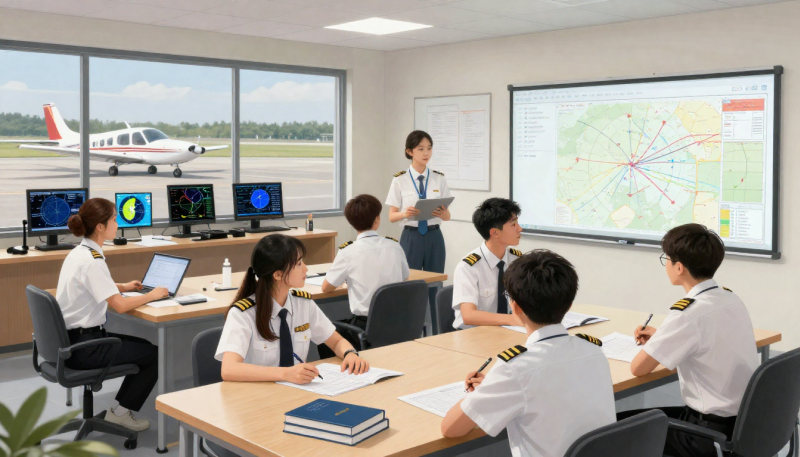
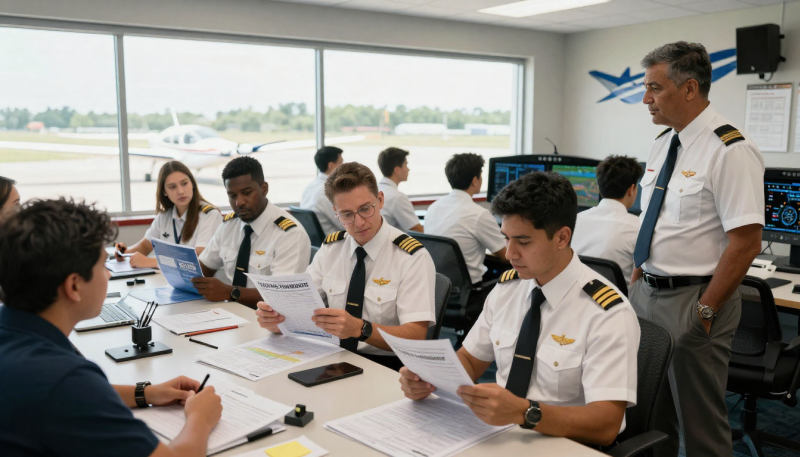
Moreover, training includes not only flying. The mandatory program includes:
- theoretical training
- study of aviation law and meteorology
- navigation and route planning
- preparation for the FAA written exam
- practical exam with an examiner
Even with an intensive training program, most students complete the course in 3-6 months, rather than in a few weeks. Timelines of "a couple of months" are possible, but this is more of an exception for students who train full-time and have ideal flying conditions.

Myth #2. A private pilot license automatically opens the door to an aviation career.
It often creates the impression that obtaining a Private Pilot License (PPL) is the first step towards working as a pilot and earning money in aviation. Formally, this is only partially true.
The Private Pilot License (PPL) does not grant the right to receive payment for flights. This is a key legal point.
According to FAA regulations and similar regulations in Europe (EASA):
- a private pilot cannot work as a pilot for pay
- they can only fly for personal purposes
- flight expenses can be shared among passengers, but cannot generate profit
To work as a pilot, a Commercial Pilot License (CPL) is required. This requires significantly more experience: a minimum of 250 flight hours in the USA, complex theoretical training, and additional ratings.
For airline jobs, an Airline Transport Pilot License (ATPL) is usually also required, which entails approximately 1500 flight hours.
Therefore, the PPL is not a professional license, but rather a basic level of aviation education.
Myth #3. Pilot training is inexpensive.
In advertising materials, the figure of around 10,000 dollars for private pilot training often appears. This amount is indeed found in some schools and is mentioned as the average cost of the course.
However, it is important to understand the structure of expenses. The final cost consists of several components:
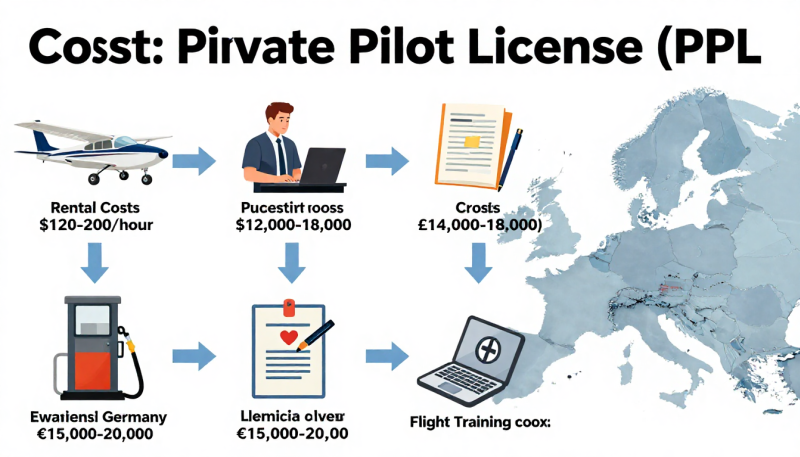
- aircraft rental (usually 120-200 dollars per hour)
- instructor fees
- ground theory
- fuel
- examination fees
- medical commission
- study materials and equipment
If a student requires more flight hours than the minimum of 40 hours, the cost quickly increases.
According to the American association AOPA, the actual average cost of obtaining a PPL in the USA today is approximately 12,000-18,000 dollars.
In Europe, the situation is even more expensive. For example:
- Germany - about 15,000-20,000 euros
- United Kingdom - about 14,000-18,000 pounds
Thus, training is not "incredibly expensive," but it is also not considered a cheap hobby.

Myth #4. An American license is automatically recognized worldwide.
Another popular thesis is that American flight certificates allow pilots to work in any country.
In reality, aviation licenses are not fully universal.
If a pilot wants to work in another jurisdiction, a license conversion procedure is usually required. For example:
- transitioning from FAA to the European EASA system
- validation of theoretical exams
- additional practical checks
- medical certification according to local standards
Sometimes this may mean retaking a significant portion of the exams.
Nevertheless, the American training system does have a strong reputation. The reasons for this are quite pragmatic:
- developed general aviation infrastructure
- a large number of airports
- comparatively cheap fuel
- favorable weather conditions in several states
Therefore, the USA remains one of the largest global centers for pilot training, but their licenses are not an automatic international pass into the profession.
Myth #5. Almost anyone can become a private pilot.
At first glance, the requirements do indeed seem simple: you just need to be over 17 years old, speak English, and pass a medical examination. This is how the basic conditions for obtaining a license are often formulated.
However, aviation medicine and the requirements for pilot training are significantly stricter than is usually imagined.
To obtain a PPL license in the USA, one must pass a 3rd class FA* medical examination. It checks:
- vision and color perception
- the condition of the cardiovascular system
- neurological indicators
- the absence of certain chronic diseases
- psychological stability
Some restrictions may seem unexpected. For example, issues with color perception may limit the ability to fly at night, and certain medications automatically render a pilot temporarily unfit to fly.
Additionally, the medical certificate must be regularly renewed. For pilots under 40 years old, it is valid for 5 years; after 40, it is only valid for 2 years.
Therefore, not just anyone can become a pilot. Health requirements remain an important filter.

Myth #6. Private pilots always have a flexible schedule.
In popular perception, the work of a private aviation pilot appears to be as free as possible: flights at will, travel, and a flexible schedule. This perception is partly due to the fact that charter flights are indeed performed at the request of clients.
But the real work of business aviation pilots is structured differently.
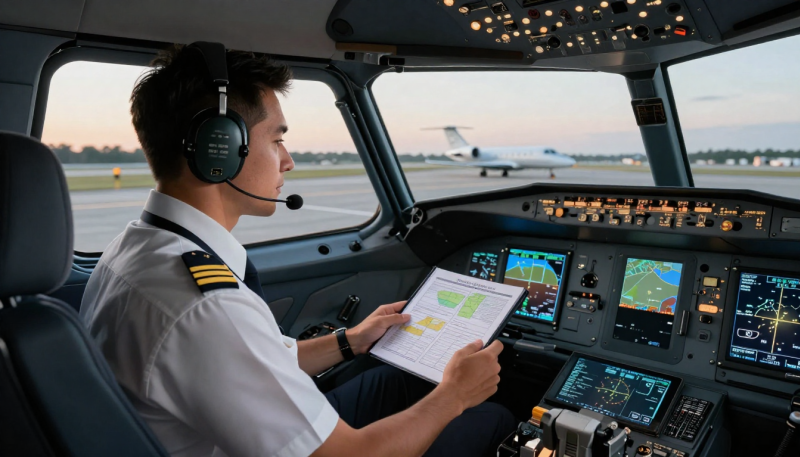
In many companies, pilots work on a duty system. This means that for a certain period of time, they are required to be on standby to perform a flight at virtually any moment.
A typical schedule might look like this: several days or weeks of duty, a waiting period for a flight, sudden departures at night or early in the morning, long flights with short rest periods.
Moreover, business aviation implies a high level of service. Pilots often participate not only in flying the aircraft but also in preparing the flight, planning routes, and interacting with passengers.
Therefore, flexibility in this profession exists, but it is accompanied by a high degree of unpredictability.
Myth #7. After obtaining a license, a pilot immediately starts flying a lot.
Another common expectation is that after obtaining a license, a pilot will fly regularly and quickly gain experience.
In practice, it all depends on financial capabilities and access to an aircraft.
Only a very small percentage of pilots own their own aircraft. Most flight school graduates continue to fly in one of three ways:
- renting an aircraft from a flying club
- participating in aviation clubs
- shared ownership of an aircraft
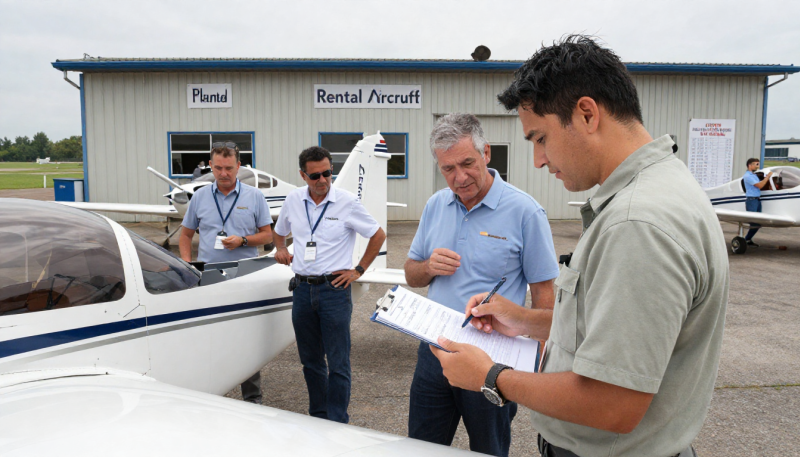
The cost of renting typically ranges from $120 to $200 per flight hour, sometimes more. This amount includes the aircraft and fuel, but does not always include the instructor's fee.
As a result, many private pilots fly significantly less often than they expected during training. For some people, the license becomes more of a costly but beloved hobby than a regular practice.
Myth #8. Education in the USA is always easier than in Europe.
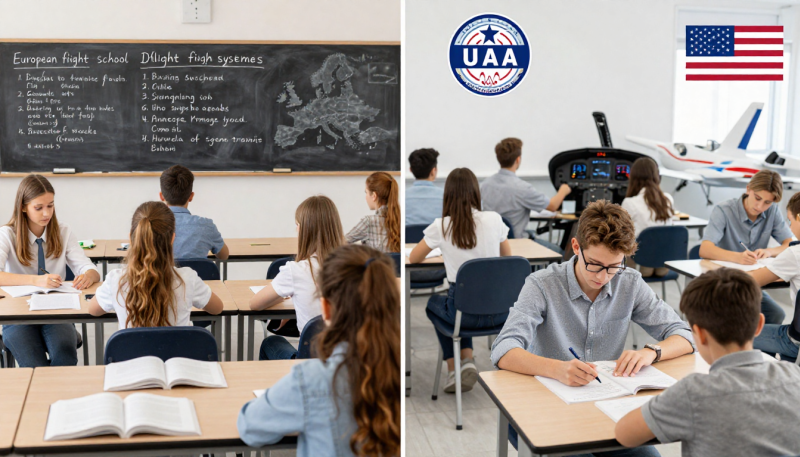
In the advertising of flight schools, it is often emphasized that in Europe, a large number of theoretical exams must be passed, while in the USA, only one is sufficient.
Formally, this is indeed the case. The FAA system requires one written exam, while the European EASA system divides theory into several subjects.
However, this does not mean that American training is objectively easier.
The differences are more related to the structure of the exams:
- in the FAA system, most of the theory is tested through a comprehensive test
- in the EASA system, exams are divided by subjects
At the same time, the level of practical training in both systems remains comparable. Flight exercises, safety requirements, and piloting skills are regulated by international ICAO standards.
Therefore, the difference between the training systems is more organizational than fundamental.
Myth #9. A private pilot license is valid for life without any conditions.
It is sometimes claimed that American pilot certificates do not expire. Formally, this is true: the document itself does not actually expire.
But this does not mean that a pilot can fly without additional requirements.
In order to legally conduct flights, a pilot is required to regularly validate their qualifications. The Flight Review rule is in effect in the USA.
Every pilot must complete it at least once every 24 months. During the review, an instructor assesses: knowledge of air traffic rules, piloting skills, and actions in non-standard situations.
Additionally, there are separate requirements for night flights, carrying passengers, and instrument flights.
Thus, the license indeed does not "expire," but the right to fly requires constant validation of skills.
Myth №10. The main value of a license is the future high salary.
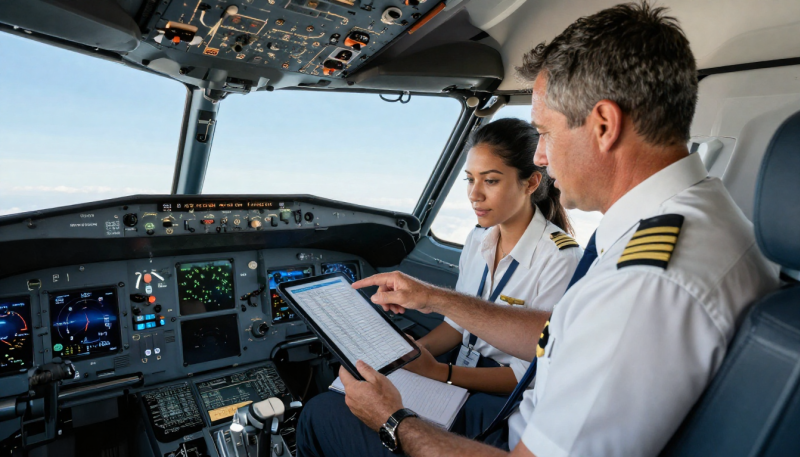
In advertising materials, the potential income of pilots is often emphasized, especially in business aviation. Some sources mention salaries of up to $273,000 per year, while the average salary of a charter pilot is estimated at around $66,000.
However, for most people, a private pilot license has a completely different meaning.
The PPL was originally created as a license for general aviation. Its main purpose is to allow a person to operate an aircraft independently.
Therefore, most PPL holders do not work as pilots, use the license for personal flights, and view aviation only as a hobby.
This is similar to obtaining a yacht captain or mountain guide license. For some, it becomes a profession, but for most, it is a way to expand their own capabilities.
In this sense, the main value of a private pilot license lies not in future salary but in access to a completely different level of freedom of movement.

Sources
Obtaining a private pilot license is indeed more accessible and quicker than commonly believed. However, it is a comprehensive professional training that requires time, significant financial investment, and strict adherence to aviation standards. PPL provides the freedom to fly and serves as a foundation for further training, but it does not, by itself, make a person a professional pilot.
- Federal Aviation Administration - Pilot's Handbook of Aeronautical Knowledge. FAA-H-8083-25B.
- Federal Aviation Administration - Private Pilot Airman Certification Standards. FAA-S-ACS-6.
- Aircraft Owners and Pilots Association (AOPA). How Much Does It Cost to Become a Pilot?
- European Union Aviation Safety Agency (EASA). Part-FCL - Flight Crew Licensing Regulations.
- Brady, Chris. The Airline Transport Pilot Licence: Theory and Practice. Aviation Theory Centre, 2019.
You might like

New megaprojects of the 21st century: why the Istanbul Canal and the Mirror Line city are being built
Large-scale infrastructure projects have always served as a kind of symbol of the era. Once, such symbols were the pyramids of Egypt, later - the Panama Canal...
The most mass-produced aircraft in history: why the Cessna 172 became an aviation legend
The history of aviation is usually associated with giants. People recall long-haul airliners, military aircraft, or supersonic projects. However, if...

Is the Boeing 777 really the safest airplane in the world?
Aviation is often perceived through simple formulas. There is the "fastest airplane," the "largest," the "longest-range." And, of course, it sounds especially in...

An RV is not an apartment on wheels: debunking myths about mobile homes
There is a persistent romantic aura surrounding motorhomes. In the popular imagination, it symbolizes absolute freedom, mobile real estate, and almost a vehicle...

Can you build a bunker by yourself: what popular instructions simplify
The idea of "building a bunker with your own hands" today sounds less like a fantasy from movies and more like a quite practical project. The rise in anxiety, discussions about technogenic...