
An RV is not an apartment on wheels: debunking myths about mobile homes
There is a persistent romantic aura surrounding RVs. In popular perception, they symbolize absolute freedom, mobile real estate, and almost autonomous living. However, when examining the topic without the glossy advertising sheen, a more complex picture emerges. The history of RVs dates back long before Instagram travels, the economics of ownership turn out to be less obvious, and the technical differences between an RV and a trailer impact everyday experience more than is commonly believed.
In this material, I analyze key theses that are usually presented in videos about homes on wheels and formulate them as verifiable statements. We will look at where facts support popular ideas and where clarification is needed.
Myth #1. Motorhomes are a modern invention of the tourist era.
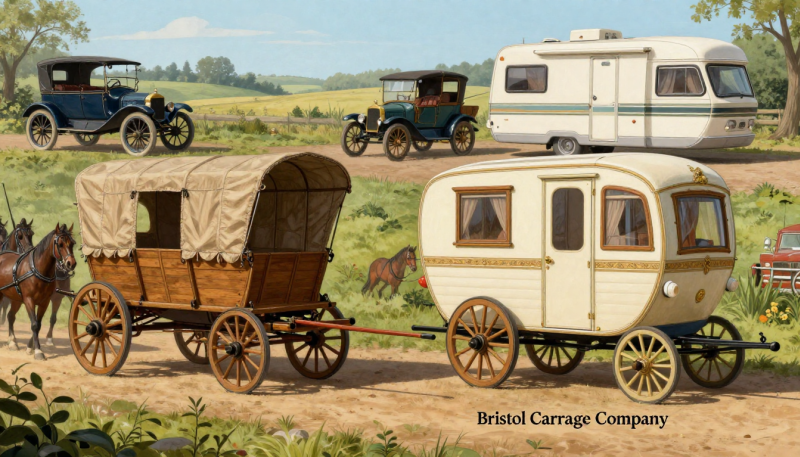
The original video claims that the first motorhomes appeared as early as the 18th century, and their prototype was the wagon-vans used for military campaigns. Here, it is important to distinguish between concepts.
Indeed, covered wagons existed for centuries. They were used for transporting people, property, and military cargo. But is it correct to call them motorhomes? No. These were horse-drawn vehicles without autonomous living infrastructure in the modern sense.
A more accurate historical milestone is considered to be the end of the 19th century. In the 1880s, the first specially designed "caravanettes" for leisure appeared in the UK. One of the early known projects was indeed built by the Bristol Carriage Company at the request of writer Gordon Stables. His mobile home was called "The Wanderer." This was already a prototype of tourist accommodation, rather than a military wagon.
A real leap occurred in the early 20th century when living modules began to be mounted on motorized chassis, including the Ford Model T. From this point on, we are talking specifically about motorhomes, not just a van.
Thus, the idea has historical grounding, but transferring 18th-century military wagons into the category of motorhomes is an oversimplification.

Myth #2. An RV always saves money compared to traditional travel.
The thesis about saving on housing and logistics is partially true, but only under certain conditions.
The cost of a new motorhome in Russia, according to the provided figures, starts from 3.5 million rubles for alcove and semi-integrated models and from 5.5 million for integrated ones. Even if considering a used option, this is a significant capital expense.
In addition, there are: fuel, chassis maintenance, living module maintenance, insurance, depreciation, storage off-season.
Savings occur if:
- Trips are frequent and long.
- A family of 3-5 people regularly replaces hotels with a motorhome.
- The motorhome is used for 2-3 months a year, not just 2 weeks.
If trips are rare, renting a motorhome or traditional hotels often turns out to be more financially rational.
Therefore, the claim about savings is not universal. It is a model that pays off only with intensive use.
Myth #3. A trailer is just a budget version of a motorhome without serious limitations.
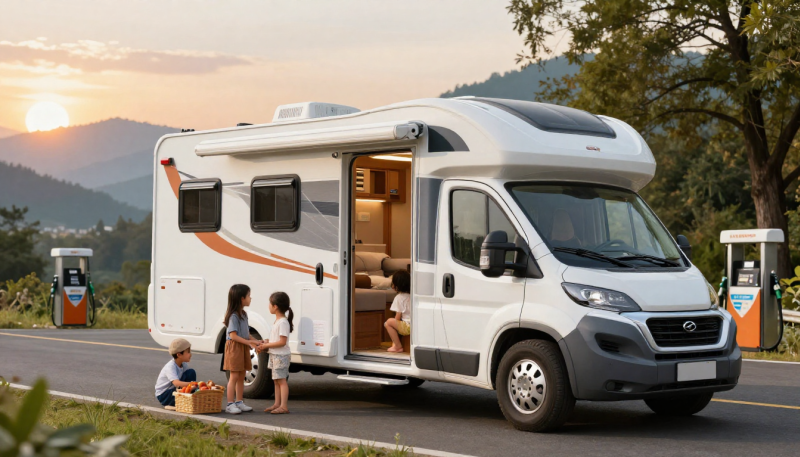
The trailer is described in the video as a more affordable option with a price starting from 600,000 rubles. It also mentions poor aerodynamics and increased fuel consumption. However, there are more fundamental limitations.
Firstly, the trailer requires a vehicle with sufficient power and permitted weight for towing. Not every passenger car is suitable.
Secondly, it is prohibited to be inside the trailer while in motion - this is a matter of safety and legislation.
Thirdly, maneuvering with a trailer requires skills. Reversing, parking, narrow roads - this is a separate practice.
However, the trailer has a strong point: it can be left at a campsite, allowing the car to be used independently. For long-term parking in one place, this is often more convenient.
Thus, the trailer is not just a cheaper version of a motorhome, but a separate model of use with different compromises.

Myth #4. The more expensive the motorhome, the more versatile it is.
In the video, the logic is structured in ascending order - camper van, alcove, semi-integrated, integrated, where the integrated model is presented as the most comfortable and well-thought-out option.
Indeed, integrated models provide:
- better insulation
- a unified space for the cabin and living area
- higher quality finishes
- thoughtful layout
However, versatility does not depend on price, but on the scenario.
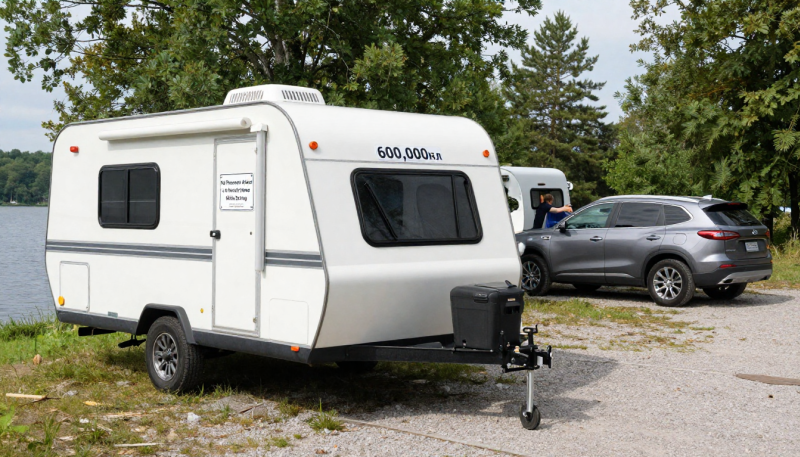
A camper van based on a van is more maneuverable, simpler in the city, and easier to park. For short trips across Europe or tight routes, it can be more practical.
The alcove is convenient for families with children due to the additional sleeping space above the cabin.
The integrated model is good for long-term living and off-season use, but its dimensions limit mobility.
Therefore, the more expensive type is not automatically the best for all tasks. It is optimal for a specific travel model.
Myth #5. You can live in a motorhome as comfortably as in a regular apartment.
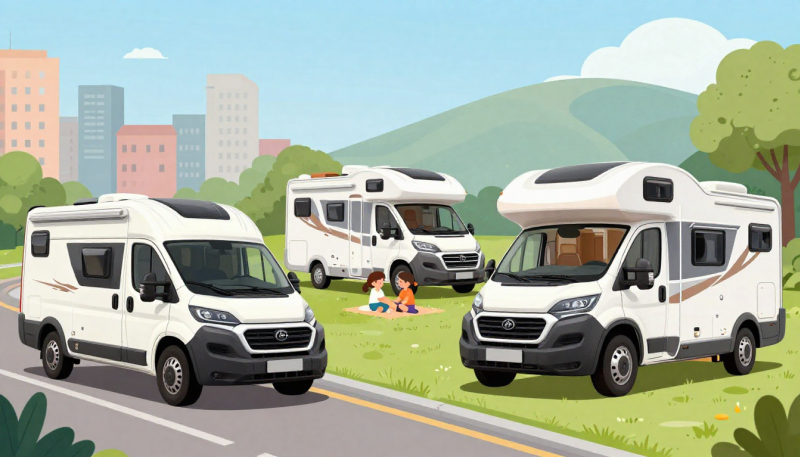
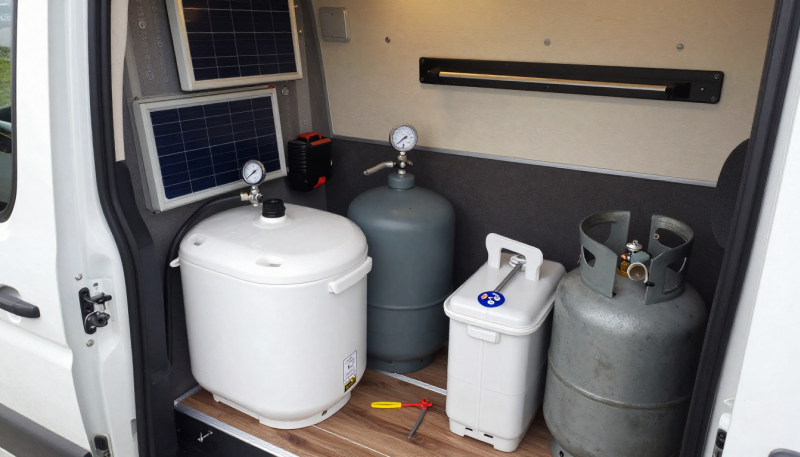
Even an integrated motorhome remains a mobile system with limited resources. It has: a limited supply of clean water - usually 80-150 liters, a gray water tank, a cassette toilet that needs regular maintenance, gas cylinders or a diesel heater, and an autonomous electrical system, often dependent on camping facilities or a generator.
Life in a motorhome is a constant management of resources. In an apartment, you don’t think about draining gray water or refilling the tank every 2-3 days. In a motorhome, this is part of daily life.
Comfort is possible, but it is engineering-limited. It is a compact autonomous environment, not a full replacement for stationary housing.
Myth #6. A motorhome completely eliminates logistical problems
The text emphasizes freedom and the lack of necessity to search for accommodation. In practice, logistics simply changes form.
Yes, you do not need to book a hotel. But you need to: look for places with permitted parking, consider height and weight restrictions, plan entries into service areas, and think through routes taking dimensions into account.
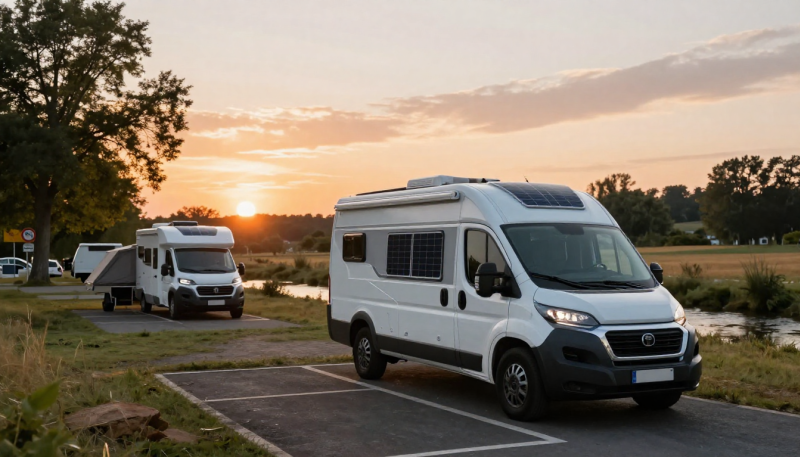
In Europe, the infrastructure for campers is well-developed. In the CIS countries, it is fragmented. In the wild, autonomy is limited by resources of water and electricity.
A motorhome offers the freedom to choose a route, but it does not eliminate the need for planning. It changes the structure of logistics, rather than eliminating it.
Sources:
A motorhome is not a universal solution and not a guaranteed saving. It is a tool that is effective with a clear understanding of the usage scenario, budget, and frequency of trips. Trailers and different types of motorhomes solve different tasks. The choice is not limited to the level of comfort - it is determined by the style of travel and the willingness to accept technical limitations.
- David M. Smith. The Caravan and Motorhome Book. Haynes Publishing
- Peter H. D. Van Der Veer. Caravanning and the British Leisure Industry 1880-1939
- Colin Divall, George Revill. Cultures of Transport - Representation, Practice and Technology
- John W. Lowe. Touring and Public Life in Britain 1880-1914
- European Caravan Federation - statistical reports on the motorhome and trailer market
You might like

New megaprojects of the 21st century: why the Istanbul Canal and the Mirror Line city are being built
Large-scale infrastructure projects have always served as a kind of symbol of the era. Once, such symbols were the pyramids of Egypt, later - the Panama Canal...

The most mass-produced aircraft in history: why the Cessna 172 became an aviation legend
The history of aviation is usually associated with giants. People recall long-haul airliners, military aircraft, or supersonic projects. However, if...

Is the Boeing 777 really the safest airplane in the world?
Aviation is often perceived through simple formulas. There is the "fastest airplane," the "largest," the "longest-range." And, of course, it sounds especially in...

Become a pilot in a couple of months? 10 myths about aviation training
The topic of training to become a private aviation pilot has long been surrounded by established notions that are actively circulated by the advertising of flight schools and popular media...
Can you build a bunker by yourself: what popular instructions simplify
The idea of "building a bunker with your own hands" today sounds less like a fantasy from movies and more like a quite practical project. The rise in anxiety, discussions about technogenic...