
New megaprojects of the 21st century: why the Istanbul Canal and the Mirror Line city are being built
Large-scale infrastructure projects have always served as a kind of symbol of the era. Once, such symbols were the pyramids of Egypt, later - the Panama Canal or the giant dams of the 20th century. Today, humanity is once again attempting to implement projects that at first glance seem almost fantastic: artificial straits, skyscraper cities, multi-kilometer architectural lines in the middle of the desert.
But how realistic are these projects? What economic and political motives lie behind them? And can they really change global infrastructure, or are they rather ambitious ideas with an uncertain future?
In this material, we analyze claims from the video and check them for factual accuracy.
Istanbul Canal: An Attempt to Change the Geography of Trade
Every architect in the world wishes to build something that the whole world will know about… but what we will discuss today is more monumental than any skyscraper!
This introductory statement sets the right scale for the discussion. We are indeed talking about projects that go far beyond ordinary architecture. This is especially true for the Istanbul Canal - one of the most talked-about infrastructure projects in recent years.
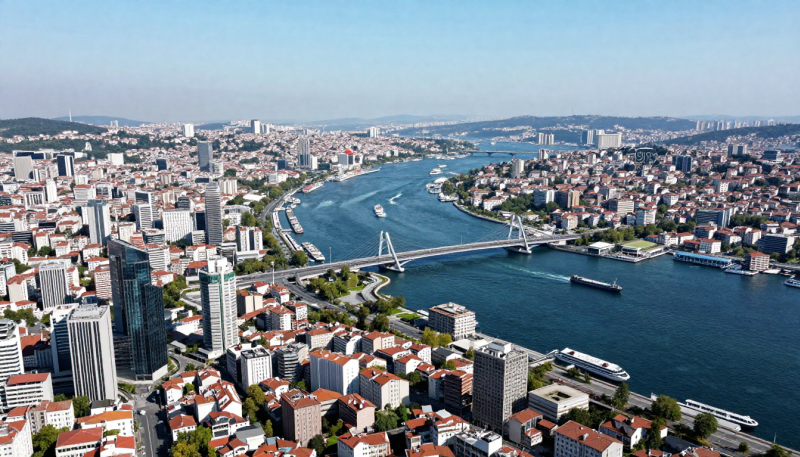
Turkey wants to build an artificial strait that will duplicate the Bosphorus and turn Istanbul into an island.
The Kanal İstanbul project involves the construction of an artificial canal between the Black Sea and the Sea of Marmara. Its length is indeed planned to be about 45–50 kilometers, with a depth of approximately 25 meters, and a width of up to 150–275 meters in different sections.
If the canal is built, the western part of Istanbul will indeed be effectively separated by a waterway and will become a sort of island, connected by bridges and transport infrastructure.
However, the assertion that the canal is being created solely to turn the city into an island simplifies the situation. The main official goal of the project is to reduce the load on the Bosphorus.
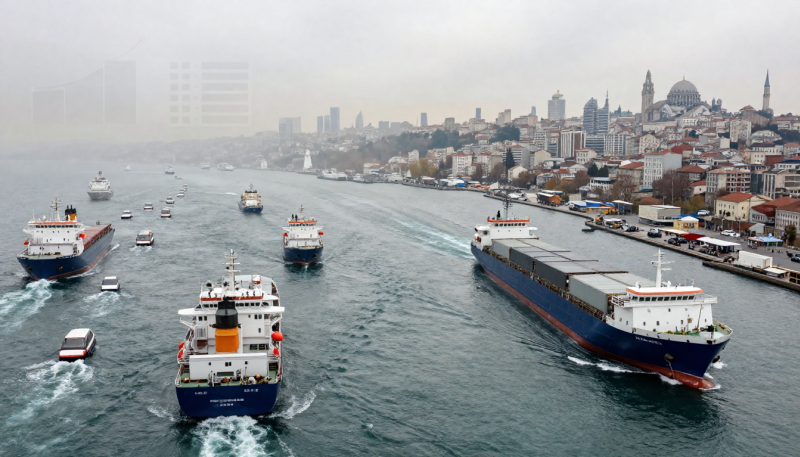
The Bosphorus Strait is considered one of the most challenging navigable waterways in the world. Its features include strong opposing currents, a winding shape, dense urban development along the shores, and high shipping intensity.
According to international maritime organizations, approximately 40–45 thousand vessels pass through the Bosphorus annually. In comparison, about 20–25 thousand vessels pass through the Suez Canal each year.
Therefore, the idea of an alternative route has indeed been discussed for several decades.

The Montreux Convention and the Question of Money
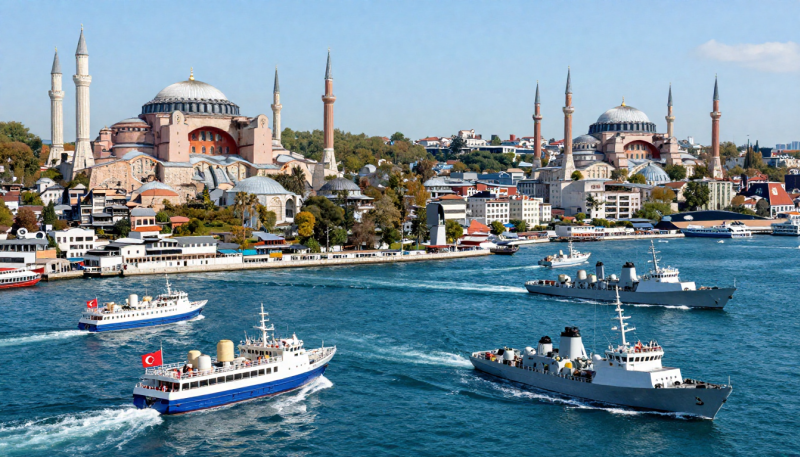
The whole issue lies in the unfavorable Montreux Convention for Turkey from 1936, which made the Bosphorus the heritage of all mankind.
The Montreux Convention regarding the regime of the straits was indeed signed in 1936 and regulates the passage of ships through the Bosphorus and Dardanelles.
However, the assertion that the strait became "the heritage of all mankind" is more of a journalistic expression than an accurate legal description.
The convention establishes the following key principles:
- free passage of merchant ships in peacetime;
- a special regime for military vessels;
- Turkey's right to control the security of the straits.
Turkey indeed cannot impose a full transit fee as operators of artificial canals do. However, the country does earn income from: pilotage services, towing, port operations, and various service fees.
Therefore, the claim that Turkey "receives nothing at all" is an exaggeration.
The Suez Canal brings Egypt $5 billion a year - this is the second most significant source of budget replenishment for the country.
The comparison with the Suez Canal is used in political debates around the project. But it is important to consider the fundamental difference:
- The Suez Canal is a completely artificial structure
- The Bosphorus is a natural strait
This is why international law treats them differently.
Egypt's revenues from the Suez Canal indeed amount to billions of dollars annually and significantly increased after the canal's expansion in 2015. However, the Bosphorus cannot function on the same model.
In this context, a new canal could provide Turkey with the opportunity to create a paid alternative artery.
Will the vessels use the new channel?
Why should trading ships sail through the paid Istanbul Canal when there is the free Bosphorus?
This is a key question that economists and maritime logistics specialists are actively discussing.
Theoretically, incentives can indeed exist: reduced waiting times, simpler navigation, lower risk of accidents.
The Bosphorus regularly experiences delays due to fog, strong currents, and heavy traffic. Sometimes vessels may wait for passage for many hours or even days.
However, there is also a downside.
If the Bosphorus remains free, shipping companies will only use the new canal when there is a real economic benefit.
Therefore, the main question of the project is the economic model. So far, it remains a subject of discussion.

Mirror Line: a city stretching hundreds of kilometers
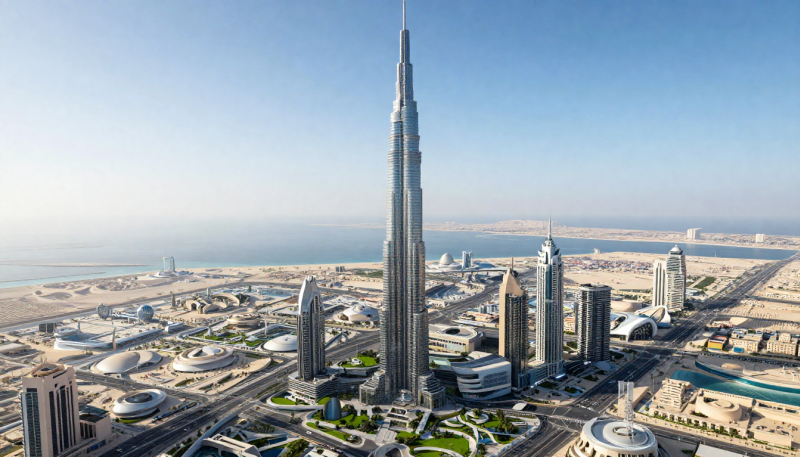
One day, a 490-meter tall skyscraper will appear in Saudi Arabia, where millions of people will be able to live.
This project is known as part of the NEOM mega-project - a futuristic region that Saudi Arabia is building on the shores of the Red Sea.
Its key element is the project The Line.
The initial concept indeed envisioned: two parallel buildings, about 500 meters tall, extending up to 170 kilometers in length.
The idea is to create a linear city without cars, where all essential services are within walking distance.
The cost of building the skyscraper city was estimated at 500 billion dollars.
The NEOM project is indeed estimated at around 500 billion dollars. But it is important to clarify: this amount refers to the entire NEOM region, not just The Line.
The Line is just one element of a larger development program.
In addition to it, the plans include:
- industrial zones;
- scientific centers;
- tourist regions;
- new ports and airports.
Therefore, the cost estimate specifically for the linear city remains approximate.
Mirror facade and architectural idea
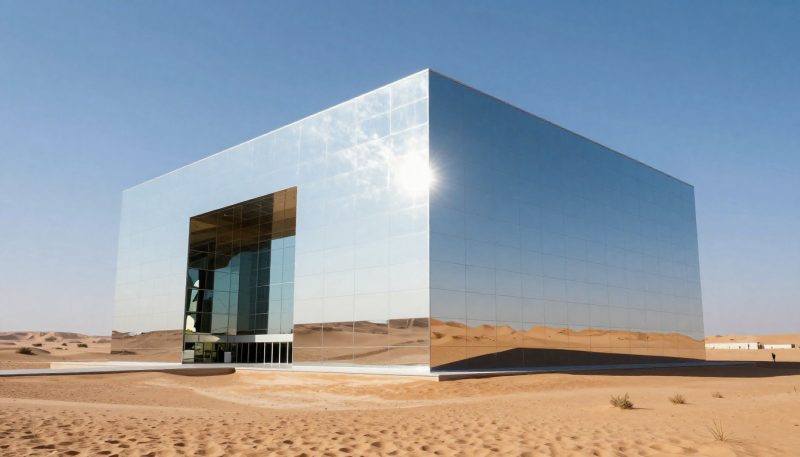
The structure will be completely covered with mirrors on the outside.
According to the published visualizations, the facade is indeed intended to be mirrored.
This decision serves several purposes: to visually "dissolve" the gigantic structure in the desert, to reflect solar radiation, and to create a futuristic architectural image.
However, it is the mirrored surface that has sparked one of the main environmental discussions.
Environmental disputes surrounding the megaproject
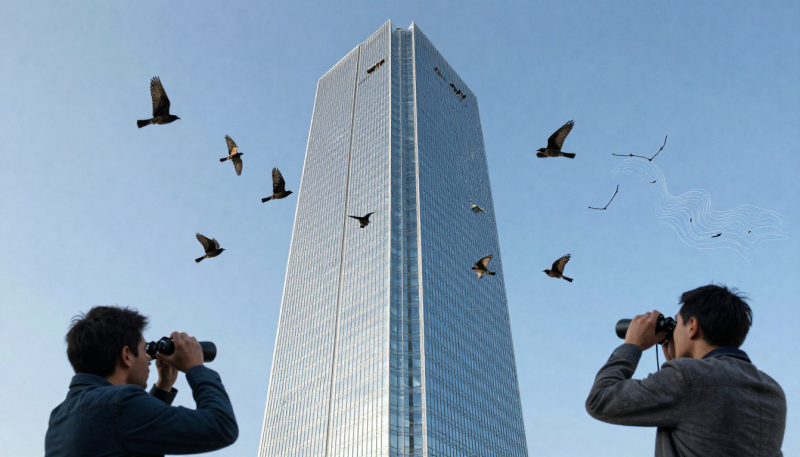
Ecologists believe that the mirror structure, standing 490 meters tall, will confuse birds and lead to their deaths.
Such concerns do indeed exist.
Mirror buildings are already causing problems for bird migration today. Millions of birds die each year due to collisions with glass facades.
In the case of a structure stretching for tens of kilometers, this problem could scale up.
However, ecologists are also discussing other potential risks: changes in air currents, localized climate effects, and impacts on animal migration routes.
For now, these issues remain subjects of research.
Realism of the project
Initially, it was assumed that the first inhabitants would appear in it as early as the 2030s.
In recent years, the project's timelines have been repeatedly revised.
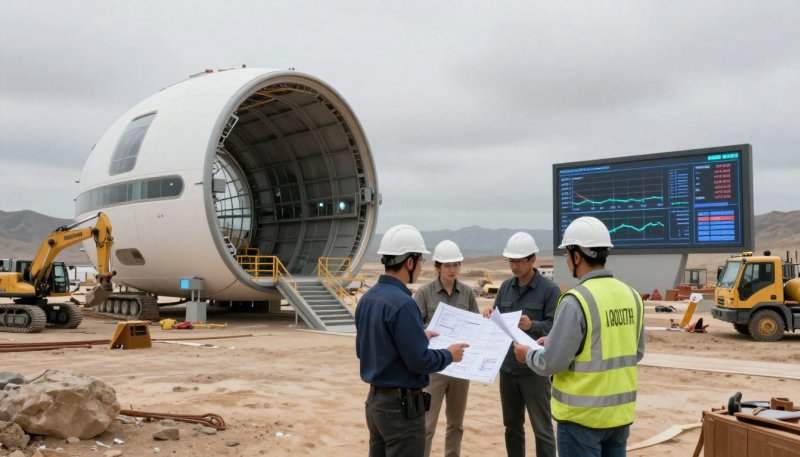
Construction has already begun, but many analysts believe the initial plans are overly optimistic.
Reasons: the complexity of engineering solutions, enormous financial costs, the need to create infrastructure from scratch.
Therefore, even supporters of the project acknowledge that its implementation may take decades.
Sources
- Montreux Convention Regarding the Regime of the Straits - League of Nations Treaty Series - 1936
- Kanal Istanbul Project Environmental Impact Assessment Report - Republic of Turkey Ministry of Environment - 2019
- The Wall Street Journal - Saudi Arabia’s $1 Trillion Mirror-Line Megacity - 2022
- NEOM Project Overview - NEOM Company
- The Line: Saudi Arabia’s City of the Future - Financial Times - 2022
- Bird Collisions with Glass Buildings - American Bird Conservancy
You might like
The most mass-produced aircraft in history: why the Cessna 172 became an aviation legend
The history of aviation is usually associated with giants. People recall long-haul airliners, military aircraft, or supersonic projects. However, if...
Is the Boeing 777 really the safest airplane in the world?
Aviation is often perceived through simple formulas. There is the "fastest airplane," the "largest," the "longest-range." And, of course, it sounds especially in...
Become a pilot in a couple of months? 10 myths about aviation training
The topic of training to become a private aviation pilot has long been surrounded by established notions that are actively circulated by the advertising of flight schools and popular media...

An RV is not an apartment on wheels: debunking myths about mobile homes
There is a persistent romantic aura surrounding motorhomes. In the popular imagination, it symbolizes absolute freedom, mobile real estate, and almost a vehicle...

Can you build a bunker by yourself: what popular instructions simplify
The idea of "building a bunker with your own hands" today sounds less like a fantasy from movies and more like a quite practical project. The rise in anxiety, discussions about technogenic...