
Is it true that Putin has 50,000 bodyguards? Who really protects world leaders?
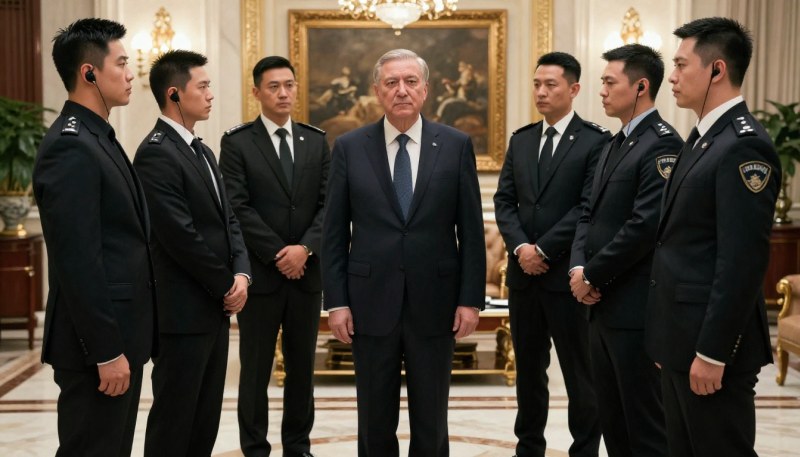
The conversation about the personal security of world leaders is almost always accompanied by strong exaggerations. In popular culture, bodyguards are perceived as an endless army of people in black suits surrounding the president or king in a tight ring. Videos and ratings love to compete in numbers - tens of thousands of guards, secret units, exotic weapons, and incredible security measures.
But in reality, the protection system for top officials is much more complex. Most of the people sometimes referred to as "the president's bodyguards" actually perform entirely different tasks: securing government buildings, monitoring strategic sites, ensuring events, and working with intelligence information. The inner circle of physical security almost always consists of a relatively small group of specially trained agents.
Therefore, the rankings of the "largest security forces" create the illusion that state leaders are surrounded by tens of thousands of bodyguards. In practice, these numbers require verification. Let's break down some of the most common claims.
Myth #1. Kim Jong Un has 15,000 personal bodyguards.
In popular descriptions of the North Korean leader's security, the number around 15,000 people is often mentioned. In this form, the statement sounds impressive, but it is inaccurate.
We are talking about the so-called Supreme Guard Command of the DPRK - a unit responsible for the safety of the country's leadership. This structure is indeed large and can number several thousand employees. However, most of them are not bodyguards in the literal sense.
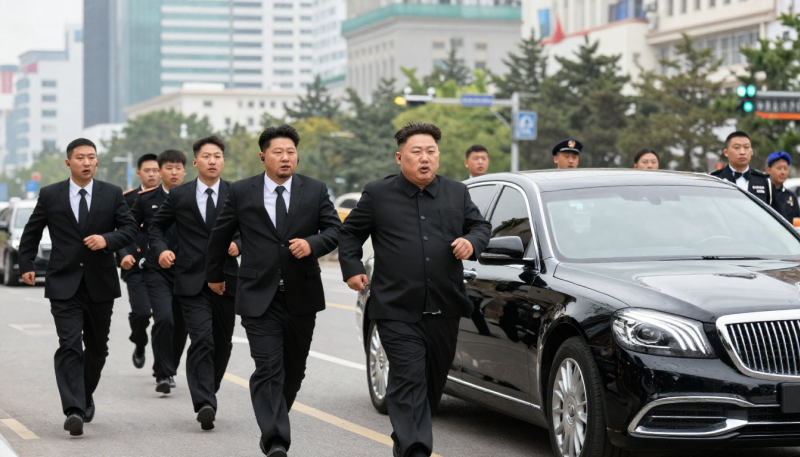
They perform a wide range of tasks: guarding residences, monitoring facilities in Pyongyang, ensuring the security of transport routes, checking personnel, and providing event security. The direct personal escort of the leader is significantly smaller. During well-known visits of Kim Jong Un, it is indeed possible to see a group of guards running alongside the car - usually around 10-12 people.

Myth №2. Putin's security service consists of 50,000 bodyguards.
In such rankings, it is often claimed that the president of Russia is protected by 50,000 people. This figure arises from a misunderstanding of the structure of the Federal Protective Service.
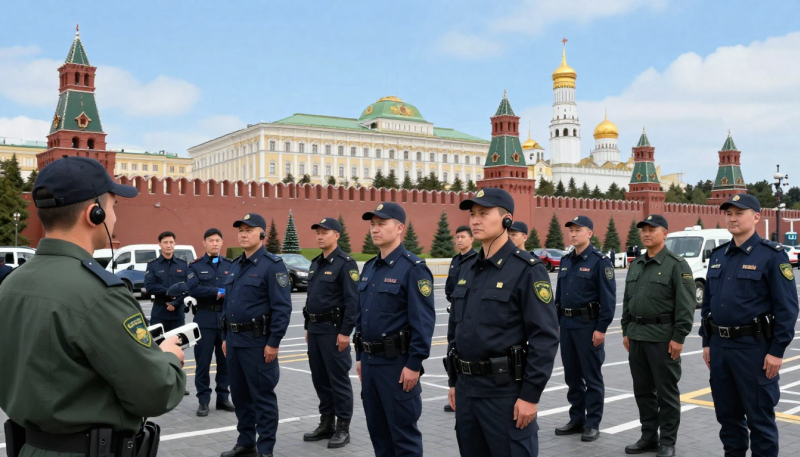
The FSO is indeed a large agency. Its staff is estimated to be around several tens of thousands of employees. However, this organization is responsible not only for the president. Its tasks include: protecting the Kremlin and other state residences, ensuring the security of the highest government bodies, safeguarding government communications, and providing security for events involving the country's leadership.
The personal security escort of the president - the so-called Presidential Security Service - is just one of the divisions within the FSO and has significantly fewer employees.
Therefore, it is incorrect to speak of "50,000 bodyguards for Putin." This number refers to the entire structure, which performs many functions.
Myth #3. Chinese leaders are guarded by 80,000 people with three guns each.
The text mentions the claim that Xi Jinping's security detail consists of 80,000 people, each carrying three pistols, knives, and even a mysterious powder. This is a typical example of rumors that circulate around closed political systems.
The Central Bureau of Security is responsible for the safety of China's leadership. Its size is not publicly disclosed, but estimates from researchers are significantly more modest. We are talking about several thousand employees.
The Bureau of Security performs tasks similar to those of analogous structures in other countries: protecting party and state leaders, securing residences, ensuring major events, and monitoring certain government facilities.
Stories about unusual weaponry—three pistols for each agent or a mysterious powder—are not confirmed by either official data or research on the Chinese political system. Such details are characteristic of the mythologization of closed security services.

Myth №4. The Pope's Guard is the largest in the world.
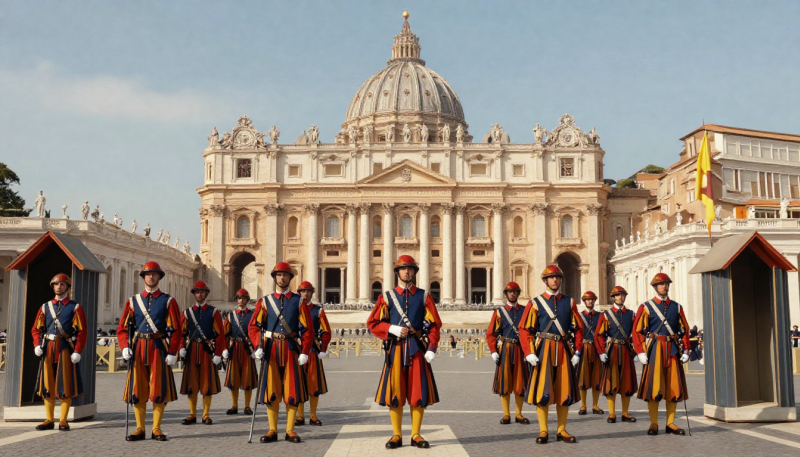
At first glance, it may seem that the Vatican has an enormous security system. The famous Swiss Guard in bright medieval uniforms often creates the impression of a large service.
In reality, it is one of the smallest security units among world leaders. The Swiss Guard consists of about 135 soldiers. It performs ceremonial functions and participates in ensuring the security of the papal residence.
The main protection of the pontiff is provided by another unit - the Vatican Gendarmerie. Additionally, during foreign trips, a significant part of the security is taken on by the police of the host countries.
Therefore, it cannot be said that this is the "largest security force in the world." On the contrary, the security structure of the Vatican is relatively compact.
Myth №5. Erdogan has a unique and the most aggressive security among world leaders.
In the media, the image of the Turkish presidential security is often created as a practically separate military force, known for its constant conflicts and harsh actions. This image partially formed after several high-profile incidents.
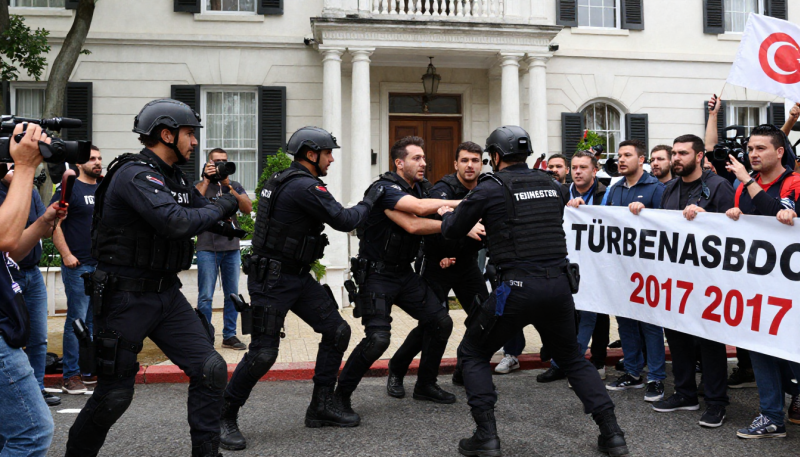
The most famous occurred in 2017 in Washington, when security personnel for Recep Tayyip Erdoğan got into a fight with protesters outside the Turkish ambassador's residence. Several people were injured, and the actions of the security team provoked a sharp reaction from American authorities.
However, such cases do not mean that Turkish security is fundamentally different from the security services of other countries. The security of the President of Turkey is the responsibility of the Presidential Security Directorate, which is part of the country's police and intelligence services. Its tasks are typical for such units: protecting the president, ensuring the safety of events, and accompanying trips.
Scandals create a vivid media image, but in terms of its structure, the Turkish presidential security is not unique.
Myth #6. The President of the USA is constantly surrounded by a huge army of bodyguards.
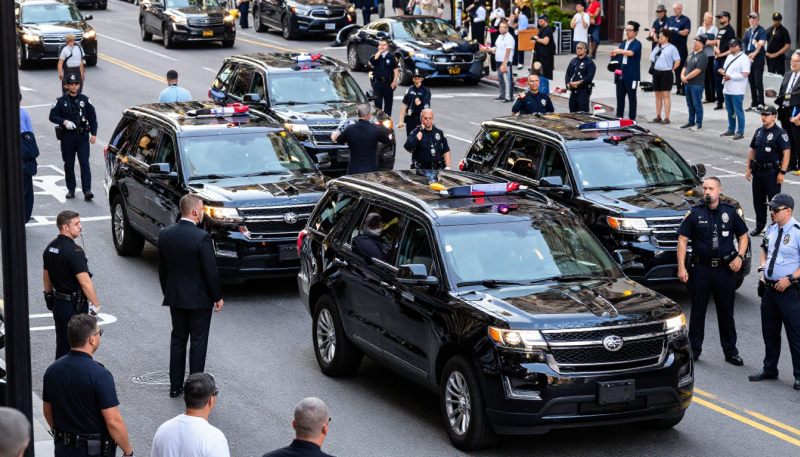
In television broadcasts, the President of the United States often appears surrounded by a large number of vehicles, security personnel, and police officers. This creates the impression that he is accompanied by a huge army of bodyguards.
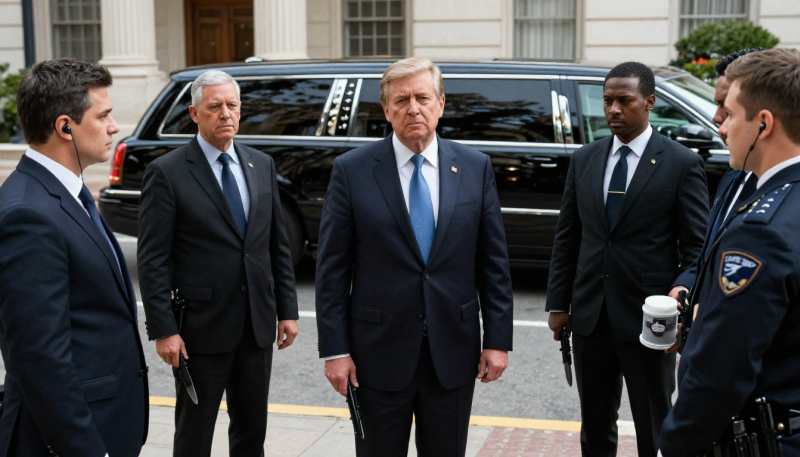
In practice, a small group of agents from the U.S. Secret Service plays a key role. They make up the immediate circle of physical protection for the president. The other forces that can be seen during the president's movements perform supportive functions.
These include local police, road service personnel, counterintelligence agents, bomb disposal experts, communication specialists, and aviation units. Most of these individuals are not personal bodyguards of the president and only work during specific events or visits.
The security system for the President of the United States is indeed extensive, but it is distributed among many agencies and does not boil down to one huge group of bodyguards.
Myth №7. The British monarch does not need serious security because they have almost no political power.
Sometimes one can hear the argument that the British monarch mainly performs ceremonial functions, so their security does not require special measures.
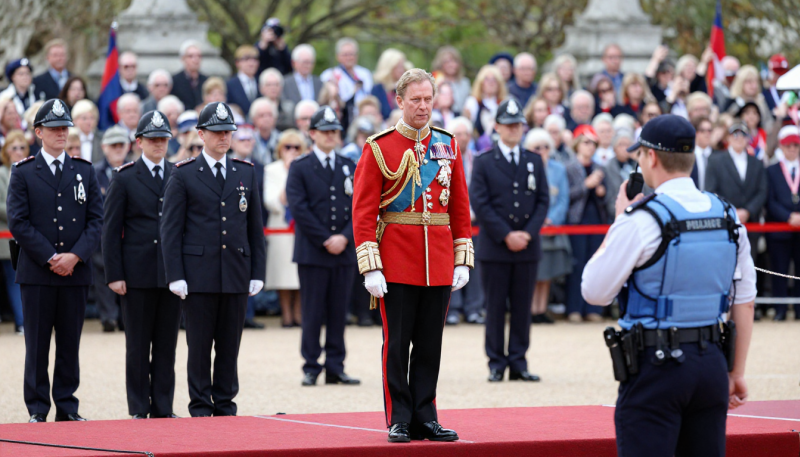
In practice, the situation is the opposite. The British royal family is one of the most well-known public figures in the world. The monarch regularly participates in mass events, state ceremonies, and international visits, which makes security issues particularly complex.
The security of the king is the responsibility of a specialized unit of the London police - Royalty and Specialist Protection. In addition, other police and intelligence service units are involved in ensuring security.
Thus, the level of protection for the British monarch is comparable to the security measures for heads of state, even despite limited political powers.
Myth #8. The more security a leader has, the stronger and more stable the state.
The ratings of the number of bodyguards often create a hidden conclusion: the more people protect a leader, the more influential and powerful the state.
In practice, the connection between these indicators is extremely weak. The size of security services depends on many factors: the political system, the level of internal threats, the traditions of protecting power, and even the geography of the country.
For example, democratic states often build their security system around small specialized units supported by other services. In authoritarian systems, protection may be integrated into larger security structures of the regime.
Therefore, the number of people in security services reflects more the characteristics of the political system and the organization of the state than its strength or influence in the world.
What’s the outcome?
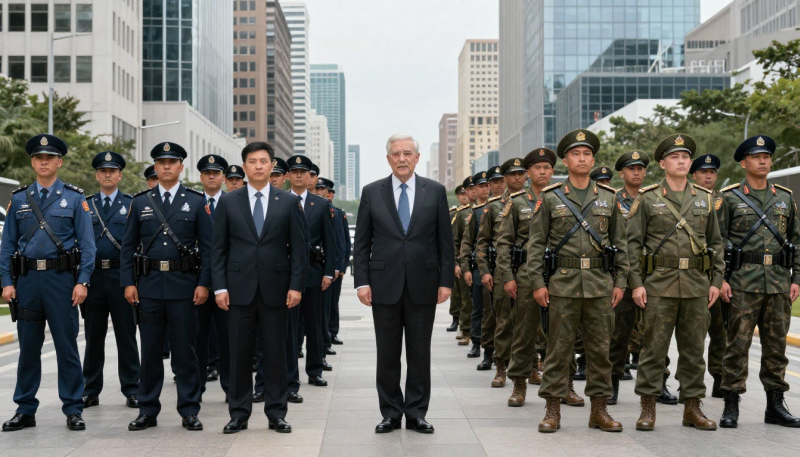
The ratings of bodyguard numbers create a spectacular picture but almost always mislead. The huge figures usually refer not to the personal protection of leaders but to entire state security structures. The immediate circle of bodyguards for almost all leaders in the world is relatively small - dozens of people, not tens of thousands.
- Andrew Scobell - North Korea's Political System and Military. RAND Corporation.
- Kenneth Dekleva - Leadership Security and Elite Protection in Authoritarian States. Georgetown Journal of International Affairs.
- Mark Galeotti - The Modern Russian Security State. Routledge.
- Christopher Andrew - The Secret World: A History of Intelligence. Yale University Press.
- John L. Allen Jr. - All the Pope's Men: The Inside Story of How the Vatican Really Thinks. Doubleday.
You might like
The Fastest Production Cars in the World
The permissible speed for driving on federal highways generally does not exceed the mark of 110 km/h. However, there are cars that are capable of...
Crazy car stunts that are hard to believe!
In this video, a truck with a trailer will jump 25 meters; you will see how the Nürburgring is driven on two wheels; we will show a loop-the-loop in a car and many ...
How North Korea Really Works: 11 Popular Misconceptions
North Korea has long become an object of mythologization. Some see it as an exotic archaic regime, others as almost a dystopia from a textbook on total...
10 unusual professions that turned out to be not so unusual after all
In almost every popular video about unusual professions, viewers are invited to be amazed: here are people milking snakes, hiring huggers, or staging kidnappings...
Carandiru: How Brazil's Largest Prison Became a Symbol of Systemic Violence
Prisons are rarely associated with humanism. But sometimes in the public consciousness, an image of the "most terrible prison in the world" emerges - a place where punishment prev...