
The myth of the scariest attractions on the planet
The theme of extreme attractions is almost always presented through the language of ultimate risk. "The scariest," "you can die from fear," "face to the abyss" - such phrases create the impression that we are talking about a zone where safety is conditional, and survival depends on luck. But if we go beyond the advertising drama and look at the numbers, engineering standards, and incident statistics, the picture becomes less emotional and more interesting.
Amusement parks are an industry with strict regulations, insurance, international standards, and reputational risks. At the same time, the sense of danger remains their main product. This is where the contradiction arises: attractions must seem extreme, but they must also be managed systems with calculated loads.
In this analysis, I take ten examples - from tall structures in China to Formula Rossa in Abu Dhabi - and check the key theses that are usually heard in their descriptions. Where does real danger end and marketing begin?
Myth #1. These attractions are truly deadly dangerous.
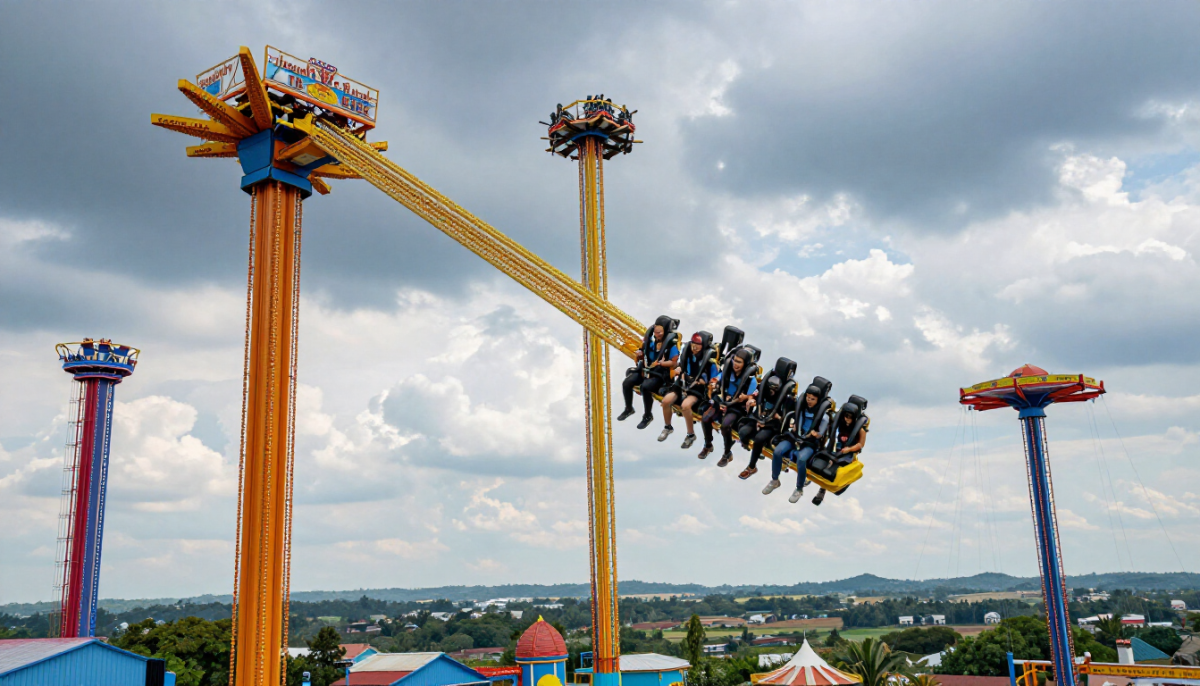
Intuitively, it seems that constructions like Insanity the Ride or Giant Canyon Swing are on the edge of acceptable risk. Heights of 280-400 meters, seats extending over the edge of the platform, speeds of up to 80 km/h - it sounds threatening.
However, the entertainment industry operates under a strict regulatory framework. In the USA, safety is governed by ASTM International standards, and major parks additionally undergo internal and external audits. According to the International Association of Amusement Parks and Attractions, the likelihood of a serious injury on a stationary attraction in the USA is less than one case per tens of millions of rides.
This does not mean zero risk. Incidents do occur, but they are statistically rare and are more often related either to operational violations or individual medical factors of the visitors.
The feeling of deadly danger is created by the visual context - open height, lack of visible support, downward incline. From an engineering perspective, it involves calculated mechanics with multiple safety margins.
Myth #2. The higher and faster, the more dangerous.
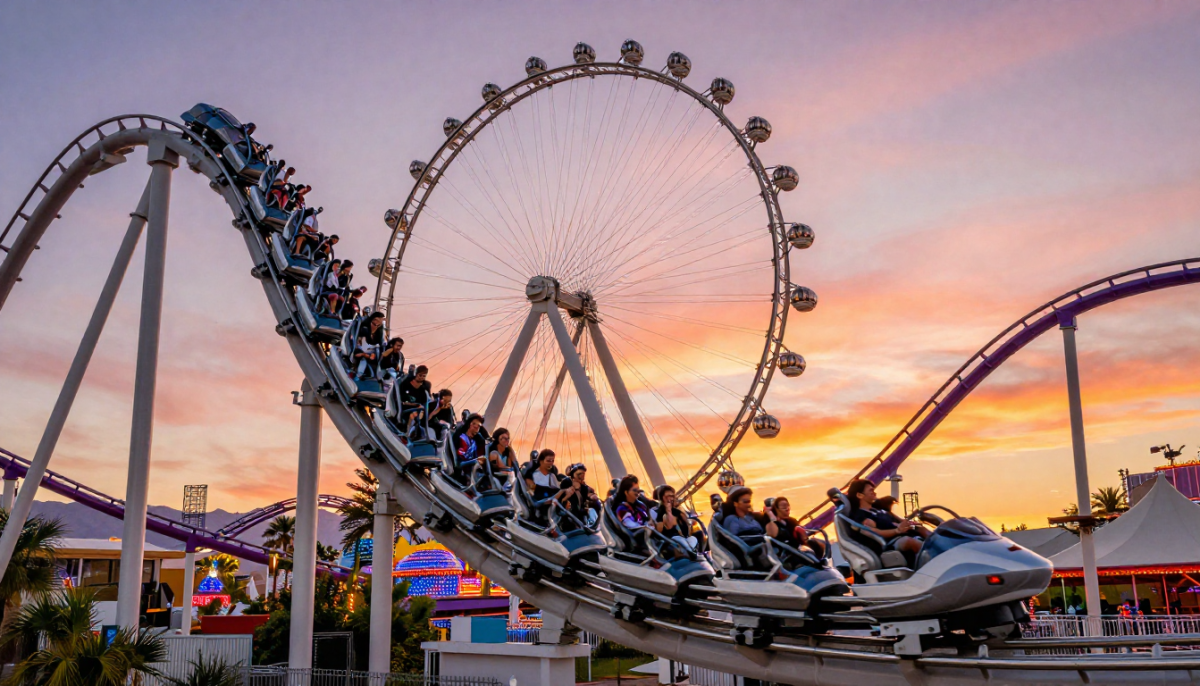
Let's take the High Roller in Las Vegas - 167 meters high. Formally, this is taller than many tower attractions. But the Ferris wheel is one of the safest types of structures, as the load is evenly distributed, the movement is slow, and the stabilization system is redundant.
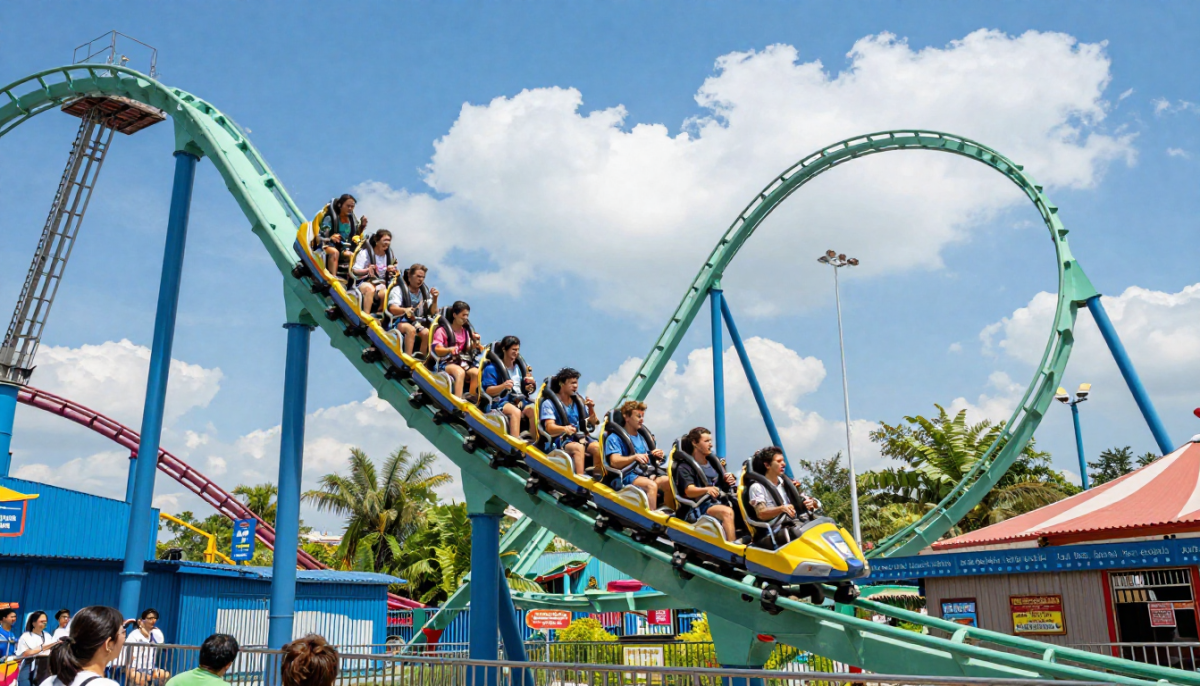
Or Valravn - a roller coaster with an almost vertical drop of 90 degrees and speeds of up to 121 km/h. The paradox is that modern steel coasters are safer than old wooden ones precisely because computer modeling allows for G-load calculations to fractions of a unit.
Height and speed alone do not equate to risk. What is critical is not how "scary" the trajectory looks, but the compliance of the structure with calculated loads, the quality of assembly, the control of bolt connections, the condition of the tracks, and the braking systems.
The industry has long learned to operate at the edge of psychological limits without exceeding engineering ones.
Myth №3. Formula Rossa is almost like a Formula 1 racing car.
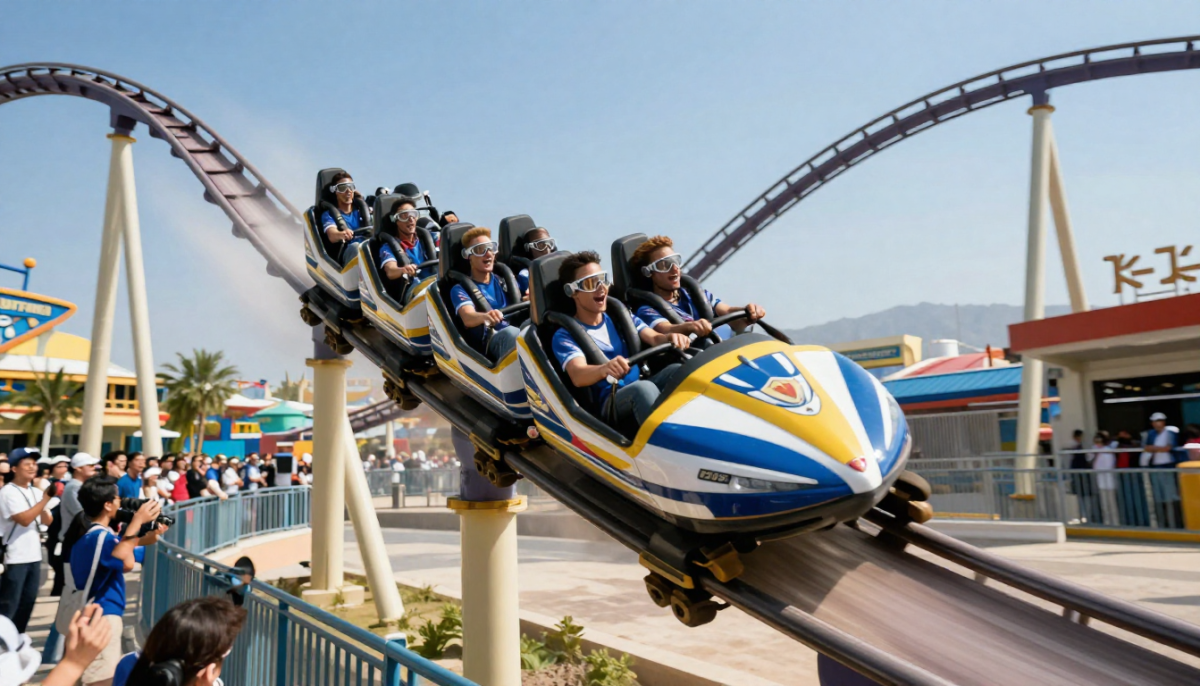
Formula Rossa is often described as "almost space-like" in sensations. The acceleration to 239 km/h in 5 seconds truly makes it the fastest roller coaster in the world at the time of its opening.
But there is an important nuance. The G-forces on it are about 1.7-2 G in the longitudinal direction. For comparison: Formula 1 drivers experience up to 5 G in turns, while military pilots experience even higher. The difference is significant.
The launch system of Formula Rossa is based on hydraulic catapulting, but the acceleration is linear and controlled. Before the ride, visitors are given protective glasses - not due to the risk of accidents, but because of the high speed of the oncoming airflow.
The feeling of extremity here is created by the combination of acceleration and the short duration of the ride - about one and a half minutes. This is an intense, but strictly calculated scenario.
Myth #4. Water slides with sharks pose a real risk of attack.
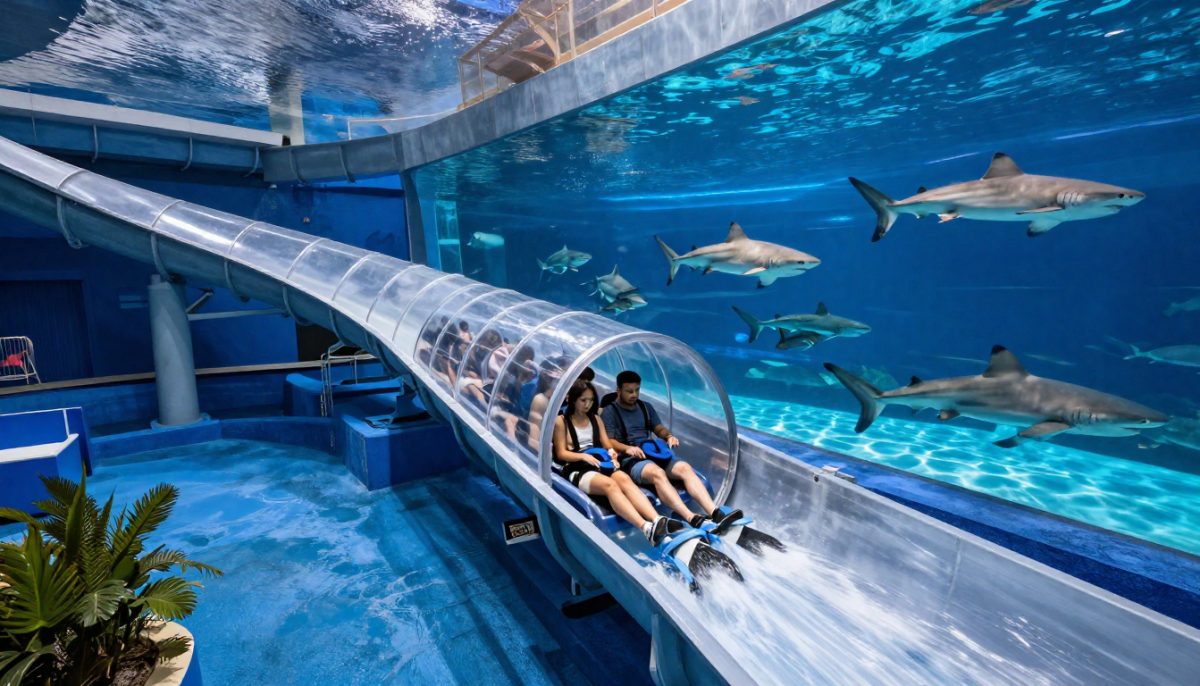
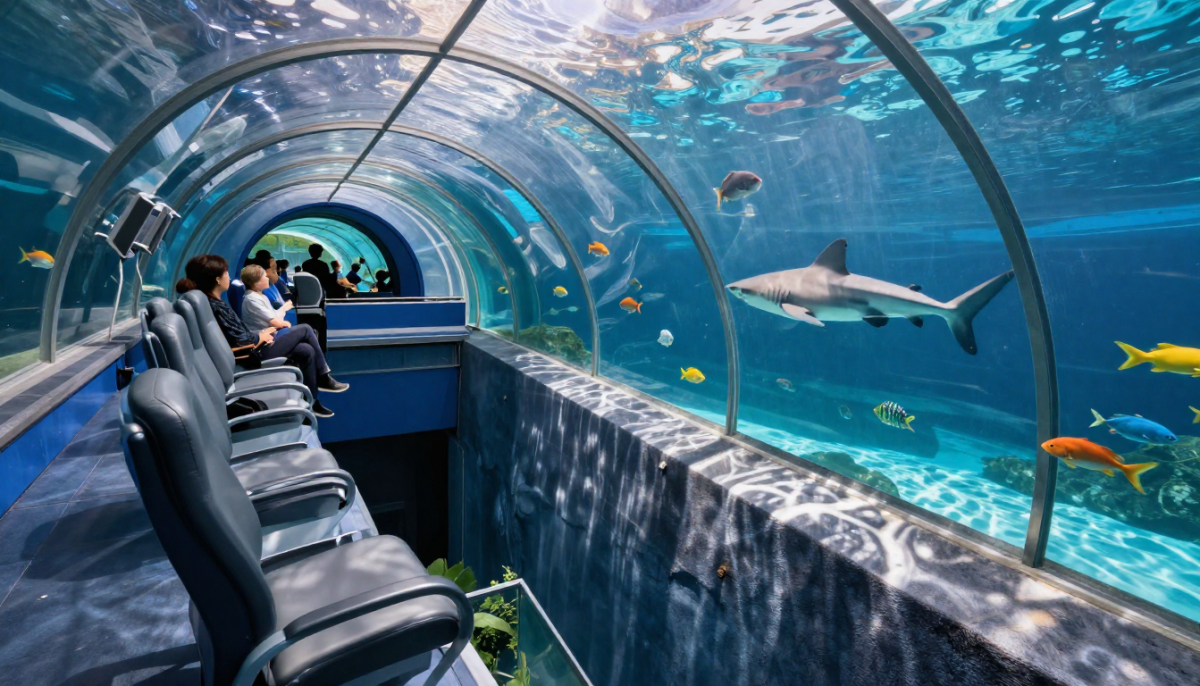
In the Leap of Faith water park at the Atlantis complex in Dubai, a transparent tunnel runs through a shark aquarium. Visually, it appears as a direct encounter with predators.
In practice, the tunnel is an acrylic tube designed to withstand water pressure and external loads. The aquarium is completely sealed off. There is no contact with the animals.
Fear is based on the evolutionary response of humans to predators and enclosed spaces. The engineering risk here is comparable to that of a standard closed water slide.
The danger in this case is psychological, not physical.
Myth #5. Free fall towers create g-forces that are dangerous for the heart.
Attractions like Giant Drop or Tower of Terror II accelerate to 135-160 km/h and create the effect of free fall.
But the key word is effect. Real free fall lasts a few seconds, while the magnetic or mechanical braking system gradually reduces speed. G-forces are short-lived and remain within acceptable physiological limits for a healthy person.
Height, weight, and health restrictions are introduced specifically to minimize risk. The main danger here is not overload, but potential issues for people with cardiovascular diseases, of which they may be unaware.
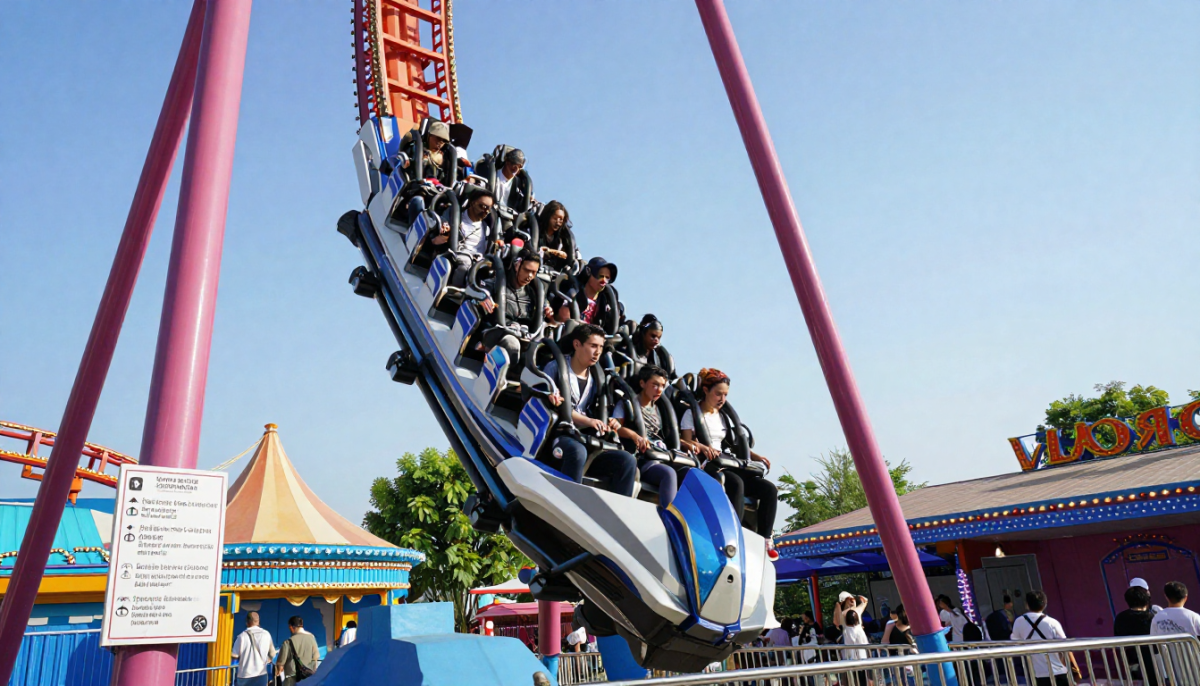
Myth #6. If there has been at least one incident, the ride is unsafe.
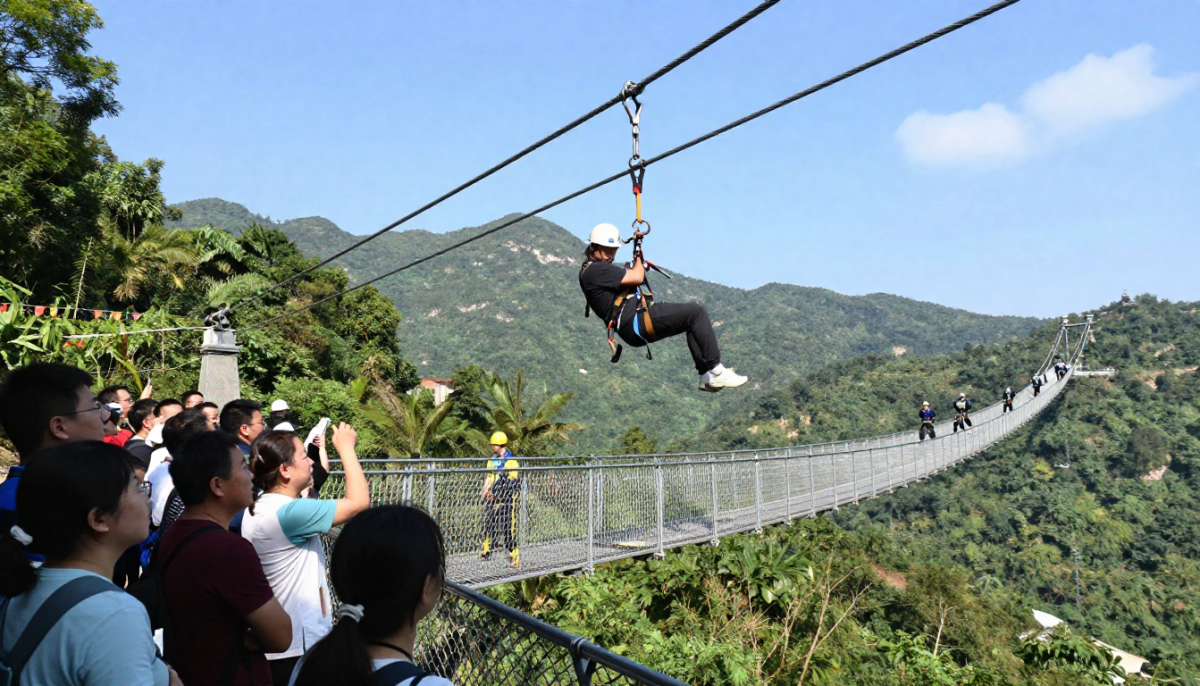
The description of the Chinese suspension bridge mentions a case where a visitor's safety harness allegedly detached. Such episodes quickly go viral and create a persistent sense of systemic threat.
However, a single incident does not equate to constructive insolvency. In the entertainment industry, every failure automatically triggers a chain of investigations, temporary closures, re-inspections, and protocol adjustments. After serious incidents, regulatory requirements typically only become stricter.
Historically, most high-profile accidents in amusement parks have led to updates in safety standards - strengthening of harnesses, introduction of redundant locks, additional seat position sensors. The system evolves through the analysis of errors.
Reputational risks for large parks are too significant to ignore even rare failures. One incident more often means increased oversight rather than chronic insecurity.
Myth #7. Old attractions are more dangerous than new ones.
Intuitively, it seems that if an attraction has been operating since 1998, like the Giant Drop, it must be morally outdated and potentially dangerous. However, in reality, the age of the structure is secondary compared to the maintenance regime.
The key factor is the technical inspection regulations. In most developed countries, attractions undergo daily visual inspections, regular non-destructive testing of metal structures, and mandatory replacement of critical components on a schedule.
Many steel roller coasters from the 1990s are still in operation precisely because they were originally designed with a large safety margin. If the park adheres to the regulations, "old" does not mean "dangerous."
Danger arises not from age, but from violations of procedures.
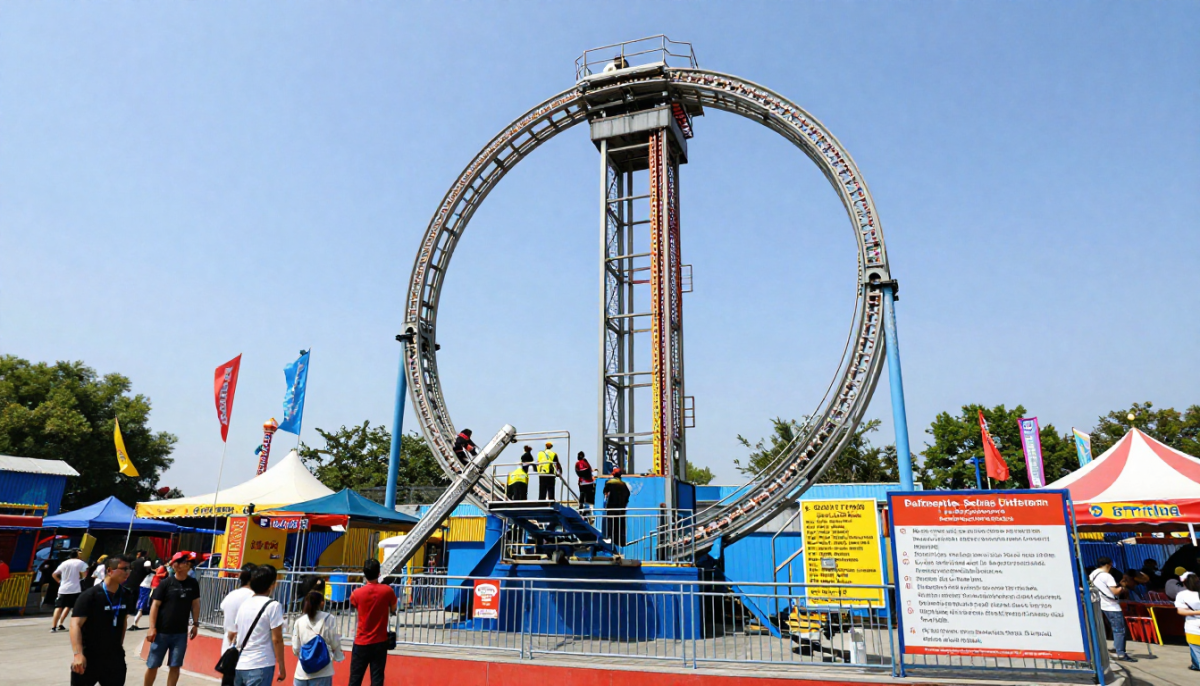
Myth #8. The more extreme the sensations, the higher the overload for the body.
The feeling of losing control is the main source of fear. When the cabin of the catapult in "Wonder Island" soars upward and begins to spin, it subjectively seems that the body is experiencing extreme loads.
However, most attractions are designed so that peak overloads do not exceed the range acceptable for a healthy person - usually 3-4 G for a short period. For comparison: during a sneeze, the pressure in the chest can be comparable in terms of the brevity of the effect.
The body reacts to suddenness and unpredictability, not just to physical parameters. That is why the slow ascent before the drop in Valravn is often perceived as scarier than the acceleration itself.
The psychological component enhances the experience but does not make it physiologically destructive.
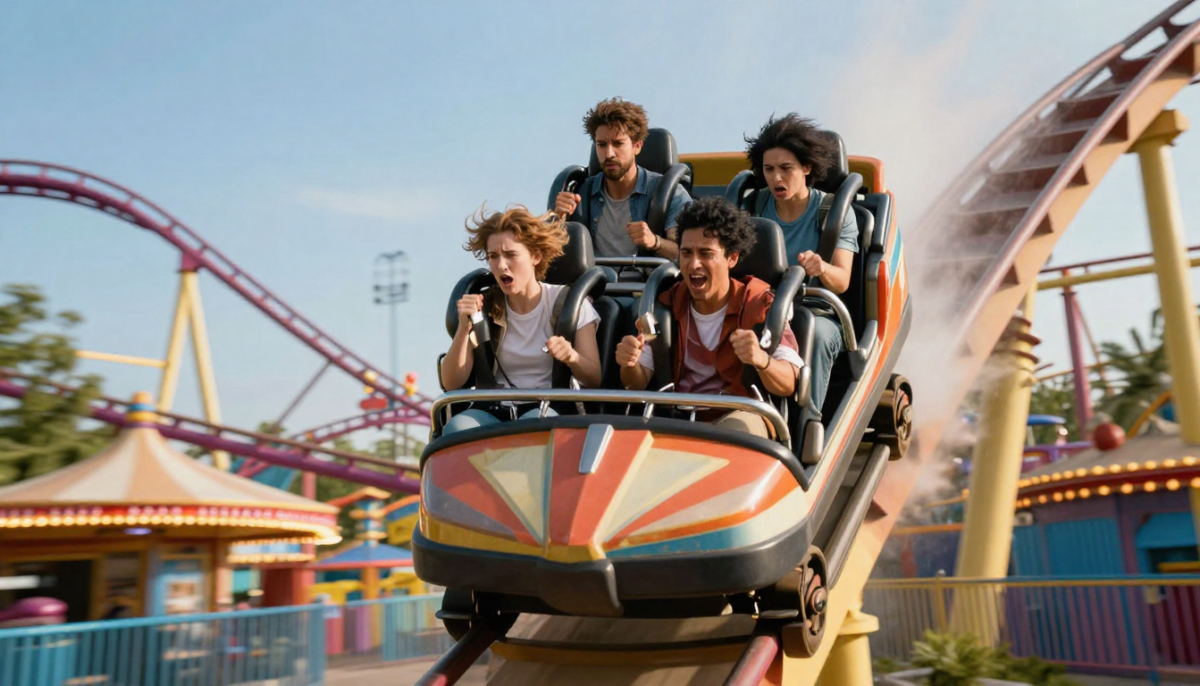
Myth #9. Extreme rides are designed only for completely healthy people.
Formally, yes - there are restrictions based on height, weight, pregnancy, and cardiovascular diseases. But this is not a testament to excessive danger, but rather a mechanism for individualizing risk.
The problem is that many visitors underestimate their own condition. In several cases, incidents occurred not due to a malfunction, but because of hidden medical factors - for example, an aneurysm or severe arrhythmias that the person may not have been aware of.
The attraction does not create illness, but it can become a trigger for an already existing problem. Therefore, the restrictions are part of the safety system, not an acknowledgment of structural instability.
Myth №10. The fastest rides inevitably wear out faster and become more dangerous.
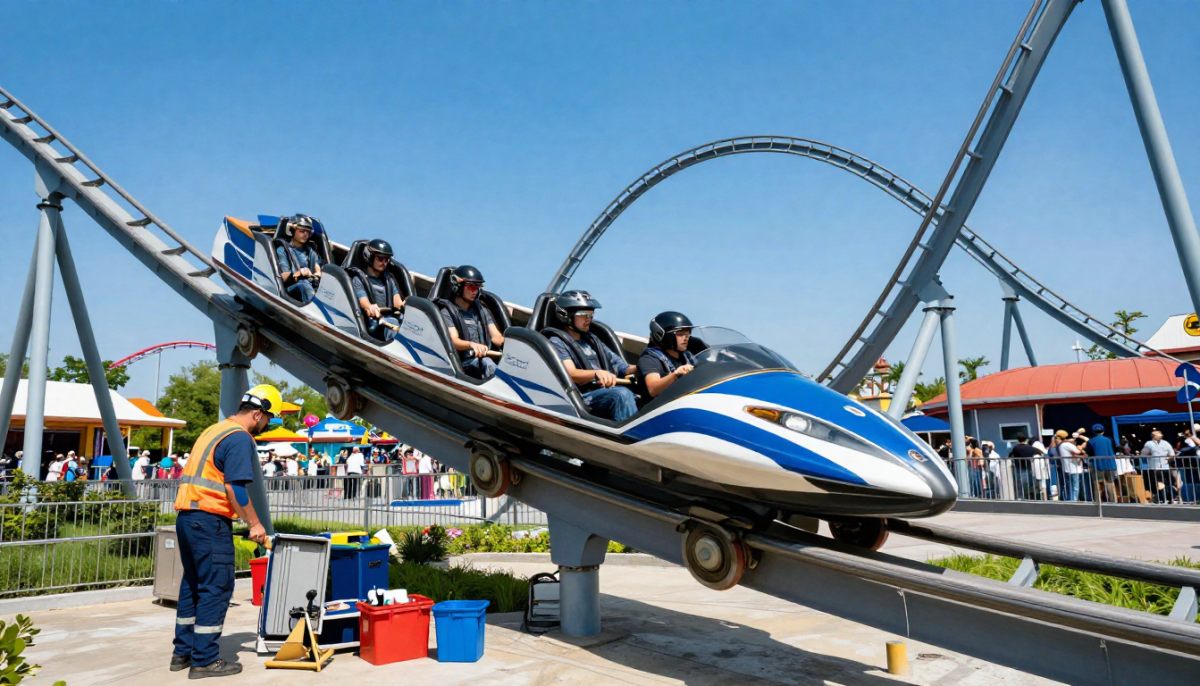
Returning to the Formula Rossa, it is logical to assume: at a speed of 239 km/h, the load on the rails and wheels is colossal, meaning wear is higher and the risk increases.
In practice, it is precisely such attractions that receive the most thorough maintenance. High speed means increased control - regular replacement of wheel assemblies, vibration monitoring, and checking of fastenings. Operating budgets for flagship roller coasters are significantly higher than for less prominent attractions.
Speed increases the service requirements, but does not necessarily increase the likelihood of an accident.
Myth #11. If an attraction looks scary, it means it is technically complex and risky.
Sometimes it's not the height or the speed that scares, but the very visual idea. A transparent tunnel through an aquarium, seats pushed over the edge of a tower, a "cliff" before the fall.
But many elements of fear are scenography. The four-second stop before the vertical drop of Valravn is a controlled effect. The tunnel with sharks in Leap of Faith is an architectural device.
The technically complex part may be the hidden braking system that the visitor does not see. And the visually frightening element often carries no additional burden.
The industry sells visible risk and conceals the real engineering routine.
Myth #12. Amusement parks are interested in maximum risk for the sake of adrenaline.
Economic logic suggests otherwise. A disaster means millions in losses, lawsuits, closures, loss of licenses, and reputation.
For large operators like Cedar Point or Ferrari World, safety is the foundation of the business model. The adrenaline must be reproducible and controllable. The visitor should want to return, not get injured.
Risk in the entertainment industry is a calculated figure, not a gamble. Attractions are designed to create the illusion of going beyond limits while maintaining statistical predictability.
Sources
Most "most dangerous attractions" are dangerous primarily at the level of perception. Their task is to create a controlled illusion of going beyond safety. Engineering standards, insurance, and regulation make the probability of catastrophe extremely low.
This does not mean that the risk is zero. But to speak of them as truly life-threatening objects is an exaggeration. In most cases, we are purchasing not danger, but a carefully constructed sense of danger.
- ASTM International. F24 Committee on Amusement Rides and Devices - Standards Overview.
- International Association of Amusement Parks and Attractions. Ride Safety Report.
- David H. Roth, "Roller Coasters: A Thrill Seeker's Guide to the Ultimate Scream Machines", Citadel Press.
- Dreamworld official ride technical specifications archive.
- Ferrari World Abu Dhabi - Technical Overview of Formula Rossa.
You might like

Festivals We Misunderstand
Festivals are often described as a universal language of joy. Tourist websites promise emotions, guides - scale, bloggers - unforgettable experiences. But behind ...

15 of the Strangest New Year's Traditions from Around the World
New Year is considered a universal holiday. It seems to erase borders: in different countries, people summarize the year, make plans, and set wishes. ...
The History of Car Logos: What Do These Symbols Really Mean?
The car logo is more than just a decorative element on the hood. It encapsulates the brand's history, its ambitions, technological achievements...

The strangest Guinness records: how the absurdity industry is organized
When we hear about the Guinness World Records, our imagination often conjures up a set of absurd achievements: people eating airplanes covered in a million bees...