
Purring, claws, and a guilty look: 10 myths about cat behavior
We are used to perceiving cat behavior as something intuitively understandable. A cat rubbing against your legs means it loves you. Purring means it is content. Ears pinned back mean it is afraid. Such formulas are convenient; they create a sense of control and mutual understanding. However, if we closely examine the factual side of the issue—from ethological data to observations in veterinary practice—it becomes clear that many popular explanations are oversimplified or partially incorrect.
Understanding this is important not out of idle curiosity. Misinterpretation of signals can lead to chronic stress in the animal, missed illnesses, or the reinforcement of conflictual behavior. In this article, I will analyze key theses from the popular description of "cat language" and check them against modern scientific data.
Myth #1. If a cat rubs against its owner, it is simply expressing love.
The original video claims that rubbing is a territorial marking with pheromones, as well as a greeting and a request for affection. Part of this is true, but the picture is broader.
Cats do have facial glands that secrete pheromones - especially in the cheek area and at the base of the tail. When an animal rubs, it leaves chemical marks that form the so-called "social scent" of the group. Research on chemical communication in cats shows that this is a way to create a safe zone, not just an act of affection.
However, it is important to understand: rubbing does not equal automatic trust. A cat may mark a person as part of its territory, even if it avoids close contact. This is not a romantic gesture, but a behavioral mechanism for establishing a stable environment.
Conversely, the absence of rubbing does not always indicate distrust. Individual differences, early socialization, and breed characteristics significantly influence the frequency of such behavior.
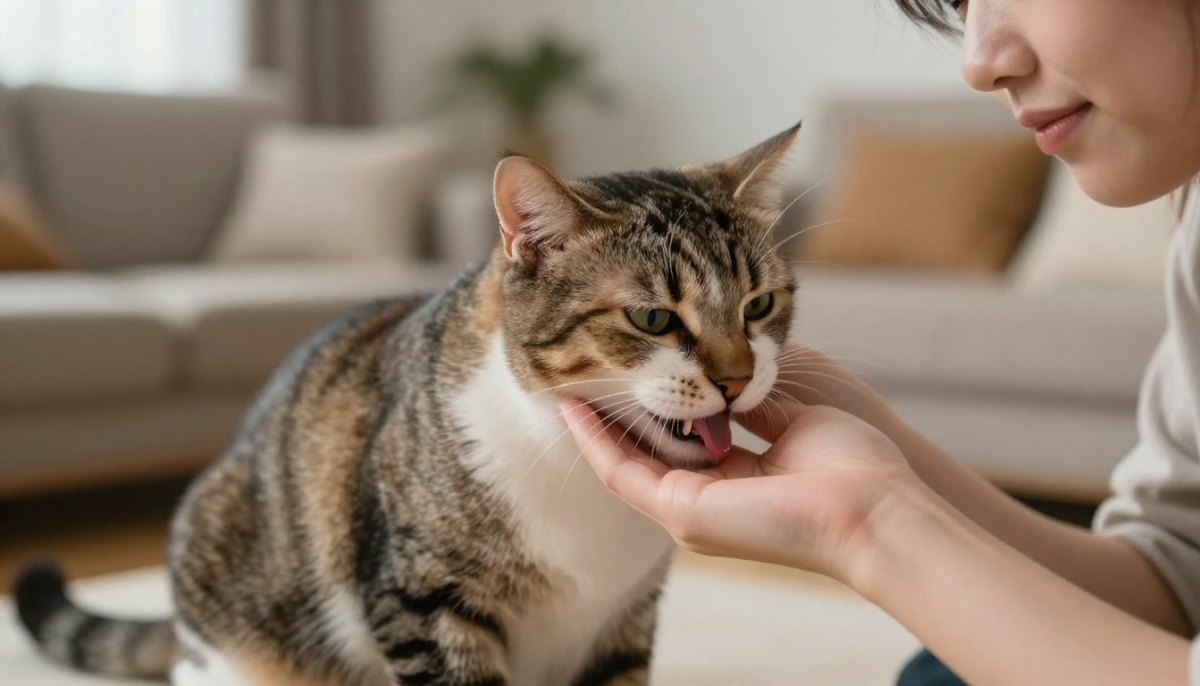
Myth #2. The tail definitely shows a cat's mood.
Popular tail decoding schemes look convincing - "tail up" means happiness, "fluffed" means fear, and so on. Overall, the direction of interpretation is correct, but the key problem lies in the word "unambiguous."
The position of the tail is part of the overall body signal. A vertical tail is indeed associated with a friendly greeting. However, the same slightly twitching tip can indicate both excitement before play and growing irritation. Context is everything.
Ethologists emphasize: feline communication is multi-component. The position of the ears, body tone, gaze direction, and distance to the object are all taken into account. Isolated interpretation of one element often leads to mistakes.
This is especially important when interpreting "tail vibrations." In some cases, this is a pre-marker of aggression, not joy at meeting.

Myth #3. Purring is always associated with pleasure.
The text explicitly states that purring does not always indicate contentment - and this is precisely the case where a popular video turns out to be closer to the truth than the mass stereotype.
Physiologically, purring is a vibration in the range of approximately 25-150 Hz. Research shows that these frequencies may promote tissue regeneration and pain reduction. This is why cats purr during stress, illness, or even before death.
In veterinary practice, purring in injured animals is a common occurrence. It is a self-regulation mechanism. It is not directed at humans as a sign of happiness.
Therefore, if a cat is purring but at the same time hiding, refusing food, or displaying a tense posture, relying solely on the sound is dangerous.
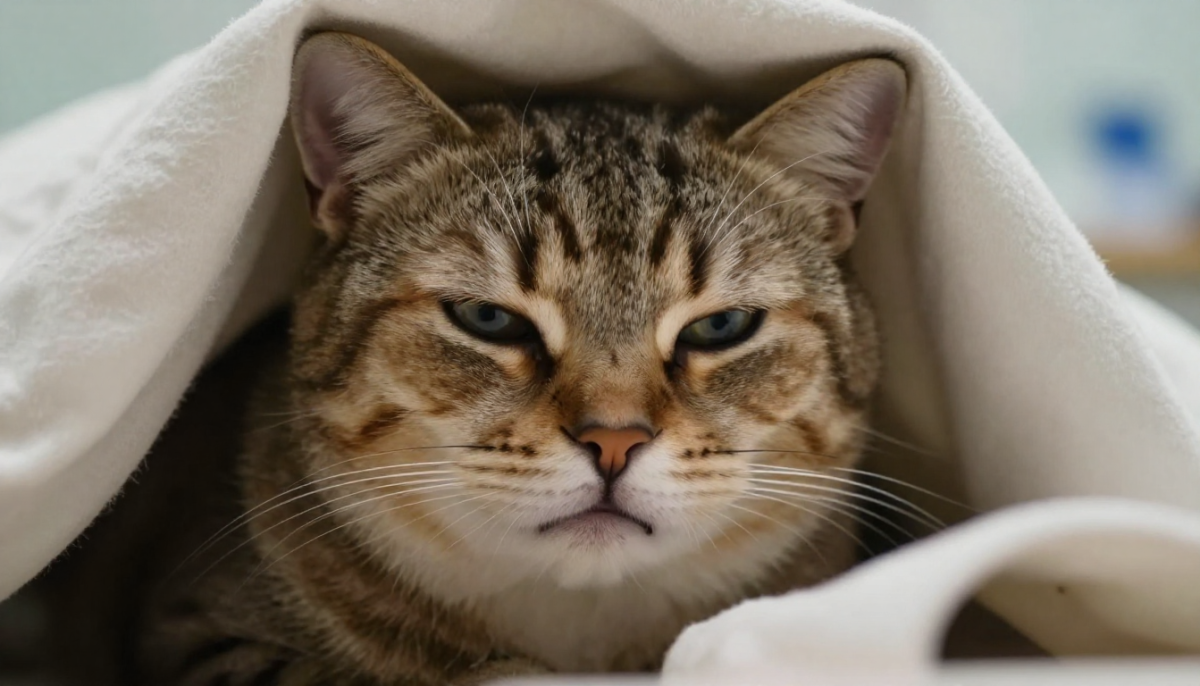
Myth №4. Cats understand more than 500 words and can engage in meaningful dialogue.
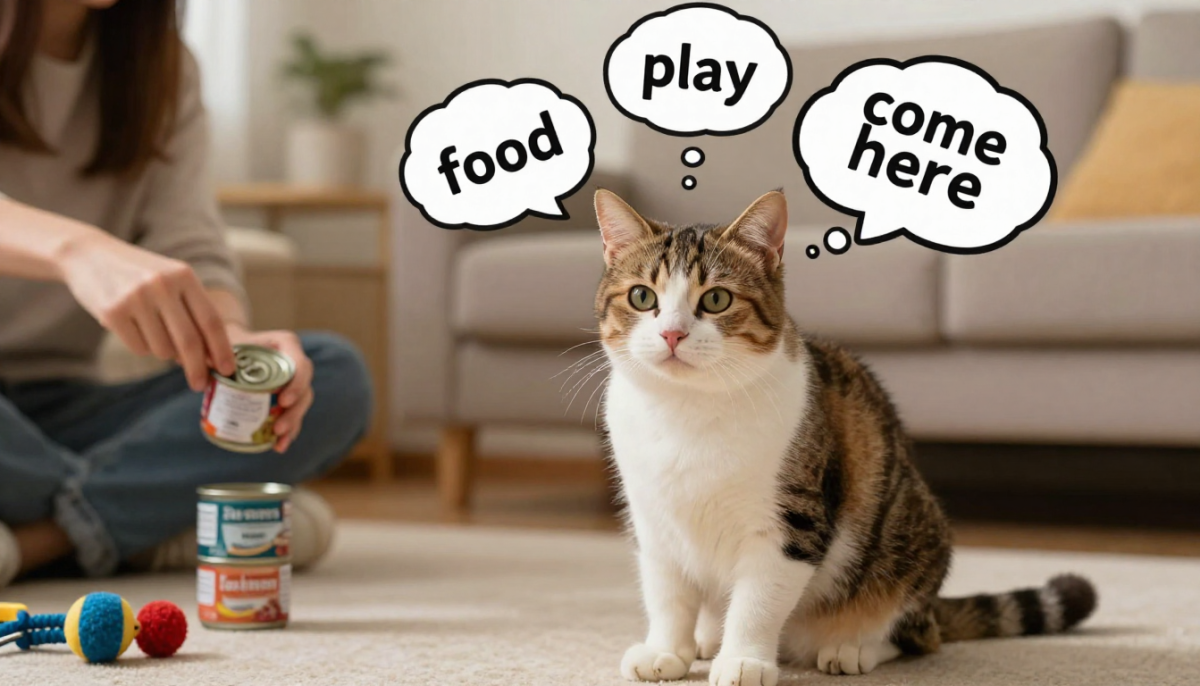
The video claims that cats understand over 500 words and even short phrases. There is no scientific evidence to support this figure.
Research on the cognitive abilities of domestic cats shows that they can distinguish intonation, recognize their own name, and associate certain sounds with actions - for example, the sound of a can opening. However, this pertains to the formation of associations, not lexical understanding of words in the human sense.
The work of Japanese researcher Atsuko Saito has shown that cats can indeed distinguish their name from other words spoken in the same voice. However, this does not equate to linguistic understanding. This is acoustic discrimination, not semantic analysis.
The number "500 words" is a nice, but unverified popular figure.
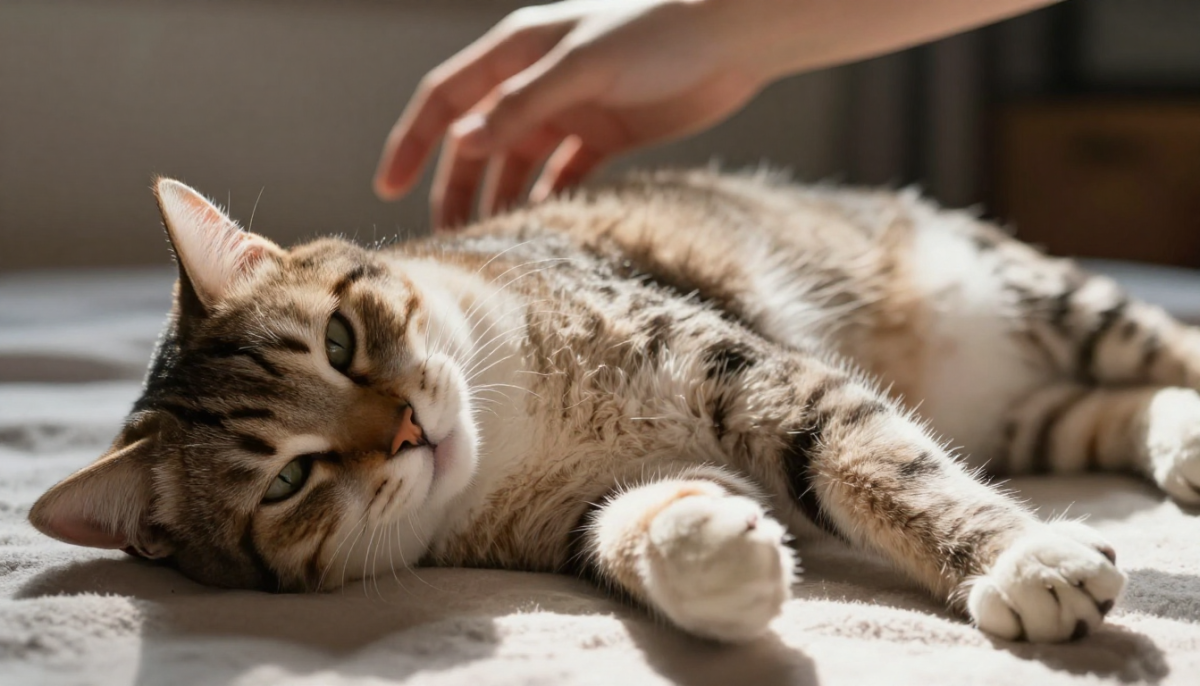
Myth #5. If a cat shows its belly, it's always an invitation to pet it.
In popular interpretation, showing the belly is called "the highest degree of trust." In a certain sense, this is true - a vulnerable posture indeed means that the animal does not perceive you as a threat.
However, this does not automatically grant permission for contact.
For cats, the belly is one of the most sensitive areas. A sudden touch can instantly switch their state from relaxed to defensive. Often, the so-called "sudden paw attack" after an attempt to pet is not a whim, but a reflexive protective reaction.
In ethology, social trust and tactile tolerance are distinguished. A cat may trust a person but cannot tolerate stimulation of certain body areas. This is especially true for animals with a low threshold for sensory sensitivity or chronic pain.
Therefore, showing the belly is a signal of safety, not a universal invitation to pet.
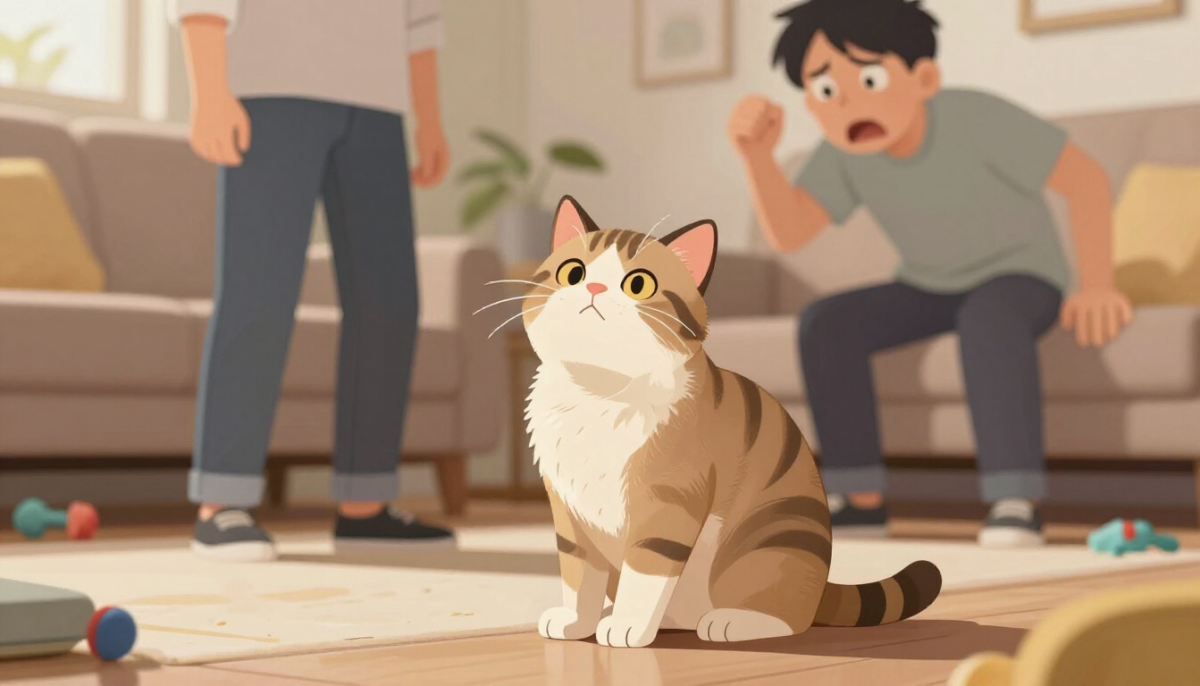
Myth #6. Frequent licking after "guilt" means that the cat is aware of its wrongdoing.
Scientific data do not support the presence of a moral sense of guilt in cats as understood by humans. What owners interpret as a "guilty look" is most often a reaction to changes in the owner's behavior - a raised voice, sudden movements, a tense posture.
The act of grooming in such situations refers to so-called displacement behaviors. This is a way to reduce internal tension in a stressful situation.
A cat does not realize that it has committed a moral violation. It reacts to the emotional background and alleviates anxiety through familiar self-regulating behavior.
Myth #7. Pressed ears always mean fear.
The position of the ears is indeed an important indicator of emotional state. However, pinned-back ears are not just a sign of fear.
Ears turned sideways and back can signal irritation, high concentration, pre-fight mobilization, or pain. In clinical practice, cats with chronic pain conditions often keep their ears partially pinned back without any overt aggression.
Additionally, the ears function as acoustic locators. In response to a sudden sound, the animal may temporarily pin them back without experiencing panic.
Isolated interpretation of a single sign leads to mistakes once again. The overall body pattern is always important.

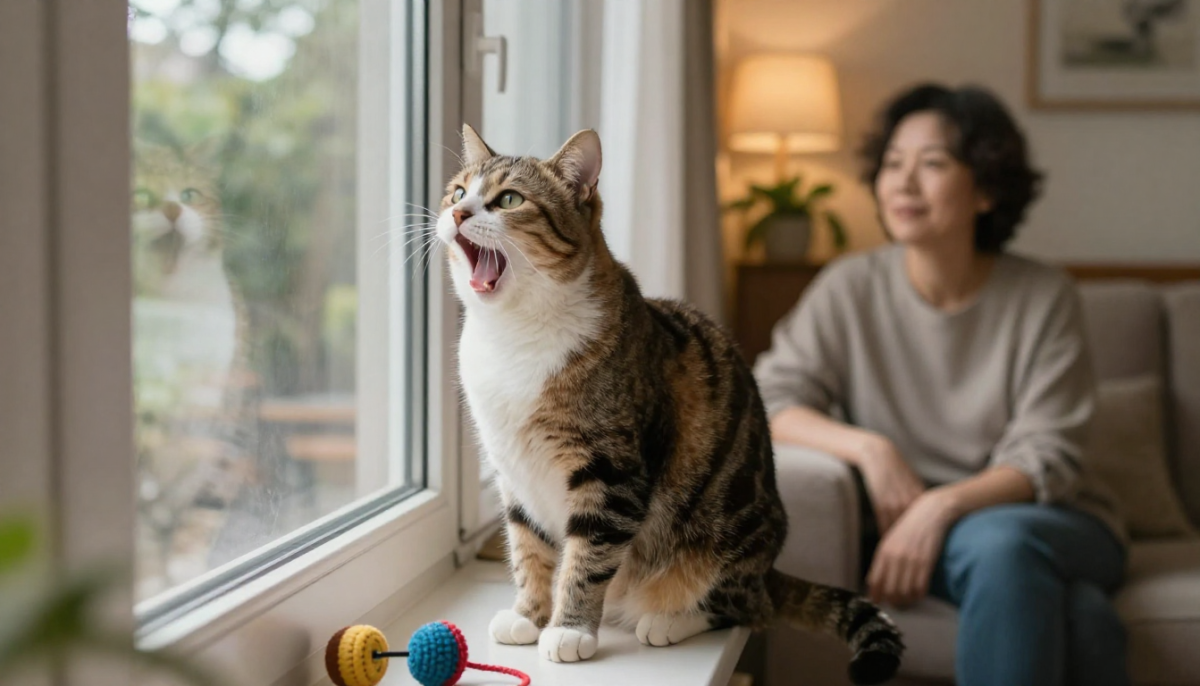
Myth #8. A cat that doesn't meow is naturally silent.
Domestic cats meow primarily when communicating with humans. When interacting with each other, adult individuals use meowing significantly less often.
This means that the frequency of vocalization is largely shaped by the process of living together with people. Some animals quickly understand that vocal signals effectively attract attention. Others prefer tactile or behavioral strategies.
Additionally, a decrease in vocalization may be related to age, hearing loss, or laryngeal diseases. Therefore, a "quiet nature" is not always an innate characteristic.
Myth #9. If a cat kneads with its paws - it is just happy.
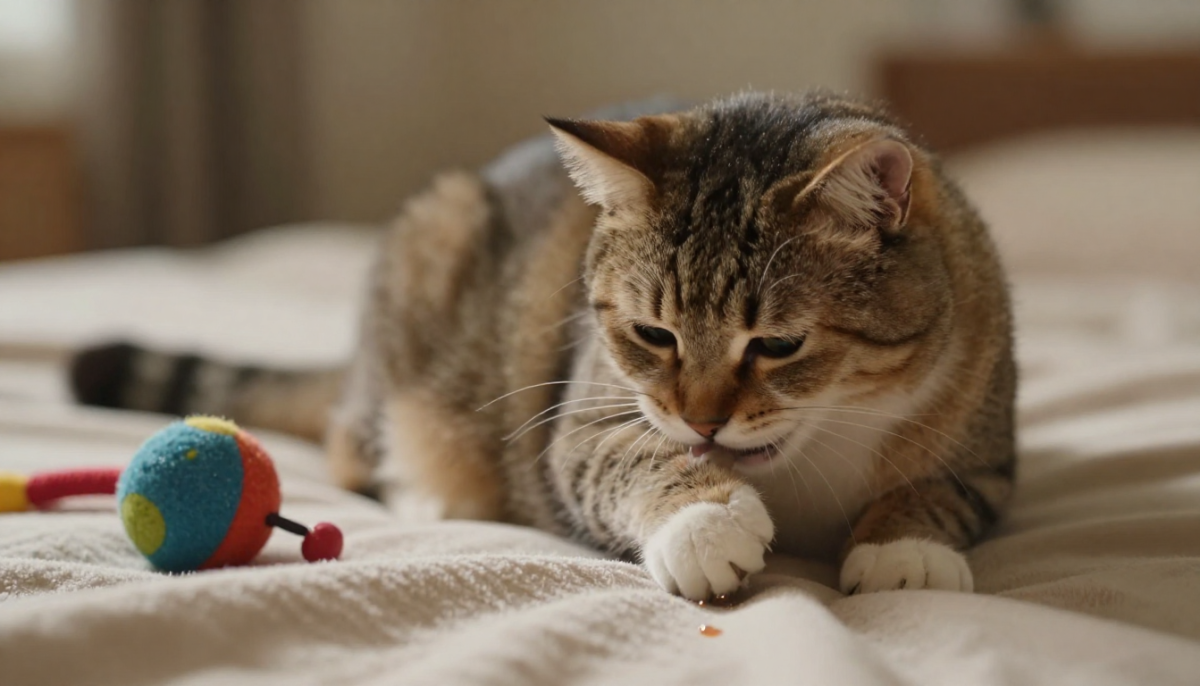
The so-called "milk kneading" is associated with the behavior of kittens stimulating lactation in their mother. In adulthood, this pattern persists as a comfort behavior.
Yes, it most often occurs in a relaxed state. But it is not necessarily an indicator of euphoria. It can be a way of self-regulation before sleep or in conditions of moderate stress.
Sometimes kneading is accompanied by drooling or intensified sucking on fabric - these are signs of an infantile behavioral complex that activates under increased anxiety.
Therefore, kneading is a marker of returning to a safe state, rather than just an indicator of happiness.
Myth #10. There is a universal dictionary of cat language with thousands of words.
The idea of a "3000-word dictionary" sounds appealing, but there is no scientific basis for it.
Cat communication is built on a combination of acoustic, visual, and chemical signals. It is a flexible system, not a discrete dictionary with fixed meanings.
Attempts to create translation tables simplify a complex process into a linear scheme of "sound - meaning." In reality, the same type of meow can signify different needs depending on the context, time of day, previous events, and the individual experience of the animal.
That is why any universal translators operate on the level of probabilities, rather than exact meanings.
Sources:
Most descriptions of cat language contain a kernel of truth but suffer from excessive rigidity. A cat is not a set of fixed signals, but a flexible behavioral system where each gesture is interpreted through context, individuality, and health status. There are no universal translators.
- Bradshaw J. Cat Sense: How the New Feline Science Can Make You a Better Friend to Your Pet. Basic Books, 2013.
- Turner D. C., Bateson P. The Domestic Cat: The Biology of its Behaviour. Cambridge University Press, 2000.
- Saito A., Shinozuka K., Ito Y., Hasegawa T. Domestic cats discriminate their names from other words. Scientific Reports, 2019.
- Overall K. Clinical Behavioral Medicine for Small Animals. Mosby, 1997.
- Vitale K. R., Udell M. A. R. The quality of being sociable: The influence of human attentional state, population, and human familiarity on domestic cat sociability. Behavioural Processes, 2019.
You might like

China on the path to global leadership: how sustainable is this growth?
China has undergone a transformation in recent decades that took centuries in other countries. From an agrarian, poor nation torn by internal conflicts...

An RV is not an apartment on wheels: debunking myths about mobile homes
There is a persistent romantic aura surrounding motorhomes. In the popular imagination, it symbolizes absolute freedom, mobile real estate, and almost a vehicle...