
Pain, magic, and "tooth worms": an analysis of myths about medieval dentistry
Medieval dentistry has long become a convenient source of historical horror stories. Hooks, hammers, tooth extraction in the marketplace, "tooth worms," and blows to the head instead of anesthesia - all of this easily turns into a viral narrative. But if we look at the sources, archaeology, and medical treatises, the picture turns out to be more complex.
In this text, I will analyze several persistent notions about dental treatment in the Middle Ages and in earlier civilizations. We will examine what is confirmed by archaeology and written sources, and what is a later exaggeration or simplification. It is important not just to reconstruct everyday details but to understand how perceptions of pain, the body, and the medical profession changed. This allows for a more accurate assessment of how "barbaric" medieval practices were and how they differed from modern ones.
Myth #1. In the Middle Ages, there were almost no problems with teeth.
In popular retellings, there is often a thesis that early medieval peasants had almost no cavities due to "coarse natural food." Archaeological data indeed show that in the early Middle Ages in Europe, the prevalence of cavities was lower than in modern times. Studies of burials from the 5th to 9th centuries record fewer affected teeth compared to populations from the 16th to 18th centuries. The main reason is low sugar consumption and limited use of refined carbohydrates.
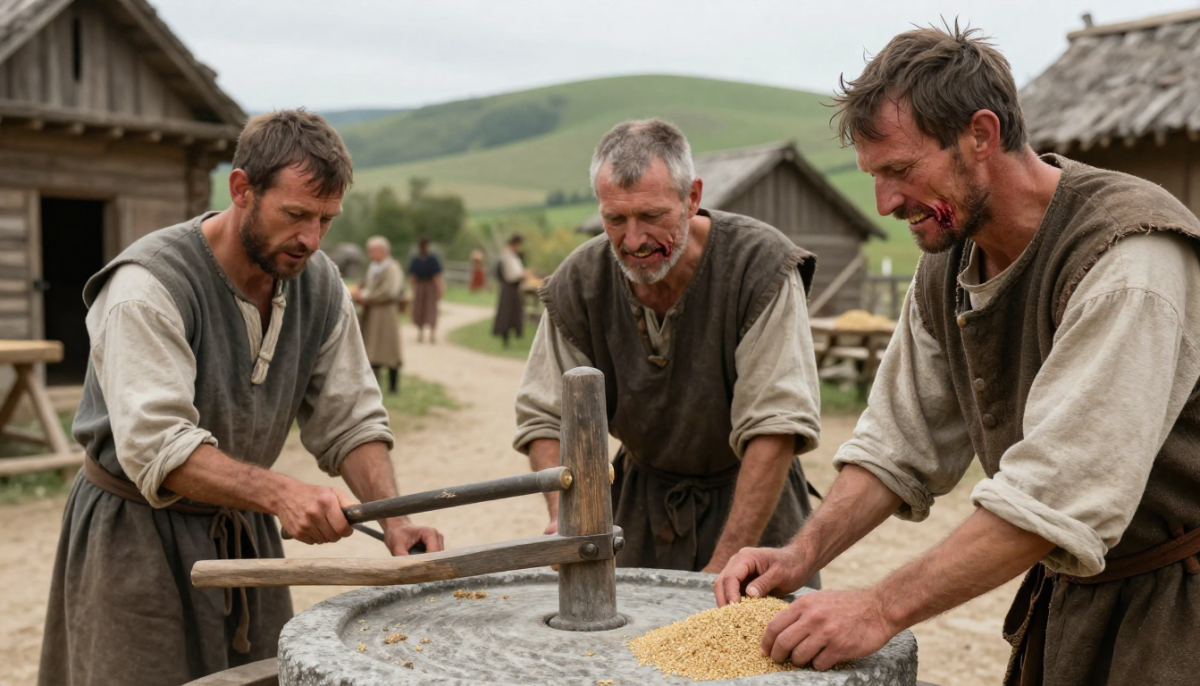
However, the absence of sugar did not mean perfect health. Peasants exhibited significant tooth wear, abscesses, periodontitis, and tooth loss due to infection. Coarse food mixed with stone dust from millstones accelerated enamel wear. Moreover, the average life expectancy was indeed lower, but that does not mean people did not reach the age of dental problems. Many adults aged 35-45 had serious tooth damage.
Thus, there may have been fewer cavities, but dental suffering was by no means zero.
Myth #2. The Church banned medicine, so teeth were treated only by executioners and barbers.
It is a common assertion that the church supposedly banned surgical interventions, handing them over to "uneducated" craftsmen. Historically, the situation was different. Indeed, in the 12th-13th centuries, the participation of clergy in operations involving bloodshed was restricted. This primarily concerned monks and clerics. However, medicine as such was not prohibited. The universities of Bologna and Paris actively taught medicine.
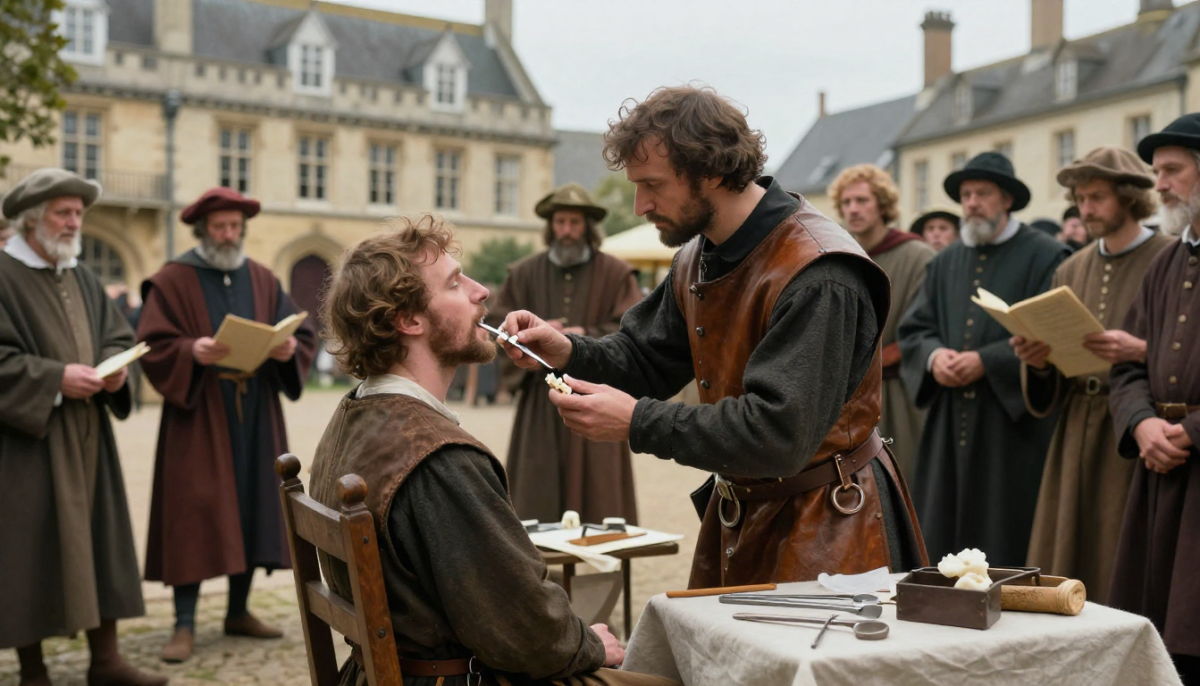
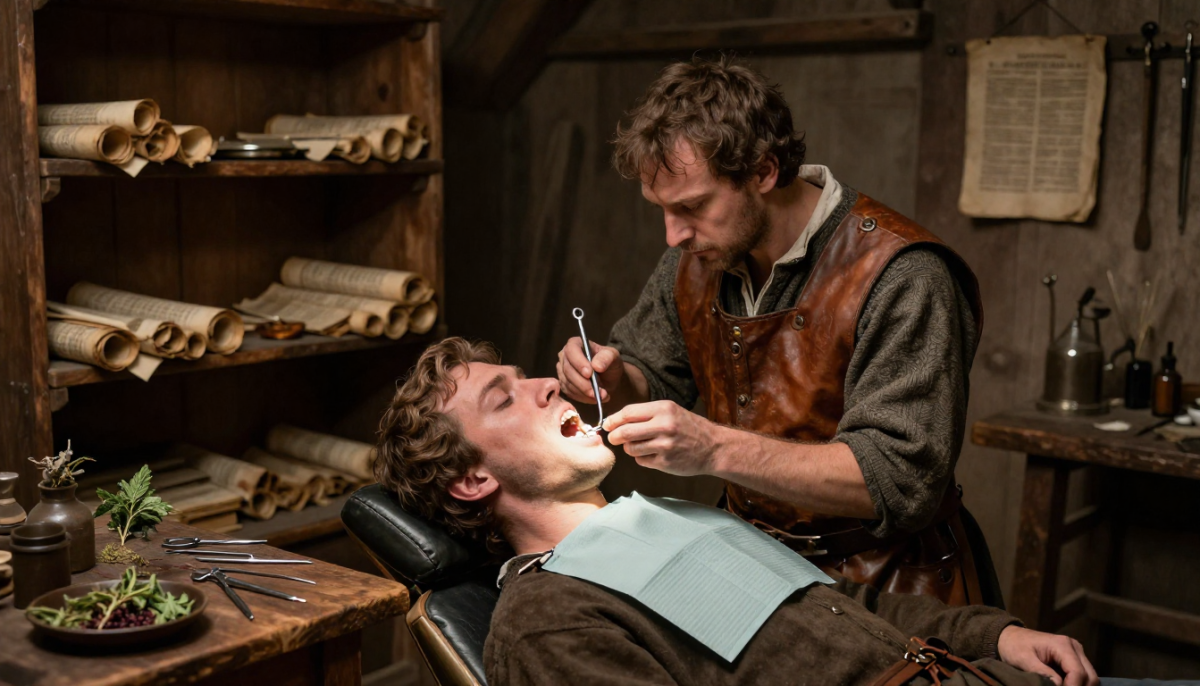
As a result, a division emerged: university doctors dealt with diagnosis and therapy, while surgeons and barbers performed practical interventions. Tooth extractions were indeed often carried out by barbers. However, this does not mean a complete absence of knowledge. By the 14th-15th centuries, specialized surgical treatises appeared, describing instruments for tooth extraction.
Dentistry as a separate profession would be established later, but the notion of a complete "handing over of medicine to executioners" is an excessive simplification.
Myth №3. People were anesthetized by a blow to the head.
Stories about patients being simply knocked out before tooth extraction regularly appear in popular content. In sources on medieval medical practice, such a method is not recorded as a systematic practice. It is more of an anecdotal plot.
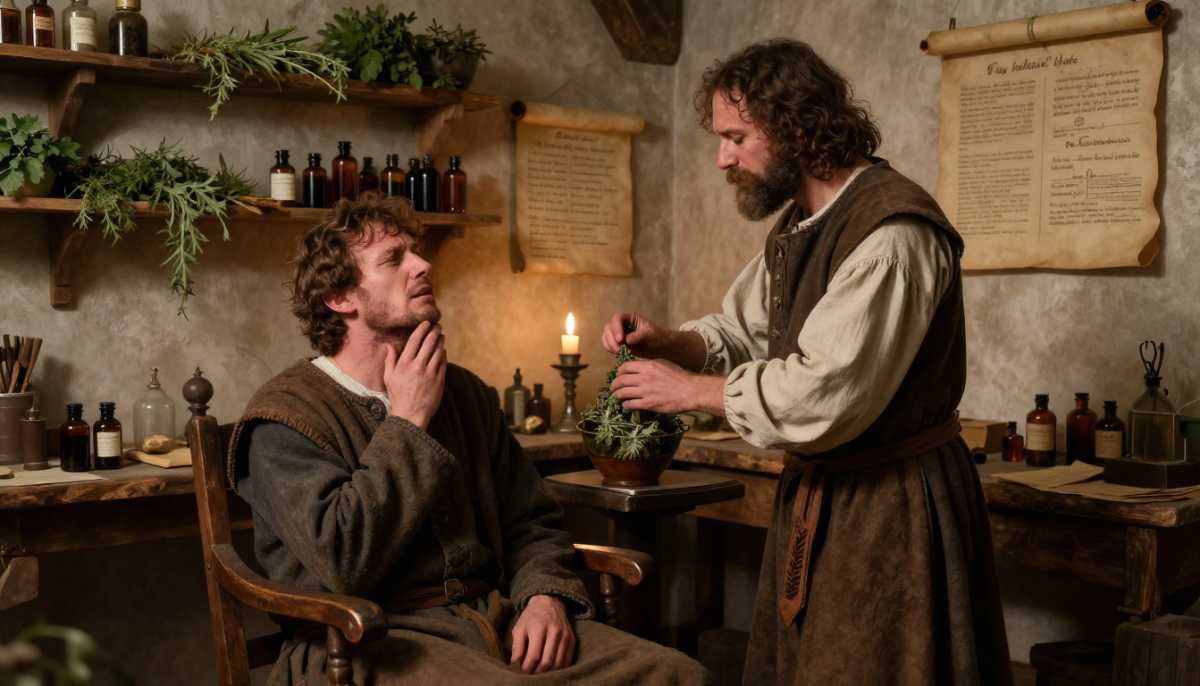
Medieval doctors used herbal remedies with sedative effects - belladonna, opium, mandrake. Their effects were unpredictable and potentially dangerous, but it was an attempt at pharmacological pain relief. In the late modern period, morphine was added to this. Full inhalation anesthesia would only emerge in the 19th century.
Pain was indeed a serious problem. However, the idea of "knockout as the norm" relates more to folklore than to documented medical practice.

Myth №4. Ancient civilizations were only engaged in magic, not real healing.
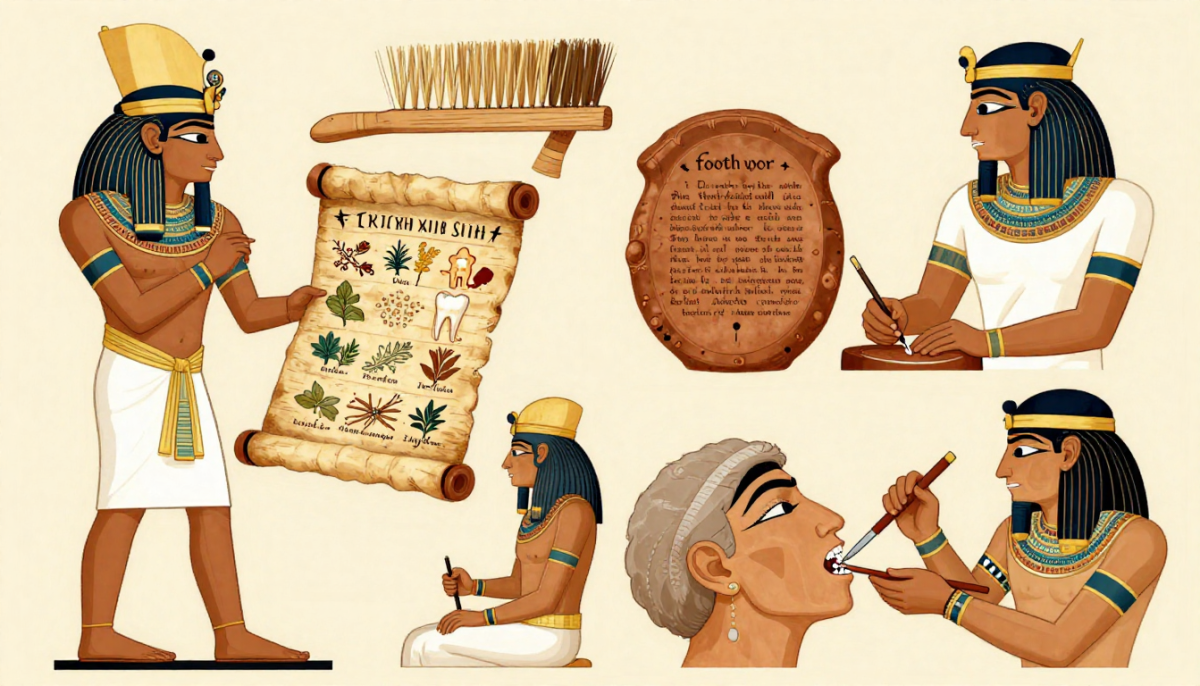
Materials from Ancient Egypt and Mesopotamia show that medical knowledge was systematized long before the European Middle Ages. Egyptian papyri describe gum inflammations and recipes for mixtures of plant components. In Mesopotamia, there indeed existed a myth about the "tooth worm," but this did not exclude practical manipulations.
In China, hygiene methods developed, including prototypes of toothbrushes made from animal bristles. In pre-Columbian America, the Maya used tooth drilling for inlaying with precious stones, which requires precise technique and an understanding of tooth structure.
Magical beliefs coexisted with empirical skills. This is characteristic of all pre-scientific medicine - symbolic explanations for the cause of illness did not interfere with practical interventions.
Myth #5. Dental prosthetics in the Middle Ages were pure fantasy or a decorative whim.
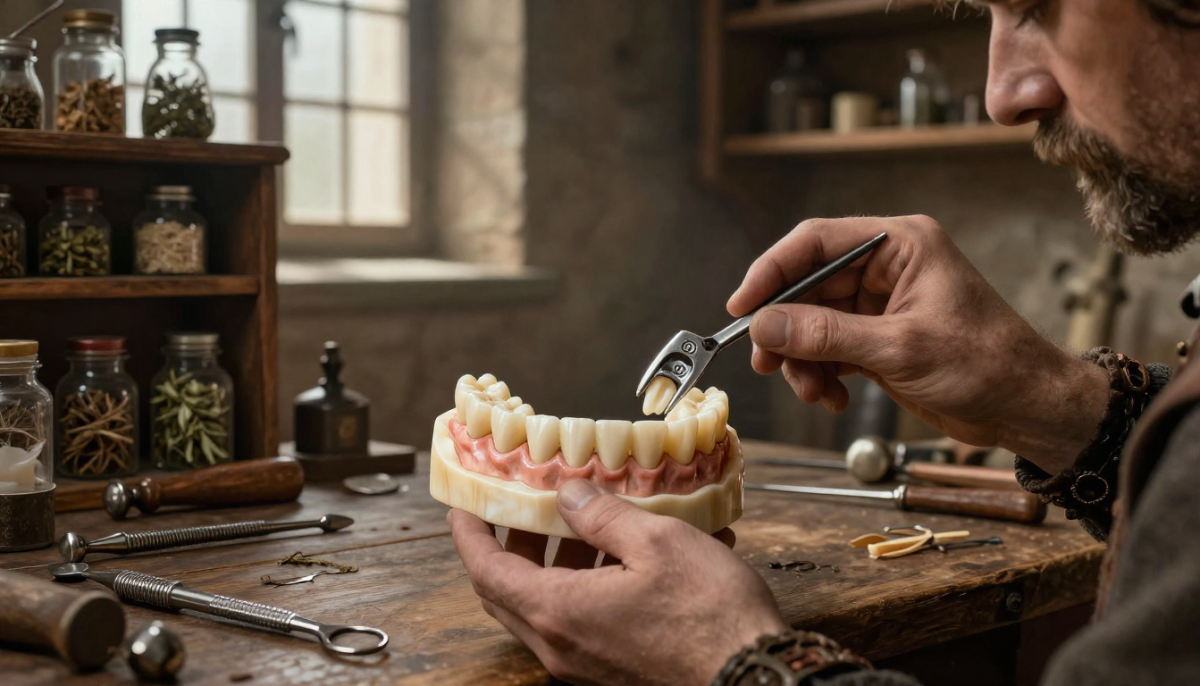
It is often heard that medieval prosthetics were either a myth or exclusively "cosmetics for the nobility." Archaeological finds show that prosthetics did exist, although on a very limited scale. As early as antiquity, the Etruscans used gold wires to secure artificial teeth - this is confirmed by finds from the 7th-5th centuries BC. In the Middle Ages, similar practices did not completely disappear.
However, such constructions were expensive, technically complex, and often traumatic for neighboring teeth. Bone, ivory, and metal were used. Sometimes animal teeth were employed. But it is not accurate to speak of mass prosthetics. This was a rare practice for the wealthy classes, and the functionality of such constructions was limited. Nevertheless, the very fact of their existence refutes the notion of a complete absence of orthopedic attempts.
Myth №6. The "tooth worm" theory made dentistry completely irrational.
The idea that a worm causes cavities was indeed widely held in Mesopotamia and persisted in Europe until the early modern period. The text of the so-called "Incantation Against Toothache" from Sumerian tablets directly describes the worm as the source of suffering.
But it is important to understand: the existence of a mythological explanation for the cause did not exclude practical interventions. Even if the pain was explained by a "worm," treatment involved the mechanical removal of the affected tissue or the tooth itself. The physician could simultaneously recite an incantation and use a tool. For pre-scientific medicine, this is a normal combination of symbolic and empirical.
The rational microbiological theory of cavities would only emerge in the 19th century, but before that, people had already observed a connection between tissue destruction and pain, which means they attempted physical interventions.

Myth #7. Before the invention of the drill, teeth were not treated, only extracted.
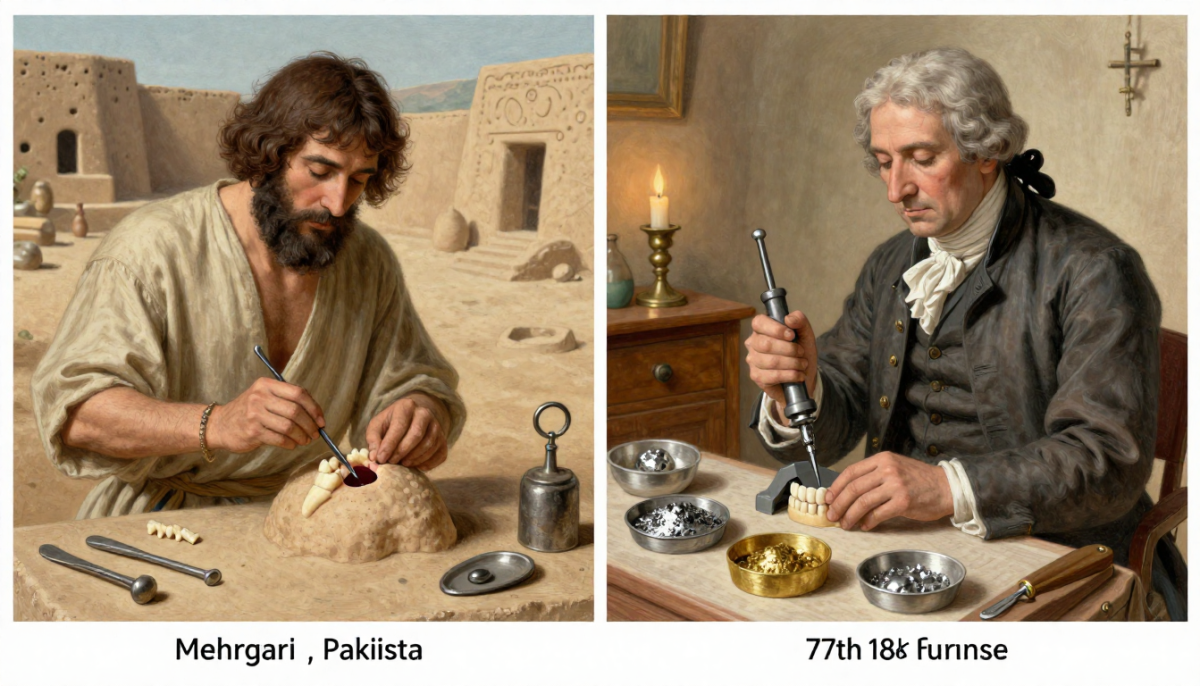
Extraction was indeed the most common method of relieving pain. But this does not mean that attempts were not made to preserve the tooth. Archaeological data from various regions show cases of mechanical treatment of carious cavities as far back as ancient times. In Pakistan, at the Mehrgarh site, teeth with signs of drilling, dating back to the 7th millennium BC, have been found.
In Europe, during the 17th-18th centuries, filling materials such as lead, gold, and silver amalgam were used. Before the widespread introduction of foot-powered drills in the late 18th century, hand tools were employed. They were slow and painful, but the idea of removing only the affected tissue already existed.
Thus, the dental drill accelerated the process and increased precision, but it did not create the concept of treating caries from scratch.
Myth #8. Medieval people were indifferent to toothache.
Sometimes it seems that people of the past endured pain without much complaint. Sources tell a different story. Medical treatises detail the sufferings of patients, methods for alleviating pain, recipes for infusions and ointments. Toothache is mentioned in legal documents and letters.
Pain was perceived as a serious problem capable of disrupting sleep, nutrition, and work. That is why there was such a variety of methods - from rational to downright strange. The existence of numerous treatment options indicates not indifference, but a constant search for relief.
The difference lay not in the level of sensitivity, but in the available technologies.
Sources
As a result, medieval dentistry was painful, limited, and often crude by modern standards. But it was not a chaotic collection of mad methods. We see a gradual accumulation of knowledge, the division of professions, the use of tools and pharmacological agents. The romantic image of total barbarism does not hold up well against the evidence. The reality was less dramatic but more complex.
Guy de Chauliac. Chirurgia magna. 14th century.
Fauchard P. Le Chirurgien Dentiste. Paris, 1728.
Roberts C., Manchester K. The Archaeology of Disease. Cornell University Press, 2005.
Ring M. E. Dentistry: An Illustrated History. Mosby, 1985.
Nunn J. F. Ancient Egyptian Medicine. University of Oklahoma Press, 1996.
Aufderheide A., Rodriguez-Martin C. The Cambridge Encyclopedia of Human Paleopathology. Cambridge University Press, 1998.
You might like

China on the path to global leadership: how sustainable is this growth?
China has undergone a transformation in recent decades that took centuries in other countries. From an agrarian, poor nation torn by internal conflicts...

An RV is not an apartment on wheels: debunking myths about mobile homes
There is a persistent romantic aura surrounding motorhomes. In the popular imagination, it symbolizes absolute freedom, mobile real estate, and almost a vehicle...